AGA’s Bill Miller Says iGaming Legalization Stalled Because States, Tribes See Value In Retail Revenue
In addition, industry trade group and Indian Country now have common enemies

4 min

The Yaamava’ Resort Casino is located high on a hill overlooking the city of Highland, California, population about 56,000, that is 65 miles from the nearest urban center of Los Angeles. About 35 miles west, on a barren plot of land next to the I-10 freeway, the tower of the Morongo Resort, Casino, and Spa shimmers against the desert.
The two casinos are prime examples of where tribal — and many commercial — casinos are located in the U.S. You won’t often find a full-blown Las Vegas-style casino in any downtown. They are more likely to be on the outskirts or in rural areas.
“There are about 1,000 casinos in the U.S., and we don’t go into the most vibrant areas, we go into the areas that got left behind by other industries,” American Gaming Association (AGA) President Bill Miller said on a podcast last week. The casinos create jobs in areas where few exist, and they often provide the communities around them with vital services, including fire stations, or act as economic engines for other retail businesses.
“Over many years, people lost the idea that the gaming industry was something they saw in the movie Casino and instead saw it as an economic driver in a town they lived in that had seen no economic development in a long time,” Miller continued. “That is an important foundational narrative for us.”
Miller addressed the questions of why the move to legalize iGaming has stalled in the last two years, as well as what casinos can do for communities, in a conversation with analyst Steve Ruddock on his Straight to the Point podcast.
“The iGaming element, the reason it stopped is exactly that — it’s ‘look, we have experience with brick and mortars when we — name your state — legalized for casinos in the state. We’re going to put them in distressed communities that need the economic lift,'” he said. “And the economic lift is a real thing — whether it’s the fire department, or the local florist, or the gas station, these people have been looking for an economic lift for a long time. And the actual jobs that we create, those are real things.”
Ruddock, who is from Massachusetts, pointed to the building of a new $500 million soccer stadium for the New England Revolution that is in progress near the Encore Casino in Everett, Massachusetts, and a new fire department in Plainville, home to Penn’s Plainridge Park Casino, as drivers for development.
Plainville is a town of just under 10,000 that was first settled by colonists in the 17th century. Its population has grown by about 20% since the 2000s — in part, after the casino opened in 2015. The Everett location was an urban wasteland that Wynn first filled, and now Kraft will.
“Plainville is not shuttered, it’s vibrant,” Ruddock said. And Miller quipped, “What, you don’t think the place where the Ts [light rail] go to sleep” near Encore would have been a “prime site for development?”
Theory on online casino legalization stall
The two agreed that legalization of online casino has stalled due to concern that revenue to states, cities, and towns would decline. So far in 2026, Virginia lawmakers are the only ones seriously moving a proposal forward.
Studies show that online casino can produce more tax dollars than retail revenue in some states with both, but Ruddock said that “eight cents per dollar from online” gambling taxes might go to a city or town, whereas “the whole dollar” from retail may go to a jurisdiction. In addition, consumers often spend additional dollars in a location — whether for gas, food, lodging, or shopping — when visiting a casino. That kind of spend doesn’t happen when consumers play on an app on their phone.
Ruddock suggested that when states began allowing online gaming platforms not tethered to existing land-based casinos, there was a shift. In some states, tethering is required, but in others, tech companies with no land-based interest in a state can offer platforms. In those cases, even less revenue would go back to the state, and it’s possible none would be earmarked for a specific community.
“The untethering of licenses is an important moment,” Miller said. “But I do believe it has also been one of the reasons that despite having sports betting in 40 states plus D.C., that’s why we don’t see online casino. … The unions believe that this could be a job killer, the people who have invested hundreds of millions, if not billions … and politicians recognize it has improved those communities and they are reluctant to bring in iGaming that is untethered to the health of the actual brick-and-mortars.”
Retail casinos drive Indian Country
The financial success of brick-and-mortar casinos, Miller said, is even more important to the nation’s tribes, which operate more than 500 casinos. Under the Indian Gaming Regulatory Act (IGRA), Congress in 1988 gave Indian Country the right to operate brick-and-mortar casinos on their lands. Since then, many tribes have become economically self sufficient, and several states have agreed that tribes should have exclusivity to Class III gaming.
Tribes “are physically limited into the places that they have been authorized via their compact with their state and IGRA,” Miller said of the mostly rural locations.
In most cases, tribes cannot offer online sports betting or casino without consent of the state. The Seminole Tribe in Florida is the only one with a monopoly on statewide mobile sports betting, though tribes in Arizona, Connecticut, and Michigan made agreements outside of IGRA to offer the online platforms and be regulated by the state. In Connecticut and Michigan, the tribes also offer online casino.
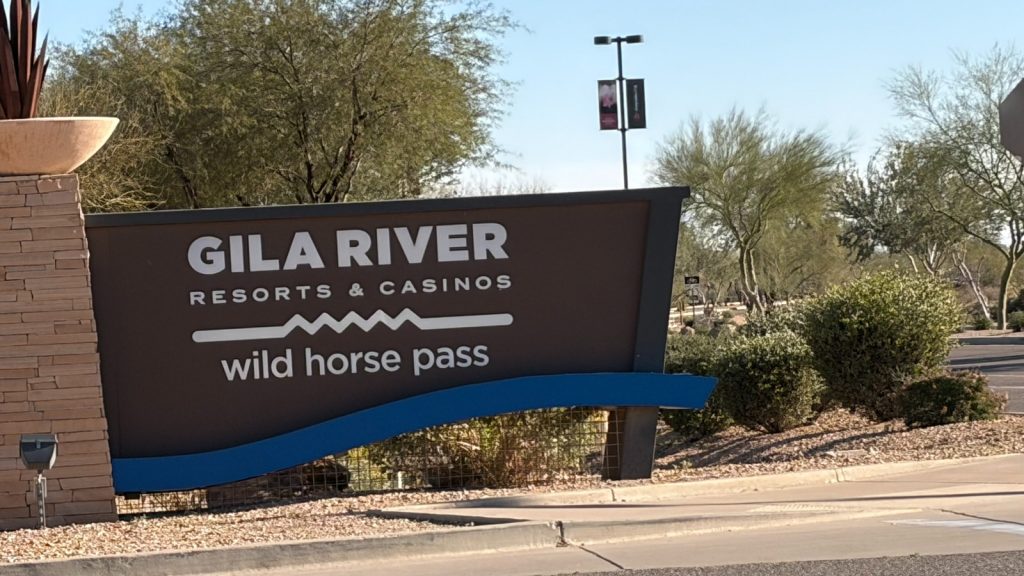
“From their perspective — and again, the American government has made so many promises to tribes over the centuries and they have broken almost every single one of them — they are breaking another right now. From a tribal perspective, these are some of the people who have suffered the most in our country’s history, and gaming gave them a transformational opportunity for their people and the communities where they are … and that’s at risk right now.”
In recent years, the AGA and the Indian Gaming Association (IGA) have moved from an “adversarial relationship,” Ruddock said, to being more aligned. Miller points to COVID as the start in the change of the relationship, and the rise of illegal, unregulated, or federally regulated platforms — from sweepstakes to prediction markets — as a time to solidify it.
The AGA and IGA now lobby together in opposition to unregulated sweepstakes platforms and federally regulated prediction markets operating without state regulation. The rise of prediction markets, in particular, created a chasm in the organization, and late last year, DraftKings, Fanatics Betting & Gaming, and FanDuel — all of which now offer prediction markets in many states — resigned their memberships under pressure. As that divide widened, the divide between the AGA and IGA has narrowed.
“The tribes were having a difficult time getting funding for different things so they became closer to us and we became closer to them to find out what do they need,” Miller said. “I feel like that was the time when the relationship really, really strengthened to where we found a common foe.”