IGA: Sports Events Contracts Are Only The Beginning
Tribal leaders say Kalshi and other platforms are aiming to add iGaming to the mix

3 min
SAN DIEGO — As Indian Country continues to sound the alarm about the rise of prediction markets, leaders are warning that it’s not just about protecting tribal and state rights to online sports betting or preserving revenue. The real issue is what comes next.
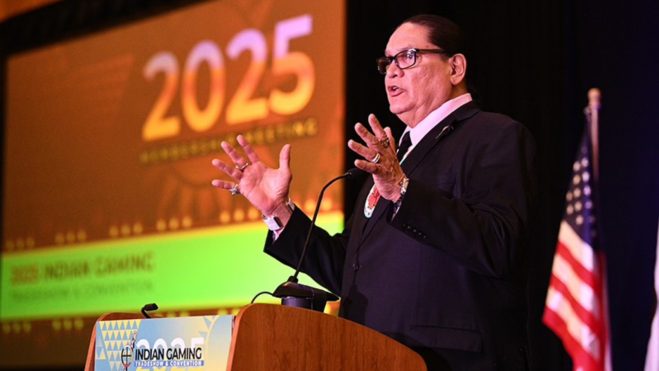
Wednesday, Indian Gaming Association Chair Dave Z. Bean addressed the issue head on during a press conference on the show floor of the IGA conference.
“This is about sovereignty and this is about fairness,” he said. “This is about protecting our communities and our industry. The message from Indian Country is clear. We will not allow federal agencies to ignore our laws and we will not allow our economies to be undermined, and we will not allow our sovereignty to be diminished.
“We don’t want to wait for what started as a brush fire [to] evolve into a wildfire … unchecked.”
Prediction markets have been a key theme all week at the annual IGA conference. Discussion has taken place on panels, on the show floor, in the hallways of the San Diego Convention Center, and in closed-door meetings. The goal is to continue to hone a strategy to protect tribal sovereignty and eliminate the threat.
“You’re not only going to lose sports betting, but you will lose iGaming,” IGA Conference Chair Victor Rocha said earlier in the week. “They are going to block out the sun. You will have only terrestrial gambling.”
CFTC’s changing stance
It’s long been accepted in the gaming industry that online sports betting is the foundation for online casino.
Indian Country has capitalized handsomely on in-person gaming in the 38 years since Congress put the Indian Gaming Regulatory Act into place, and it has no intention of giving up current or future revenue to what it calls illegal gaming.
Prediction markets, particularly sports event contracts, have taken the gaming world by storm since early 2025. Led by Kalshi, the financial platforms have exploited the favor of the Trump administration and limited leadership at the Commodity Futures Trading Commission (CFTC) to begin offering products that critics deem explicitly banned by its regulations and the Commodities Exchange Act.
Both prohibit contracts on terrorism, war, assassination, and gaming, yet the CFTC has for more than a year allowed its licensees to self-certify wagering contracts and push the envelope on the other categories.
In January, the CFTC indicated that it would take steps to show that it can regulate the contracts — currently classified as financial tools rather than gambling — and that it would withdraw a proposed rule change that would have deemed contracts on gaming contrary to the public interest. That rule would have effectively made the contracts illegal.
‘A huge affront to tribal sovereignty’
What those in Indian Country — and many state regulators — fear is that the platforms are edging toward offering products that look and feel like iGaming. Sports event contracts are beginning to erode some online sports betting profits in legal wagering states while, along with the black market, siphoning online gaming revenue from non-legal states.
Bean cited declining revenue for tribal casinos in New Mexico as additional proof and said that, anecdotally, he had heard revenue was declining elsewhere.
Should Kalshi or any other prediction market begin offering the equivalent of online casino games, the fear is those offerings will cut into land-based tribal casino revenue.
“It’s not a direct competitor [in California], but it is a huge affront to tribal sovereignty,” said Michael Hoenig, counsel for Yuhaaviatam of San Manuel Nation in California, on the opening day of the conference. “We’ve said it’s sports betting now, but we know it’s full-on iGaming that’s coming. I’m sure you’ve heard from the owner of Kalshi that he thinks every single thing that you can make a decision on should be a market. So what’s to stop it from being slots or roulette or anything else?”
So far, only eight states have legal iGaming, but the revenue from it dwarfs that of legal sports betting. The two biggest states in the U.S. — California and Texas — do not allow either type of gambling. But black market and federally regulated prediction markets are offering both kinds of gaming in those states.
Tribes must get, stay engaged in fight
Tribes and states are taking their cases to court and to Congress, where more than 10 bills have been introduced to address the legality of prediction markets.
Tribes in two states have sued Kalshi in federal court, and three state attorneys general have sued the company in state court. Kalshi has sued multiple states in federal court asserting the legality of its sports event contracts. After judges in the first two — New Jersey and Nevada — at least initially declined to ban the platform, the pendulum is beginning to swing the other way against it.
Hoenig and other attorneys are working with Indian Country on amicus briefs supporting states and are considering filing a complaint against the CFTC. They say tribes must stay engaged, and that the more tribes that sue or otherwise attempt to disrupt the prediction markets, the higher the pressure.
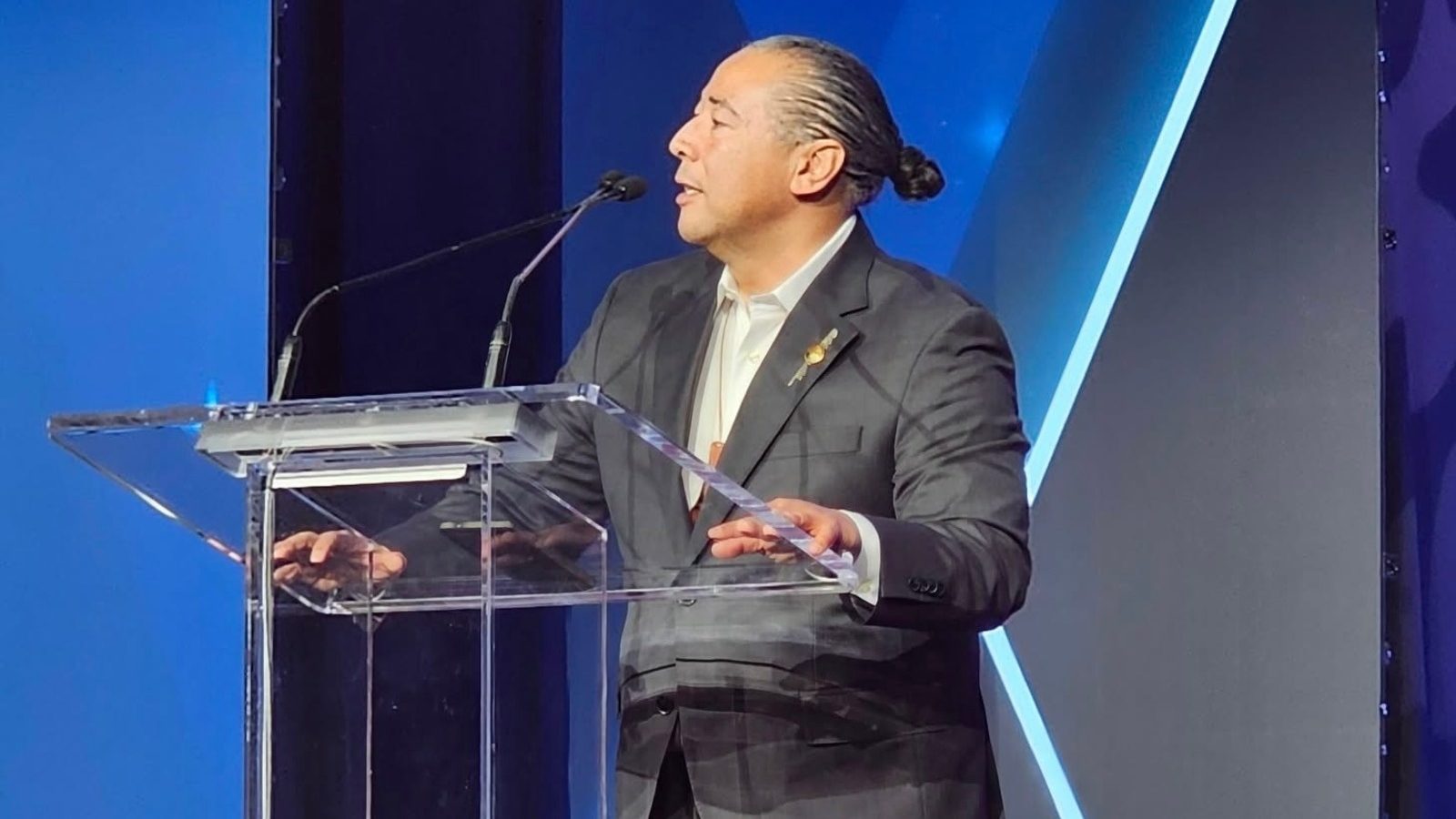
California Nations Indian Gaming Association Chair James Siva said Wednesday that he believes there is no question that Kalshi and others are “working the math” to add casino games to their repertoire. And that, tribal leaders said, is what could crack the economic foundation of Indian Country.
“Illegal gambling will always be out there, but what Kalshi and Polymarket are trying to do is cloak themselves in a legal” posture, former U.S. Department of the Interior Assistant Secretary for Indian Affairs Bryan Newland said Monday. “Illegal gaming is 90 percent of the problem, Kalshi and Polymarket are 10%, but they cloak themselves with the legitimacy of the law, and if you pair that with growth, aging and native app users, these guys are going to eat our lunch.”