Virginia House Approves iGaming Bill Via Reconsideration Route
Still a long way to go for passage, but House bill advances in similar fashion to Senate bill
2 min
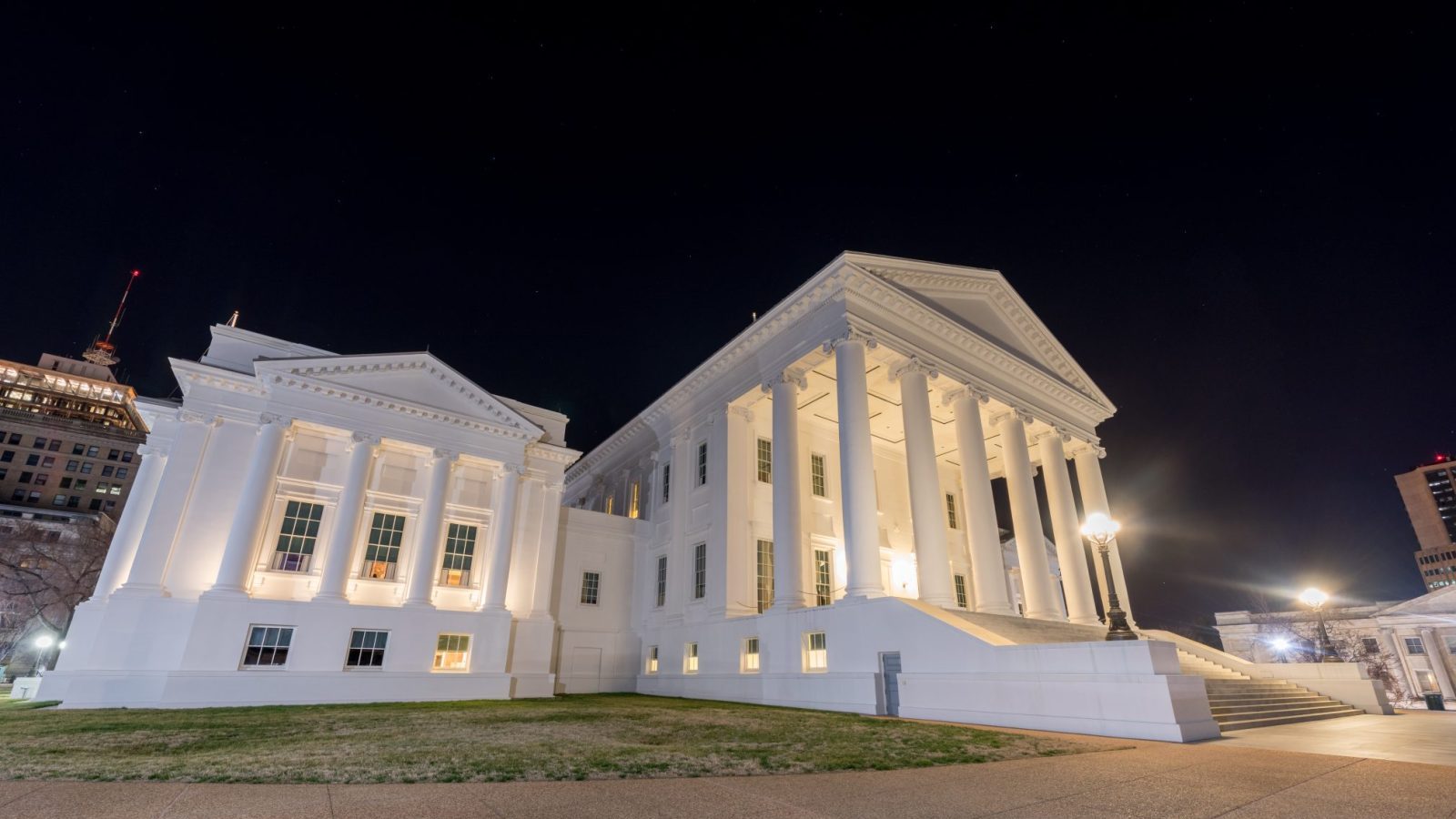
The Virginia House of Delegates on Tuesday approved Del. Marcus Simon’s online casino bill, but only after reconsideration was used.
The initial vote on HB 161 in the lower chamber was 49-46 against during Tuesday’s morning, but Simon — a “nay” vote — called for reconsideration in a bid to bring the bill up for a second vote in the afternoon session. This time, the vote swung dramatically in support by a 67-30 count.
Tuesday was the crossover deadline for each chamber to act on its own bills before crossing over to the opposite house. The companion bill for Simon’s legislation, SB118 authored by Virginia state Sen. Mamie Locke, passed 19-17 in the Senate after it, too, was brought back by reconsideration.
The two chambers will now work to hammer out the differences in the respective bills. The biggest challenge looks to be the reenactment clause in Simon’s bill that requires the General Assembly to pass the bill again in 2027. Locke’s bill contains no such requirement but does have a firm launch date of July 1, 2027.
There is no easy road forward
The slim margin of passage in the Senate coupled with the intense opposition voiced first in the upper chamber by Gaming Committee member and Sen. Bryce Reeves as well as Del. Thomas Garrett Jr. in the House on Tuesday means passage through the Assembly is far from a given.
Garrett gave an impassioned call to reject Simon’s bill, likening it to Frankenstein’s monster based on the number of times this bill and the Senate version “was dead” before continuing to advance. He also took aim at Simon’s and Locke’s contentions that iGaming was already taking place in Virginia and that they wanted it taxed and regulated.
“Do we need money so bad that we should tax and regulate fentanyl?” Garrett asked rhetorically. “Should we tax and regulate rape, murder, strong-arm robbery?
“We don’t tax and regulate things that destroy people because our responsibility is to try to form a more perfect union, not to cater to the basal instincts and the greed of people who wish to make money without regard for human life.”
Language in the bill that calls for banning sweepstakes casinos is also expected to be the subject of intense lobbying between now and the March 14 deadline for adjournment.
Sweeps operators have renewed their state-by-state push to be a regulated industry. The Social Gaming and Leadership Alliance submitted testimony during debate over SB 118 that regulation could generate $27 million in annual revenue via player purchase taxes and operator registration fees.
Another issue to be solved is the tax rate. Simon’s bill proposes a 15% rate, while Locke has a 20% levy. The enhancements made to Locke’s bill with relation to responsible gambling and problem gambling during its path through the Senate would seem candidates to be amended into Simon’s bill.
“This week’s votes are a major step forward for Virginia,” said John Pappas, state advocacy director for iDevelopment and Economic Association. “We applaud lawmakers for advancing legislation that will expand consumer protections, strengthen the land-based casino industry, and generate significant new revenues for the Commonwealth. Notably, this progress comes despite a wave of misleading claims from opponents that mischaracterize how regulated iGaming works and what it actually means for consumers, accountability, and Virginia’s existing gaming industry.
“There is still significant work ahead to reconcile the House and Senate versions and get this across the finish line, but the momentum and the facts are clearly on the side of a safe, regulated marketplace.”