Caesars CEO Reeg’s Take On Vegas Economy: ‘No Crisis,’ ‘Normal Cyclicality’
Q4 earnings call features positive spin and 2026 optimism from casino giant

2 min
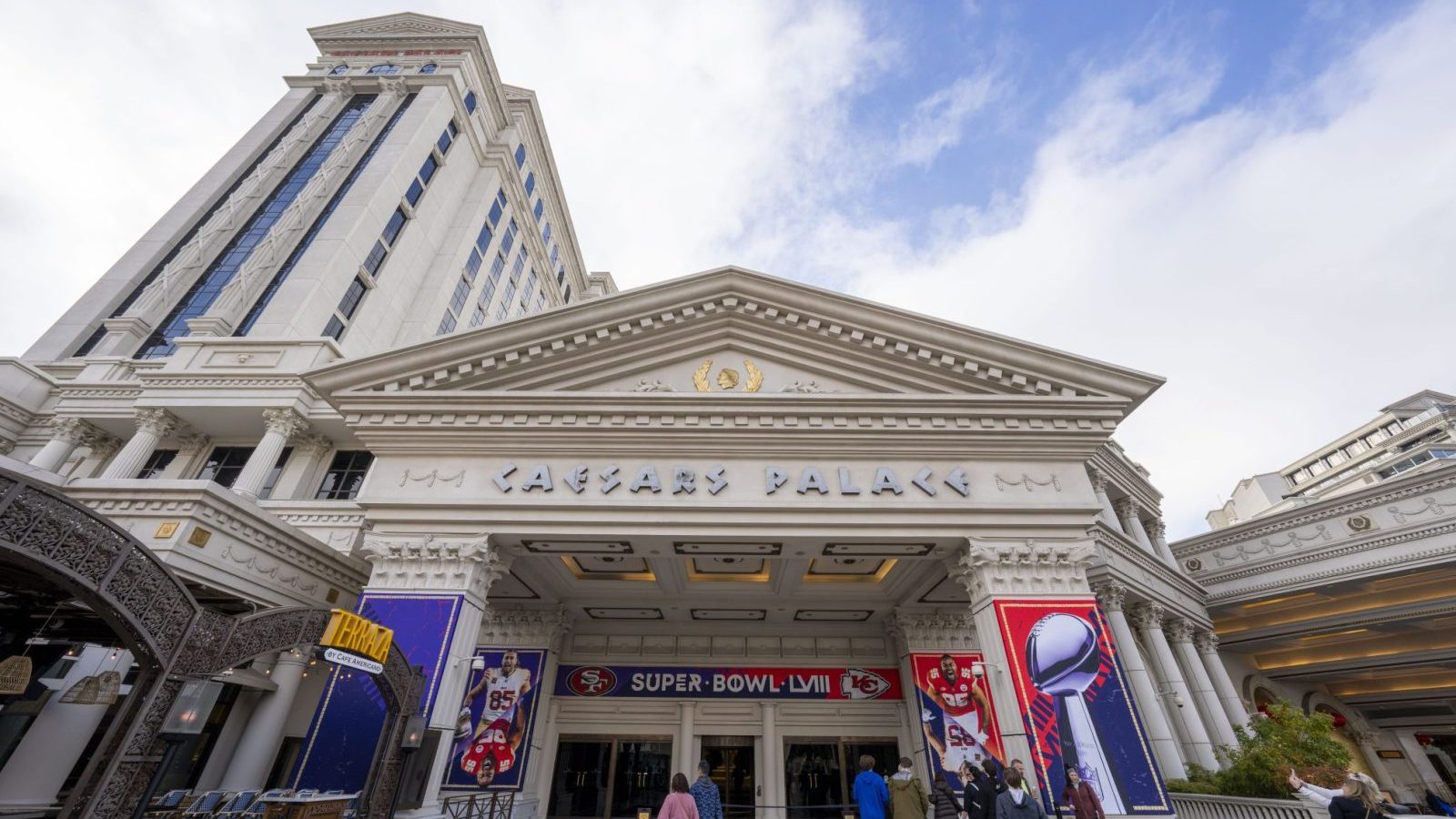
Las Vegas is more dependent on tourism than most American cities, and visitor volume dropped 7.5% year-over-year in 2025 to the lowest numbers Sin City has seen since the 2020 COVID year.
Despite this, gaming revenue on the Strip hit an all-time high in 2025 — and Caesars Entertainment is among the companies outwardly expressing optimism about the state of affairs in Las Vegas. On the company’s fourth-quarter earnings call Tuesday, CEO Tom Reeg delivered a decidedly positive message.
“If you look back over the history of Caesars in Vegas, this was probably the third or fourth best fourth quarter of all-time,” Reeg said. “There’s really no crisis happening in Vegas. It’s normal cyclicality that will play itself out.”
Reeg’s take is consistent with the viewpoint expressed on the most recent episode of the Low Rollers podcast by Las Vegas Review-Journal casino reporter David Danzis, who observed that higher-end properties catering to big spenders are thriving, but business is down at properties that appeal to budget-sensitive customers. Caesars, with such casinos as Caesars Palace (which houses the luxury Nobu Hotel), Paris Las Vegas, Horseshoe Las Vegas, Planet Hollywood, and The Linq, appears positioned relatively well.
“Center Strip is holding up quite well,” Reeg continued on the call. “The options you have here are unsurpassed. The fact that we were at 92 percent [occupancy in the fourth quarter] instead of 96 percent — we are going to work to get back to 96 percent. There’s nothing unusual happening here, and I expect it to recover as time goes by, and we’re already seeing that happen over the fourth quarter and into the first quarter.”
Peaks and valleys
Reeg, the CEO since Eldorado Resorts Inc. acquired Caesars Entertainment in 2020, acknowledged that visitation to Vegas was down in 2025, singling out the facts that “Southern California drive-in was softer” and “immigration crackdowns … left people less willing to leave home and drive hours away.”
Still, Caesars was able to weather that due to significant spikes around “strong events,” such as the annual F1 race in Las Vegas and the Super Bowl attracting gamblers and partiers regardless of whether the game is actually played in Vegas in a given year.
“The way I characterized the business in Vegas is peak events and peak weekends and conferences — the city and all of our properties are doing quite well,” Reeg said. “It’s the shoulder periods when there is not a big event or a big conference where demand is challenging, and from an operating perspective, that’s a unique challenge for us and all of us in the market.”
Reeg said he anticipates a strong Q1 and Q2, thanks to a bustling Las Vegas business conference schedule, though a summer dip wouldn’t surprise him.
For the fourth quarter of 2025, Caesars enjoyed a slight uptick in company-wide net revenue, from $2.8 billion in 2024 Q4 to $2.9 billion in the most recently completed quarter. Specific to Las Vegas, though, revenue was slightly down, from $1.08 billion the previous year to $1.04 billion in 2025 Q4. Adjusted EBITDA in Las Vegas also declined year-over-year, down 6.5%.
Offsetting that for the company as a whole? Caesars Digital, which went from $20 million adjusted EBITDA in the fourth quarter of 2024 to $85 million in 2025’s Q4 — a new quarterly record for the company.
“As we look ahead to 2026,” Reeg said, “the brick-and-mortar operating environment remains stable, and we are expecting another year of strong net revenue and adjusted EBITDA growth in our Caesars Digital segment.”
Not surprisingly, the topic of prediction markets came up on the earnings call. Reeg stood by the company’s prior stance that it will not get directly involved. “It’s been made clear to us in a number of states that if we pursue that avenue, some of our bricks-and-mortar licenses could be at risk,” he explained.