We Built A Gambling Economy And Forgot To Teach Anyone How To Gamble
A legendary coin-flip experiment reveals just how bad even smart people are at thinking about probability, and now we can bet on anything

5 min
When I was 18 years old, my gambling options consisted of the following: betting a few bucks on the NFL with my friends and playing poker.
Today, 18-year-olds, depending on what state they’re in and how much they know about VPNs, have the following gambling options: betting a few bucks on the NFL with friends, playing poker, trading sports contracts on prediction markets, playing in crypto casinos, betting on sports on sweepstakes sites, playing casino games on sweepstakes sites, entering DFS pick ’em contests, playing at offshore sportsbooks, more I’m sure I forgot, and they’ll have watched exactly 43,482,218,292 gambling ads.
No judgment here, just facts.
Well, at least we’re teaching them all about gambling and probability and odds and maybe the Kelly criterion …
Oh? No? We’re not? Right. Only Virginia has legislated gambling education, and it’s basically just all about gambling harm.
This is your brain. This is your brain on gambling. That kind of stuff.
I’m sure this is fine. It’s fine. We’re all going to be fine.
“I do think there should be gambling literacy, the same way there’s health literacy or financial literacy,” said Isaac Rose Berman, a fellow who specializes in gambling research at the American Institute for Boys and Men. “But there are two aspects to that. One is the public-health side: Here are the dangers, here’s how you spot the signs of addiction. The second half is statistics. The fact that we try to teach all kids calculus, but not all kids statistics, is ridiculous. Statistics is far more useful — not only for gambling, but for life. Most kids are never going to use calculus. They will use statistics. So I think of the gambling curriculum and literacy work I’m doing as split into those two categories: one focused on the health part, but the other is much more proactive — how to think probabilistically, how to understand statistics and probability, whether it’s with sports or just life in general.”
Because here’s the thing: Kids don’t know how to think probabilistically. Fact is, neither do adults. I can’t even spell it.
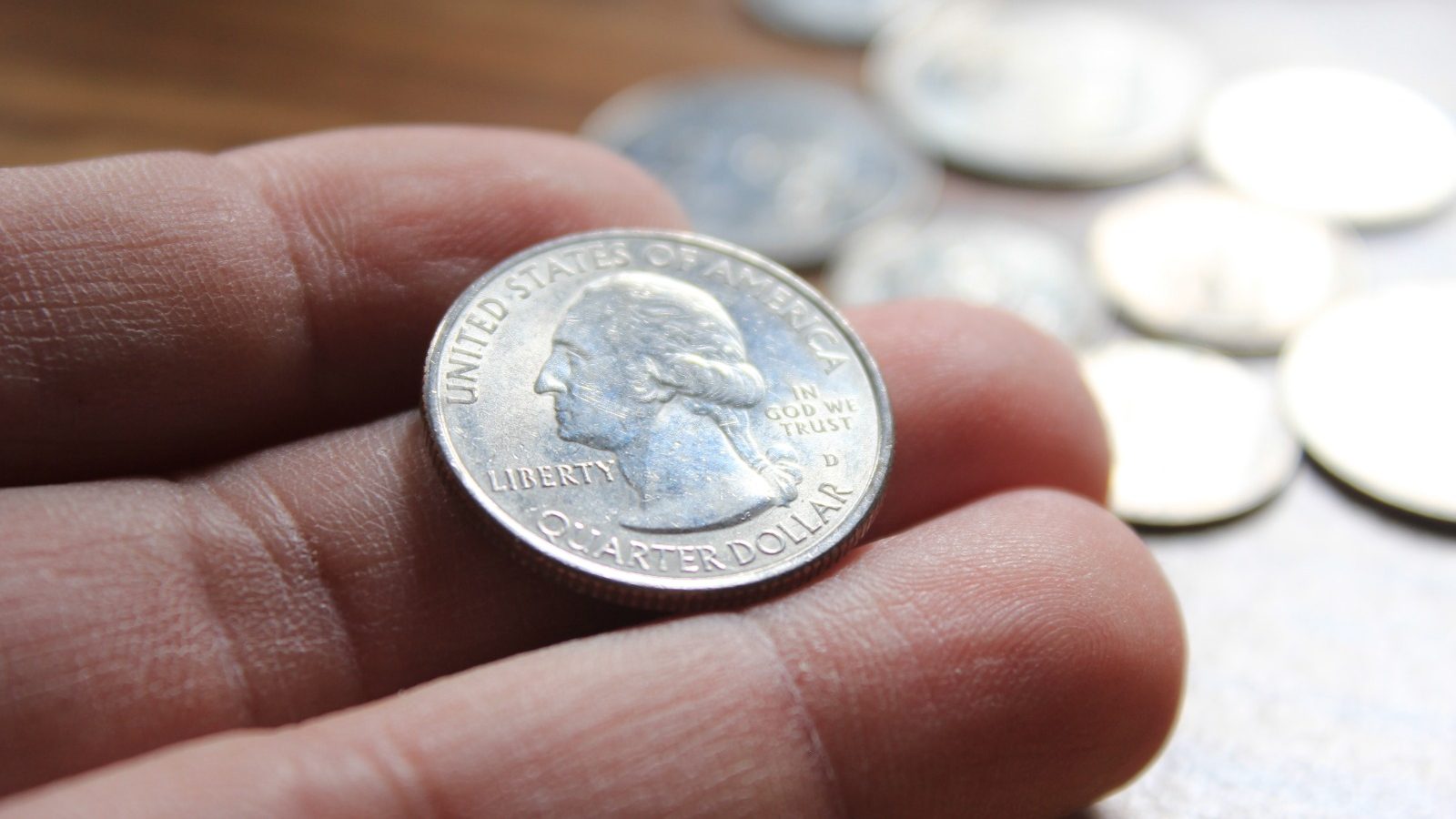
Flip a coin
This study is from 2016. I somehow never came across it until recently. It blows my mind.
Victor Haghani and Richard Dewey, a couple of finance guys, ran a beautifully simple experiment. They gathered 61 people — college students studying economics and finance, young professionals working at asset-management firms — and gave each of them $25 to bet on a coin flip. The coin was biased 60/40 in favor of heads. They were told this, clearly, in bold. Bet as much as you want, on heads or tails, for 30 minutes. Maximum payout: $250.
That’s it. A rigged game, rigged in their favor, with real money on the line.
A Kelly criterion-style approach says you should be putting about 20% of your bankroll on heads each flip, and the authors say that even a basic bet-the-same-amount-every-time strategy in the 10% to 20% range would’ve given players roughly a 95% chance of hitting the cap.
So how did our financially educated subjects do?
Twenty-eight percent went busto betting on a coin they were told — in bold! — was tilted in their favor. Another third finished with less than they started. Only 21% maxed out. The average payout was $91, which A) saved the researchers a lot of money and B) showed how dumb otherwise intelligent people are when it comes to all of this.
Oh, but it gets worse. Eighteen of 61 players went all-in on a single flip. Two-thirds of participants bet on tails at some point, many of them right after a streak of heads, because the gambler’s fallacy is one hell of a drug. Some tried Martingale strategies.
Only five people had even heard of the Kelly criterion.
And again: These weren’t random people off the street. These were finance students and investment professionals.
And now we’re out here handing 18-year-olds access to sportsbooks and prediction markets and crypto casinos with literally zero education on how probability actually works. Cool. Cool cool cool.
Getting smarter, slowly
Or maybe I’m overstating it. Maybe this is nothing new.
“It’s all just a little bit of history repeating. In fact, I’d say we improve slightly each time.”
That’s Capt. Jack Andrews speaking and his take is just that: We’ve always been stupid when it comes to gambling and we’ll eventually figure it out. More or less.
“Go back exactly 100 years. People gambled a lot more than they do today. In fact, we were on the precipice of such out-of-control gambling and unnecessary chance that it would create the Great Depression,” he said. “Truth is, it was just a repeat of the rampant gambling mindset that had been prevalent 60 years prior, as people tried to cash in on the Civil War. Gambling on bonds. Gambling by troops to stave off boredom. Gambling funded the precursor to the Red Cross. Keep going back further, and gambling is there. Lotteries to fund wars. Tulips. The one consistent lineage is greed. Where there’s greed, there’s gambling. There’s a desire to get money for as little risk as possible.”
But again, the Captain is hopeful.
“Evolution marches on and each generation gets slightly more educated, either through observing or experience,” he said. “So I think there’s hope. However, greed is insatiable.”
Other side of the coin
Rose Berman sees two sides to all this.
“On the pro-gambling side, I really think there’s a lot of value in thinking like a gambler,” he said. “The world is not black and white, and it is important to be able to see the world through a probabilistic lens. That is beneficial in all sorts of ways, whether it’s business or life. You get unlucky, you miss your train, whatever — life goes on.”
And he’s right. Thinking probabilistically is close to a superpower. It makes you better at decisions, handling setbacks, understanding that results and process are two different things. The coin-flip study isn’t just about gambling. It’s about how we process risk and uncertainty in everything we do.
But outside of gamblers who have been around the block once or three times, humans don’t really think like this.
“As the world becomes more gamblified — specifically, the prediction markets ‘bet-on-everything’ mantra — the fact that people don’t think probabilistically becomes a big danger to them,” Rose Berman said. “I hosted a dinner party the other night and people were talking about random bets on Kalshi, betting on Dancing with the Stars and Love Island. People see the world through a very black-and-white lens: This person is going to win, I’m going to bet on them. And I’m spending all of my time trying to convince them there’s a difference between betting on someone at 60% and betting on them at 40%. That’s just not something most people get.”
Remember: Finance professionals couldn’t figure out a 60/40 coin. And we’re expecting regular people to navigate a world where you can bet on literally anything from your phone while sitting on the toilet.
“I used to think you could teach it, and I still sort of do,” Rose Berman said. “But for a very large percentage of the population, that is just not a message you’re going to get across. So the proliferation of the gamble-on-everything world is going to be very bad for their wallets.”
So what do we do? Probably not nothing. Probably more than one state mandating a “gambling is bad, m’kay” curriculum. Probably something that actually teaches kids — and adults — how to think about probability, risk, expected value, and why you should never, ever bet your entire bankroll on a single coin flip, even when the coin is on your side.