Native Americans Were Rolling Bones Before The Bronze Age
A new study reports Native Americans were playing dice games 12,000 years ago

3 min
I spend an inordinate amount of time thinking about and participating in gambling.
Truth is, while I type this, my other tabs are populated by righty-lefty splits, ballpark weather conditions, Fangraphs (which I’m pretty sure if I ever closed that tab, there would be a ghostly afterimage leftover), and DraftKings.
I love playing daily fantasy sports, and I spend a ton of time (some might say too much time, thank you very much Mrs. Edelstein) mucking around with it, specifically when trying to figure out what bargain-basement second-string catcher has the best chance of going yard today.
So I want you to understand the deep, spiritual validation I felt when I learned that gambling is not a modern vice, not a moral failing, not a weakness of character — and I’m not just talking to my wife here.
It is, according to a new study published in American Antiquity, one of the oldest and most persistent cultural practices in human history. We’re talking 12,000 years old. Ice Age old. Hunting-mammoths-on-the-Great-Plains old.
Robert J. Madden, a Ph.D. student at Colorado State University, just dropped what might be the most important paper in the history of people who have ever said the word “Martingale.” He found that Native American hunter-gatherers on the western Great Plains were making and using dice more than 12,000 years ago, during the final centuries of the Pleistocene era.
This is very much news, as previous to Madden’s study, the earliest known use of dice in the Old World dates to about 5,500 years ago in Mesopotamia. That means Native Americans were rolling bones a solid 6,000-plus years before anyone in the Bronze Age even thought about it.
Roll ’em if you have ’em
“Historians have traditionally treated dice and probability as Old World innovations,” Madden said in a press release hyping the study. “What the archaeological record shows is that ancient Native American groups were deliberately making objects designed to produce random outcomes, and using those outcomes in structured games, thousands of years earlier than previously recognized.”
So yes: Some 120 centuries before people in what is now Colorado were setting state records for betting American dollars on table tennis, people in what is now Colorado were throwing dice after a long of day of bison hunting.
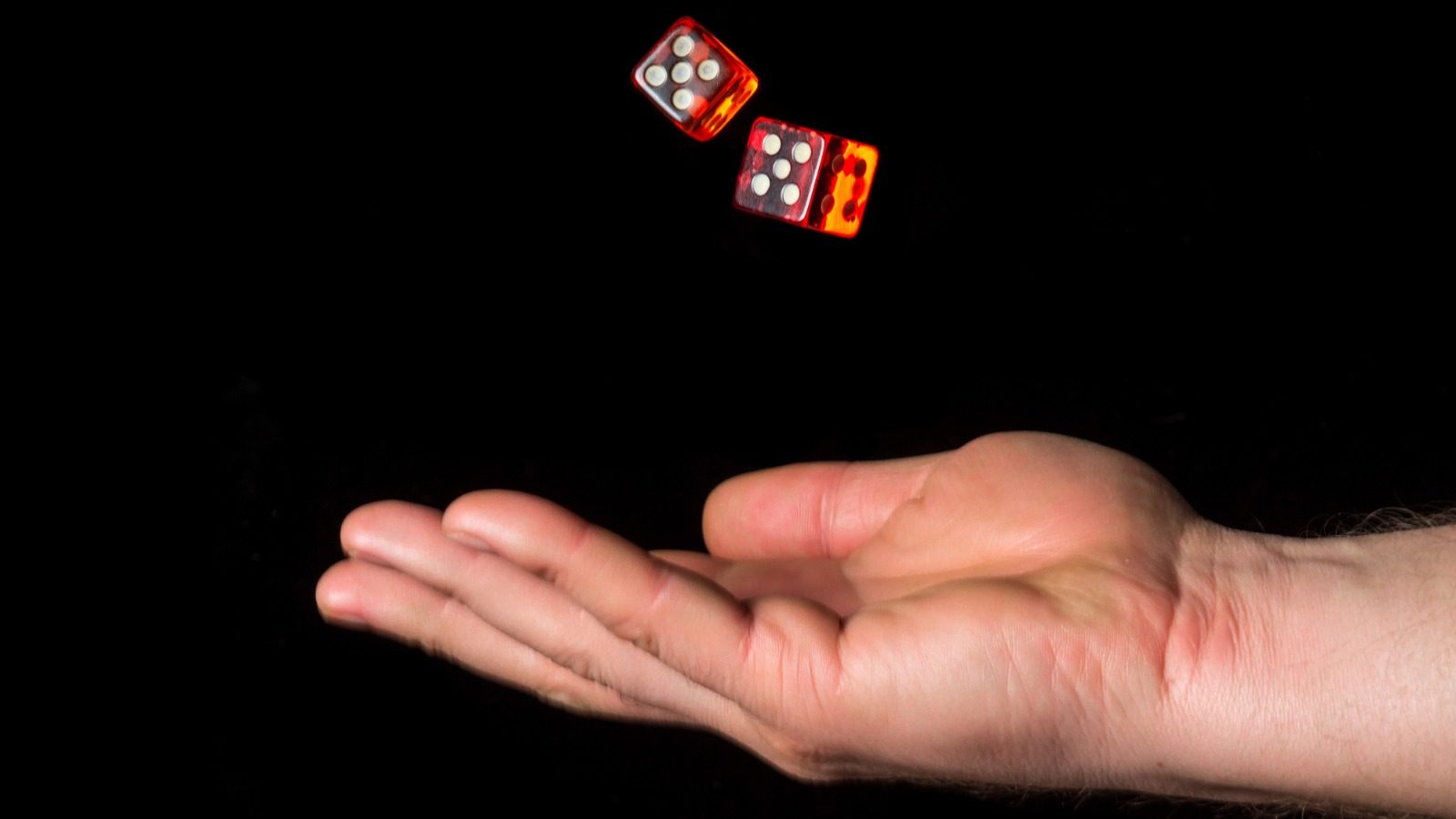
For the record, these were not laser-cut six-sided dice. They were two-sided flat or slightly rounded pieces of bone, oval or rectangular, small enough to hold a few in your hand and toss them onto a patch of dirt. One side was marked, the other wasn’t. You’d throw a set of them and count how many landed marked-side up.
“They’re simple, elegant tools,” Madden said. “But they’re also unmistakably purposeful. These are not casual byproducts of bone working. They were made to generate random outcomes.”
He identified over 600 of them across 57 archaeological sites spanning every major period of North American history. Twelve thousand years of continuous dice-making and dice-throwing.
Digging (that’s a pun) through the actual study, there was one item that really jumped out at me: These dice games were overwhelmingly played by women. A previous study that Madden cited showed 131 documented instances where the gender of participants was noted, and it found that 81% were played exclusively by women. Just 7% were men only.
So not only were Native Americans gambling 6,000 years before anyone else on the planet, but the women were running the tables. (Also — and obviously notable — is the fact some 250 tribes operate over 500 casinos in the United States today, meaning there’s a good chance a pit boss at the Ameristar Black Hawk is a direct descendant of some of these dice throwers from 12,000 years ago.)
From there to here
Now, you might be thinking this is all very interesting from an archaeological standpoint but has nothing to do with the modern world. Madden thinks otherwise.
“Games of chance and gambling created neutral, rule-governed spaces for ancient Native Americans,” he said. “They allowed people from different groups to interact, exchange goods and information, form alliances, and manage uncertainty. In that sense, they functioned as powerful social technologies.”
Kind of like a prehistoric G2E, but without the lanyards.
Also — and without getting too deep in the weeds here — math.
“These findings don’t claim that Ice Age hunter-gatherers were doing formal probability theory,” Madden said. “But they were intentionally creating, observing, and relying on random outcomes in repeatable, rule-based ways that leveraged probabilistic regularities, such as the law of large numbers. That matters for how we understand the global history of probabilistic thinking.”
So next time you consider hitting on a soft 18 to the dealer’s face card, know people were thinking just like this during a time when their effort to figure out agriculture was akin to us considering how to get a Mars settlement up and running.
And, of course, there’s the big-big takeaway: That 14-leg parlay you just built? Not the mark of someone who is a bad gambler. It’s the mark of someone celebrating a 12,000-year-old human tradition.