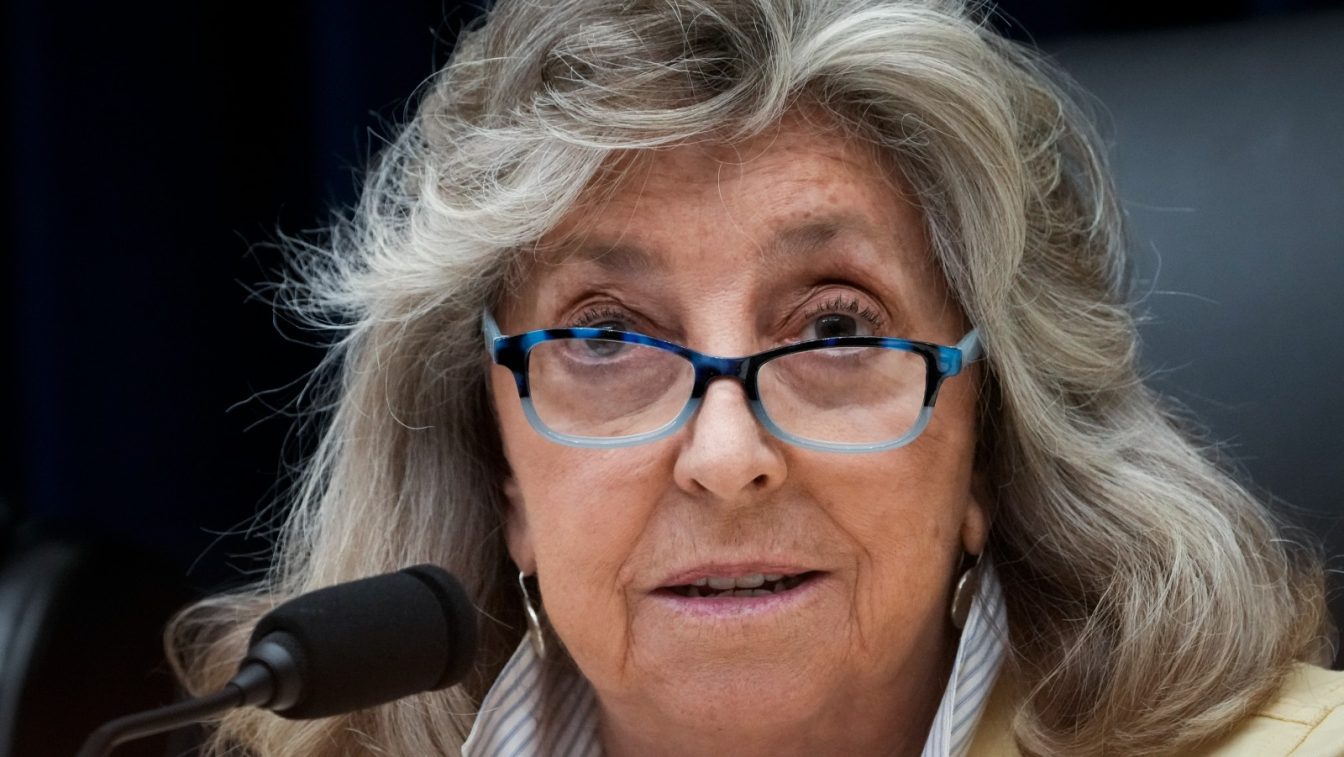
Rep. Dina Titus: ‘I Don’t Apologize For Being An Advocate For Gaming’
The congresswoman from Nevada gets frank about the FAIR Bet Act, prediction markets, the Trump administration’s impact on tourism, and more

7 min
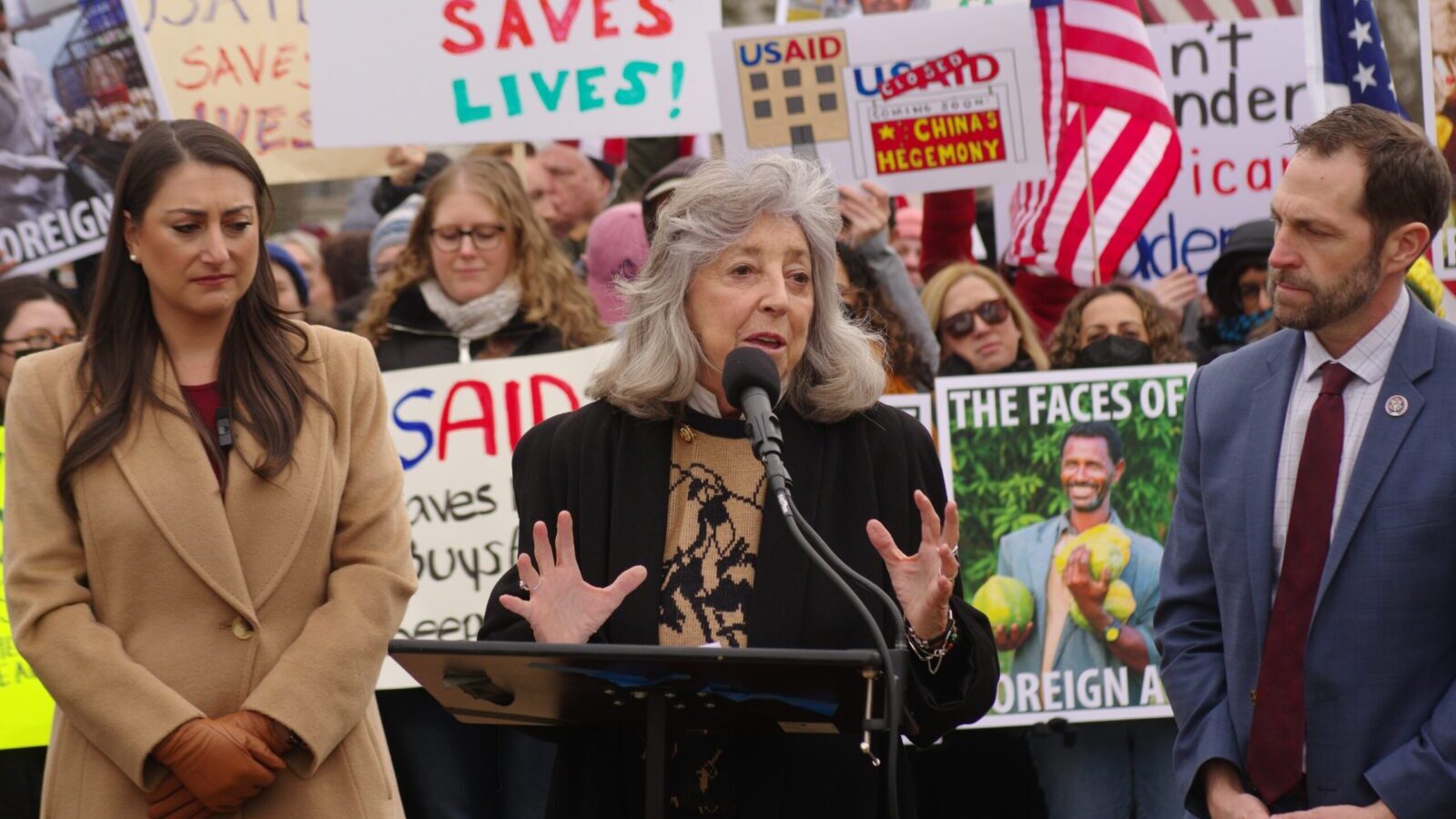
Rep. Constandina “Dina” Titus is a scrapper. It’s seen her all the way up to the halls of Congress, where she is co-chair of the Gaming Caucus.
The Democrat’s trademark feistiness served her well for 20 years (1988-2008) in the Nevada state Senate.
In 2006, Titus vied for Nevada’s governorship against scandal-prone Rep. Jim Gibbons, who won despite being accused of attempted rape while on the campaign trail. Gibbons’ victory was ascribed to his having painted Titus as tax-happy … only for Nevadans to see Gibbons increase Silver State tax rates during his one maladroit term as governor. He was ejected overwhelmingly by GOP voters in a 2010 primary, in favor of federal judge Brian Sandoval.
By that point, Titus was already on to bigger things.
From Carson City, Titus went to Capitol Hill in 2008, defeating GOP backbencher Jon Porter. In 2010, she was voted out in favor of Dr. Joe Heck, who enjoyed casino industry support. But redistricting helped lead to a 2012 Titus comeback, and she’s been a fixture of the House of Representatives ever since.
Despite having been arguably backstabbed by “Big Gaming” 16 years ago, Titus, 75, holds no grudges and makes no apologies for being an industry champion. She’s also a pragmatist and incrementalist, taking satisfaction in the gradual gains the gaming industry has notched in Washington, D.C., such as raising the jackpot-reporting threshold, a longtime Titus hobbyhorse.
In conversation with Casino Reports, Titus discussed myriad issues confronting both Congress and casinos. These included taxation of gamblers, the Trump administration’s policies that have hurt international tourism, federal attempts — mostly fumbling ones — to regulate gambling, and the effects of prediction markets. (Titus’s HR 7477 would bar prediction markets from engaging in sports betting or iGaming, but currently lacks a co-sponsor.)
As Titus’ thick Dixie twang attests, she’s come a long way from Pogo’s swampy environs to being the congresswoman from Las Vegas. Our conversation thus began back in the Deep South …
Casino Reports: What brought you all the way from Thomasville, Georgia to Sin City?
Dina Titus: Well, I made a few stops in between. I went off to college and got a Ph.D in political science. I taught one year in North Texas State, in Denton, Texas and I thought, “Get me the hell out of Texas!” A job came open at UNLV to teach political science and I thought, “That’s bright lights, big city. I’m gonna go to Las Vegas.”
CR: What was the attraction of politics?
DT: I’m from a politically active family. I had some members of my family who had run for office. I went to school at William & Mary. You’re just steeped in it there — Patrick Henry, Thomas Jefferson, James Madison. I thought when I grew up I’d be an attorney maybe or a journalist, but then the appeal of a college schedule was attractive. (laughs)
CR: In 2006, when you ran for governor of Nevada, your opponent said you would raise taxes and he wouldn’t. Then he raised taxes. Did it feel good to see him go against his promises and what would you have done in his stead?
DT: That was a long time ago. He was a pretty failed governor. You don’t feel right if you lose, but you feel right if you know your convictions are solid. I don’t think of it as raising taxes. I thought of it as investing in Nevada’s future.
CR: During your first reelection campaign in Congress the industry supported your challenger. Did that sting, and how did it affect your relations with them going forward?
DT: They may have supported [Heck] more than me. They tend to support Republicans more. But you don’t ever look back at the last race. You always looked forward to the next one.
CR: How is the dynamic between yourself and the industry different when in Congress as opposed to the Nevada Legislature?
DT: Gaming is a powerful interest in the state and rightly so: They pay a large percentage of the taxes. They employ large numbers of people. They invest in the community as good corporate citizens. So I don’t apologize for being an advocate for them. At the state level, it’s more about gaming taxes.
However, at the federal level, gaming has always tried to keep a low profile — keep your head down and your tail up. They didn’t want to be regulated or taxed at the federal level. Now, since gaming has spread to all but two states — Indian gaming, big gaming, small gaming, it’s not monolithic anymore — they don’t have the luxury of hiding, so they have to be more engaged.
CR: How are Trump administration policies affecting Nevada tourism?
DT: I say that we don’t make anything in Las Vegas but [we make] dreams come true. We have to import everything else, whether it’s flowers or lobsters or people. So tariffs have also hurt, besides the rhetoric and lack of visas — getting rid of the half of the state department that would help with visas.
For example, we thought we would benefit from the World Cup and the Olympics, because people would come to the West Coast and then they’d pop over to Las Vegas. But if you can’t get the team members here, much less the family and friends, it’s gonna hurt tourism too.
CR: Is the gaming industry feeling the impact of the ongoing immigration purge?
DT: You’ve got a lot of people who work back of the house that are immigrants. They work back of the house so their children can work front of the house. If people are afraid to come to work ‘cause they don’t know if they’re going to be rounded up, that’s not good for business.
CR: Why were tax deductions for gamblers cut in the last federal budget? What were [Senate Finance Chair] Mike Crapo’s motives?
DT: He’s not said, and we can only speculate. But they were looking for money anywhere they could find it and they estimated that this cut of 10 percent would bring in about $1 billion over a 10-year period. That may not be a lot, but they were looking for every pot they could find, and gaming is always an easy target. He and [James] Lankford are very anti-gaming, so they didn’t mind looking for it there.
CR: Why is it so difficult for the FAIR Bet Act to move forward in the House and are there any signs of hope?
DT: There are signs of hope. We’ve got 24 bipartisan co-sponsors, including Tom Cole from Oklahoma, who chairs the Appropriations Committee. But there are a couple of reasons it hasn’t moved. The leadership doesn’t want to open up the Big Beautiful Bill because who knows where it’ll go then.
They may be timing it such that they can take credit for it in the next election. You’ve had the chairman [Rep. Jason Smith] of Ways & Means commit, on the record, right in a hearing, that this needs to be fixed. You’ve had members of the Senate say, “We didn’t even know that was in there!” We’ve got some members of the Ways & Means Committee on our list of co-sponsors. So I think it’ll move.
Who knows where we can end up putting it? We’re looking at every angle. It will be fixed before the end of the year, but it’s better to fix it sooner rather than later, because people are already making plans for where they are going to go for a gambling weekend or what tournaments they might play.
CR: Why do you see prediction markets as bad for gaming?
DT: They’re competition, but you don’t mind competition and you don’t want to stifle creativity. But it’s bad for individuals. The gambler has absolutely no recourse. They are attracted to these markets because they can give better odds, there are fewer regulations, and they can bet on anything. I mean, anything — when the bird flies off the wire.
But if you think you’ve won and they think you haven’t, who are you going to get to enforce it for you? You saw that recently at the Super Bowl when — oh, what was her name? — was on the stage and they had bet if she was going to perform or not: Cardi B. [Bettors] thought being on the stage counted, and Kalshi says, no, it doesn’t. Who’s going to be there to step in to make sure that you get your money back? So the individual loses.
The community loses because these people are offshore. They don’t hire people in the community. They don’t pay any taxes in the community. They don’t build buildings. They don’t contribute to charities. It’s a bad deal all the way around.
CR: Is there a serious danger of the federal government stepping into gaming regulation?
DT: It certainly is an issue. We have always left gaming to the states, who know what’s best for their own settings. Nevada set the gold standard. A lot of people have copied Nevada’s regulation. We have certainly had strict rules in place.
But you’ve got an agency [the Commodity Futures Trading Commission] that’s been tasked with being the regulator. Pork bellies, that’s what they do. They are not equipped to be a national gaming regulator. So if they do come up with any regulations, I don’t know how they’ll enforce them because they emasculated that department. There aren’t many people left there to actually do the enforcement. You’ve got some members of the board who are tight with the new chair [Michael Selig], who are Donald Trump’s sons, who are on the board of Kalshi itself! It kinda smacks of conflict of interest.
CR: Where do you stand on the POINTS Act, which would redirect federal gaming excise-tax money toward problem gambling treatment?
DT: I don’t know what that is. I’ve opposed that in the past because each state has a system already set up where gaming contributes to those causes. It’s not a problem that needs to be addressed in this way.
CR: Do you ever feel like you’re fighting alone? Does it get fatiguing?
DT: No, because this is my district and I know this issue. I’ve been working on it for a long time now. Sometimes it’s distressing to hear people say bad things about gaming when gaming operates just like any other business. It’s bound by a lot of regulations, a lot of tax policy. It creates a lot of jobs. So I’m sometimes on the defensive. But the AGA (American Gaming Association), I get a little frustrated with them because they don’t do much of a job of informing my [fellow] members about how things work or getting out the positive side of gaming.
CR: What are your plans past the 2026 midterms?
DT: We’ll see how the election turns out. We’ll continue to fight all these issues. We’ve made progress. We got the [jackpot-reporting] level up from $1,200 to [$2,000] for reporting and we’re trying to get that up to $5,000. We’ll keep working with the sports betting handle tax. I continue to work on these bills, and if it goes into the next Congress, we’ll reintroduce ‘em.