Schuetz: Gambling Is Gambling, And Almost All The Kids Are Doing It
This prediction market problem is nothing compared to all the other action available to everyone

3 min
“Mike Trout rookie card sells for record $3.93M at auction.”
— CBS Sports headline, 2020
Back in the 1990s, I was standing outside a store that sold baseball cards when a male about 15 years old walked out with a bag of packages that included a slab of gum and a few baseball cards. He opened the packages near a trash can and began shuffling through the cards. He kept one card and threw the rest in the trash, along with the gum.
I was visiting about this incident with Tony Cabot, my Las Vegas-based gaming attorney, who had handled many of my gaming licenses. He said the kid was gambling.
Now, I need to explain that Tony was also a dear friend and would often pull my leg. One time, Tony and I were traveling together in London, and he explained much of the history behind the buildings we saw. After listening to several of his explanations of the building processes and whatnot, I interrupted him to ask, “You are just making this all up, aren’t you?” His response was “yes.”
Regarding my baseball trading cards example, however, Tony was not joking around and one could argue that he was right: This was gambling. This is because the event involved chance, consideration, and prize.
The chance lay in the notion that the package might have held a valuable card. The consideration was the package’s price. And the prize was a valuable card.
The downside, of course, was that the buyer might have received only some reasonably disgusting stale gum and pictures of baseball players that were essentially worthless.
Oh, Babies
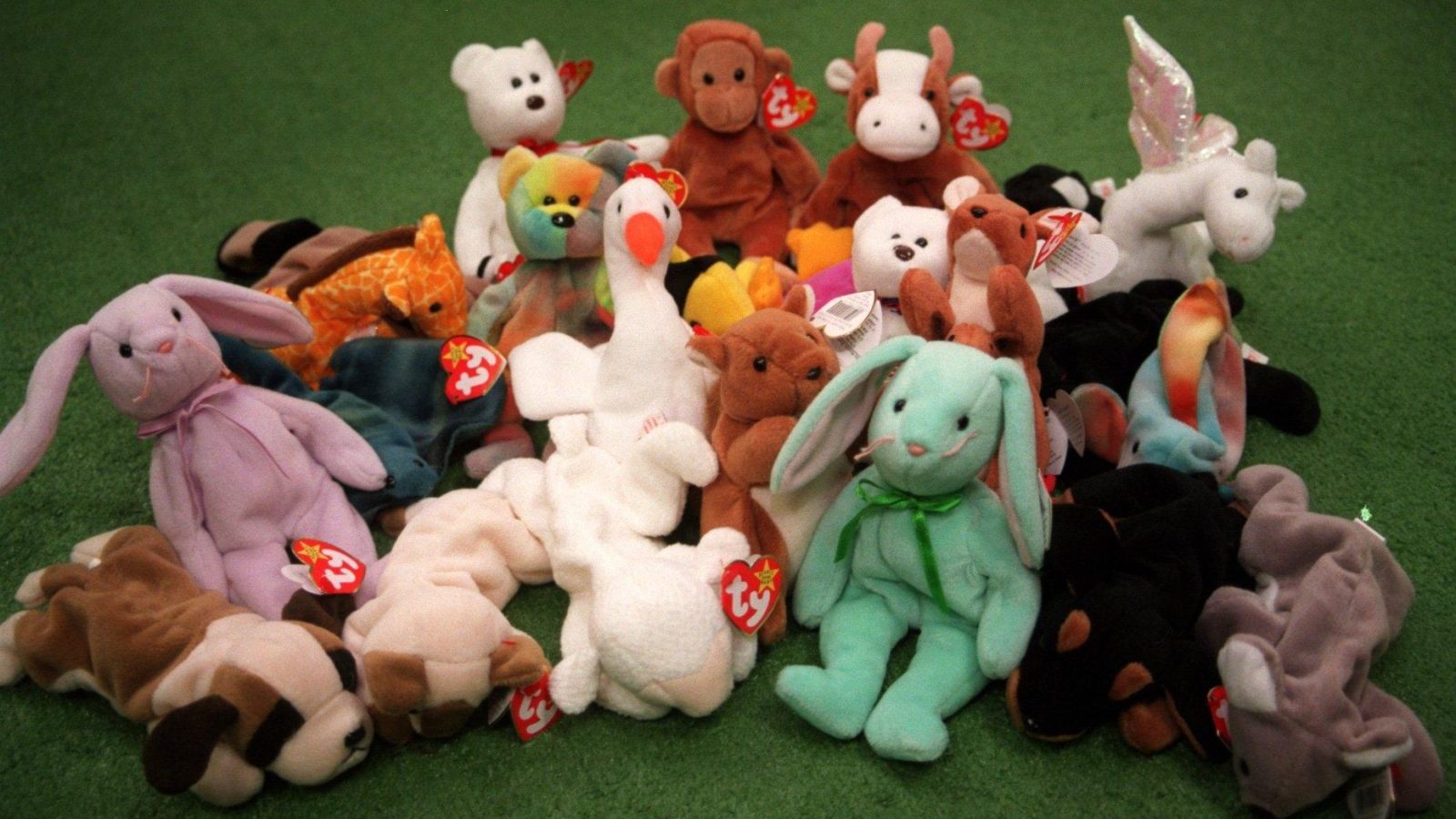
Another interesting experience from my past was the Beanie Babies phenomenon. This all started with the production of a small stuffed animal that sold for around $5, and little in traditional economics would help explain what happened next. A segment of the world went crazy, buying up Beanie Babies on the notion that, at some point in the future, they would be worth more than the house where they were stored. One was, in fact, at one time valued at $600,000.
Again, the elements of chance, consideration, and prize seemed to be present. A person paid for the Beanie Baby (consideration) with the chance that it would become of significant worth. This could be a function of production mistakes, label misprints, the type of filling used in the Babies, the size of the production run, and God only knows what else. It was a great example of how economists try to explain something that makes no sense. Using the simple model of chance, consideration, and prize suggests that buying Beanie Babies may have been a gambling event. But the world at large does not view it as such.
Now, if any of you think that the notion of chance, consideration, and prize is a simple model that can explain all things in gambling, you are out of your mind, as I hope the above examples illustrate.
An excellent example for me is the claw game that is in many children’s arcades. It seems to me it is based on chance, consideration, and prize. Not only is this not considered gambling, but it is a cool thing to offer to your children … except in those jurisdictions where it isn’t.
The claw game is but a simple representation of the law on gambling as a confusing array of contradictory thoughts, notions, and interpretations that is very much a function of the jurisdiction and the sloppiness and laziness of the politicians, regulators, police, and legal assets of that jurisdiction.
And don’t even get me started on loot boxes. This is one link of interest on the subject, and this too is a worthwhile related read.
The downward spiral
The point is that we are in a race to the bottom in the regulation and legislation of gaming. Our politicians, our regulators, and our operators are indifferent to the damage they cause to society as long as they can line their pockets. And many of our “journalists” are busier chasing clicks and cheering on the moral decay surrounding the industry than thinking about speaking truth to power.
The gaming space is full of these engineers of moral decay, and a particularly bothersome aspect of this is that they are cool with providing these products to children. At some point, I would like to hear an explanation for why we are working so hard to provide our children with these products. But the answer is that they are popular with kids and therefore profitable.
If one explores the historical development of gaming regulation, there was a period where there was a commitment among the regulators to work toward licensing people who possessed character, honesty, and integrity.
Those were the days.
I believe this is the section of an article where I suggest a group of responsible adults gather to develop a coherent policy on gambling for the United States. Unfortunately, I am afraid there really aren’t too many responsible adults in the space.
It will only get worse.
—
Richard Schuetz entered the gaming industry working nights as a blackjack and dice dealer while attending college and has since served in many capacities within the industry, including operations, finance, and marketing. He has held senior executive positions up to and including CEO in jurisdictions across the United States, including the gaming markets of Las Vegas, Atlantic City, Reno/Tahoe, Laughlin, Minnesota, Mississippi, and Louisiana. In addition, he has consulted and taught around the globe and served as a member of the California Gambling Control Commission and executive director of the Bermuda Casino Gaming Commission. He also publishes extensively on gaming, gaming regulation, diversity, and gaming history. Schuetz is the CEO of American Bettors’ Voice, a non-profit organization dedicated to giving sports bettors a seat at the table.