Schuetz: Onions, Movies, Elections, And The Long Road To Sports Prediction Markets
Prediction markets are a case of nothing new under the sun, even if they’re higher profile now

7 min
“Sooner or later, everything old is new again.”
— Stephen King, The Colorado Kid
In December 2013, Katherine Mangu-Ward, then a writer for Reason magazine, penned the following line: “Prediction markets are a really good, useful idea, which makes them hard to snuff out.”
It seems that Mangu-Ward was very good at predicting the future, for prediction markets definitely are proving hard to snuff out.
In 2007, James Surowiecki, writing in The New Yorker, explained that Simon & Schuster partnered with MediaPredict to “use the collective judgment of readers to evaluate book proposals.” MediaPredict is still in existence and has bypassed legal issues where money, per se, is not involved. It uses funny money to encourage membership and participation. The logic of this move is that the book publishing market is full of duds and a few big winners. Obviously, the publishers are not particularly adept at determining the winners from the duds, so they are using a form of a prediction market to improve their track record — and their profits.
And if you want to talk about duds with a few big winners, you are also talking about the motion picture business. Their model is the Hollywood Stock Exchange, and that was the inspiration used by the publishing folks. The movie business is well known for being a very tough business to pick winners in.
The Hollywood Stock Exchange was founded in 1996 by Max Keiser and Michael Burns. The company developed “moviestocks” and “starbonds” as non-monetary trading instruments and gained some acclaim for picking film and Oscar winners.
In 2001, the company was purchased by Cantor Fitzgerald. It was Cantor’s goal to turn the Hollywood Stock Exchange into a real money exchange. This plan was waylaid when, several months after this purchase, Cantor Fitzgerald was devastated by the tragic events at the World Trade Center, resulting in the deaths of 658 Cantor employees officed there. This delayed the plans regarding new product launches for Cantor.
Sports betting, perhaps?
In the mid-2000s, Cantor was again exploring working to penetrate the prediction space in movies. The company was also beginning to explore entering the sports betting business in Las Vegas and beyond.
Cantor’s chief executive was Howard Lutnick, currently the United States secretary of commerce, appointed by and serving under President Donald Trump. The individual who ran Cantor’s betting explorations was a gentleman named Lee Amaitis, who was the no. 2 person at Cantor Fitzgerald and oversaw the London office. Amaitis left London and relocated to Las Vegas to oversee Cantor’s sports betting efforts.
In 2009, Cantor received its non-restricted gaming license from the Nevada Gaming Control Board. It also opened its first operation in Nevada. The company ran into problems in 2014, when it had to pay the largest fine imposed on a firm in the state’s history of regulated gaming.
In 2016, the feds moved in on Cantor’s Nevada betting entity, now CG Technology, and fined the company $22.5 million for money laundering and illegal gambling. A few months earlier, the company was fined by the Nevada regulatory authorities for “inaccurate payouts” and forced Amaitis to resign.
The end result was fairly conclusive proof from all parties that the company was not adept at running a sports betting operation in a regulated market, and it sold itself to William Hill.
Cantor Fitzgerald also lost out on its dream of monetizing the Hollywood Stock Exchange for the strangest of reasons. As a result of the Great Recession in the latter part of the first decade of the 21st century, Congress was compelled to establish a tighter legal environment for financial markets to mitigate the potential downside. And, as is typical in big, ambitious bills, there are opportunities to throw all kinds of things into those bills that have little to do with the bill. These are called riders.
The bill in this case was the Dodd-Frank Wall Street Reform and Consumer Protection Act, which was signed into law by President Barack Obama on July 21, 2010. Oh, and it included a rider (or two). The rider was placed in the bill by Blanche Lincoln and essentially ended the potential use of financial prediction tools for the motion picture industry. The language states that futures contracts based on motion picture receipts are illegal. The motion picture producers in Hollywood and beyond were the impetus for this change, for it appears that the system was susceptible to manipulation.
Peeling back the layers
And let’s not forget about onions. No story about futures contracts in commodities is complete without noting that, since 1958, a law has prohibited the trading of onion futures. In brief: Two very smart gentlemen basically manipulated the onion futures market, causing significant economic dislocation and making a fortune for themselves.
The Commodity Futures Trading Commission (CFTC) plays a significant role in the current debate over prediction markets. It should be noted that the first word in this entity’s name is “commodity.” This entity was formed in 1974 and consolidated the duties of several predecessor agencies.
Prior to the CFTC, the Commodity Exchange Authority was the processor agency overseeing commodity futures. This agency was under the U.S. Department of Agriculture (USDA).
With the formation of the CFTC, the intent was to remove it from the USDA and make it an independent regulatory agency, much like the Securities and Exchange Commission and the Federal Reserve.
When I read about prediction markets, I am often reminded of the economist Adam Smith and his discussion of the “invisible hand.” He suggested that people who work independently and act on their own opinions and motivations will generally produce results beneficial to society. Unfortunately, Smith wrote about the invisible hand in the 1760s and ’70s, and his thinking is now generally considered overly wishful and naive. Again, it reminds me of unregulated or poorly regulated prediction markets, which do have a history of going off the rails.
As one roams the literature on prediction markets, one finds a powerful tool for anticipating the future and enabling financial strategies to mitigate losses and enhance returns. One also finds a history checkered with abuse and inappropriate behavior. Once again, one is reminded of the reality of Smith’s “invisible hand.”
Elections and manipulation
One of the more interesting values in prediction markets is their use in elections. They have proven to be measurably better than polling in predicting outcomes, with an observed 74% higher level of accuracy.
This is of interest if one looks at the 2012 presidential election between Obama and Mitt Romney. A company named Intrade was taking action on the election, and it had a very good track record for being “right.” The company was founded in 1999 by John Delaney, an Irish lad with a financial background.
Delaney launched TradeSports, which focused on sports betting, and Intrade, which focused on elections and events. It was located in Ireland, but took action from America. He also seemed to be an individual who was willing to accept risk, for in 2011, he was found dead just 50 feet from the summit of Mt. Everest.
Because of Intrade’s predictive accuracy, it was closely watched by the press as a forecasting tool. In the 2008 election, Intrade predicted that Obama would receive 364 electoral votes; he received 365.
But in the 2012 election, Intrade experienced some seemingly aberrant behavior. An outlier bettor fired somewhere in the neighborhood of $4-$7 million on Romney in the last hours. It has been argued that this was undertaken because the press closely watched Intrade, given its record of accuracy, and would report this news, and the “bets” were made in an effort to encourage more Romney supporters to vote.
Sheldon and Miriam Adelson were the largest contributors to federal races in the 2012 election cycle, and Mr. Adelson noted he was willing to provide $100 million to defeat Obama, remembering that this was the first presidential election since the Citizens United Supreme Court ruling.
It has never been revealed who the mystery bettor was.
Thumb on the scale
What one finds in meandering through the history of prediction markets is an interesting and curious history. Theoretically, and at times in practice, they are incredibly accurate. They are also subject to being used and abused by political interests, unsavory operators, and other troubling realities, whether the topic is onions, motion pictures, or more serious subjects.
One finds a great deal of attention being directed toward prediction markets presently for a variety of reasons, with the attempt to facilitate betting on sporting events particularly standing out.
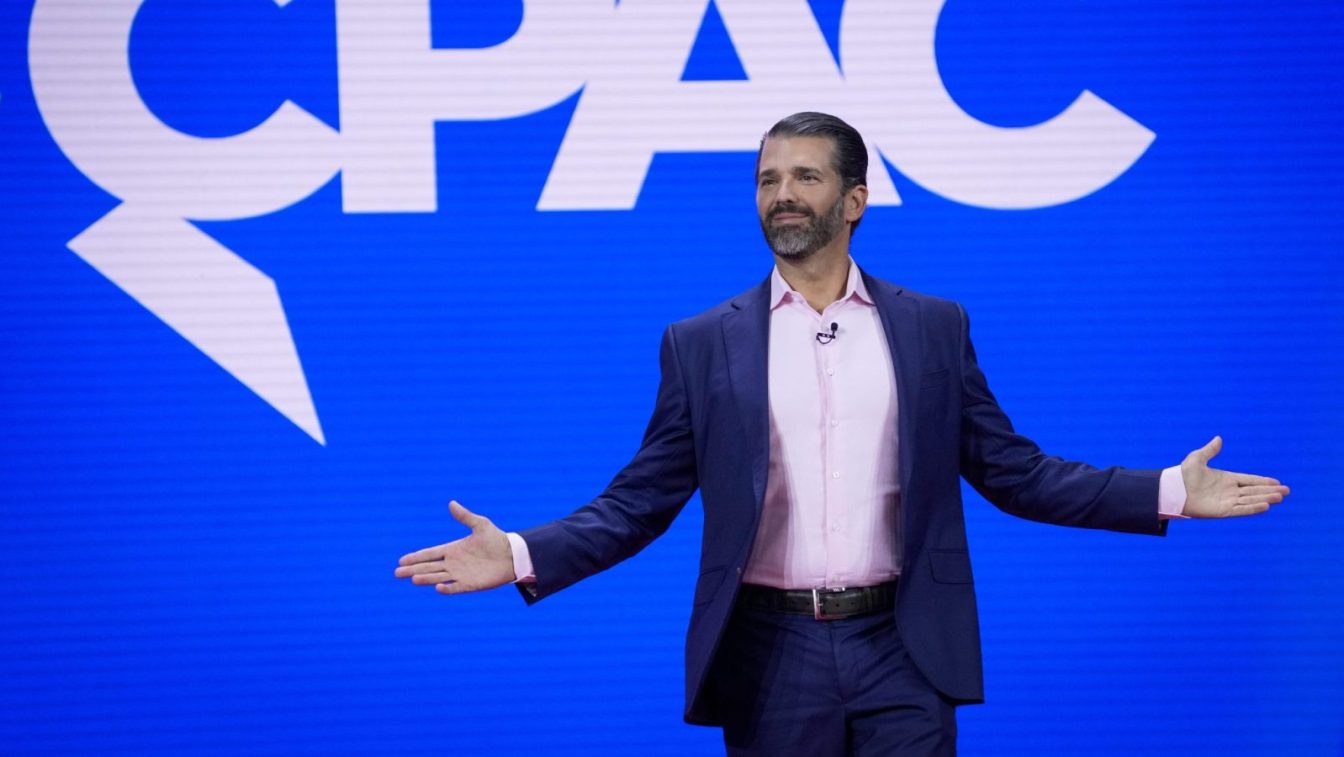
Prediction markets are also of great interest to the Trump family. Donald Trump Jr. is a strategic advisor to Kalshi, a major player in the prediction market space. Polymarket, the largest global player in the prediction space, has Trump Jr. sitting on its advisory board. Also, 1789 Capital has invested in Polymarket; Trump Jr. is a partner at 1789 Capital.
Moreover, Trump, Jr. is on the board of directors of Truth Predict, which is a part of Truth Media and Technology Group. Truth Media and Technology is held by the Donald J. Trump Revocable Trust, of which Donald Trump, Jr. is the trustee.
It is also the case, as mentioned above, that when the CFTC was formed in 1974, it was made an independent agency. That means it is protected from the whims of the executive branch regarding the termination of members. This has been played out extensively in the press, with the tension between the Federal Reserve Board of Governors, an independent agency, and President Trump, who wants to fire its head, Jerome Powell.
It is important to note that Trump issued an executive order on Feb. 18, 2025, to strip the CFTC of this independence. That would mean it would fall directly under the president’s control. This all gives the appearance that the guardrails are weakening.
Long ago, I spent several years working on a Ph.D. dissertation to understand the forces that shaped the development of the Nevada Gaming Control Board. My conclusion then, and it remains today, was that the NGCB was formed to protect the industry from itself. The character of many industry participants was suspect, primarily because of their association with organized crime. The board needed to control this image and worked to cause these criminals in the industry to either behave or leave.
I believe that the Nevada regulatory experience is a good one, and if we want prediction markets to be sustainable in the United States, sound regulation needs to be introduced to protect this industry — for the people in control here are too disorganized to be referred to as organized crime.
—
Richard Schuetz entered the gaming industry working nights as a blackjack and dice dealer while attending college and has since served in many capacities within the industry, including operations, finance, and marketing. He has held senior executive positions up to and including CEO in jurisdictions across the United States, including the gaming markets of Las Vegas, Atlantic City, Reno/Tahoe, Laughlin, Minnesota, Mississippi, and Louisiana. In addition, he has consulted and taught around the globe and served as a member of the California Gambling Control Commission and executive director of the Bermuda Casino Gaming Commission. He also publishes extensively on gaming, gaming regulation, diversity, and gaming history. Schuetz is the CEO of American Bettors’ Voice, a non-profit organization dedicated to giving sports bettors a seat at the table.