Wall Street Weighs In On Surprise Maine Online Casino Legalization
A day after Gov. Janet Mills’ non-veto, analysts think it could help push legislation elsewhere

2 min

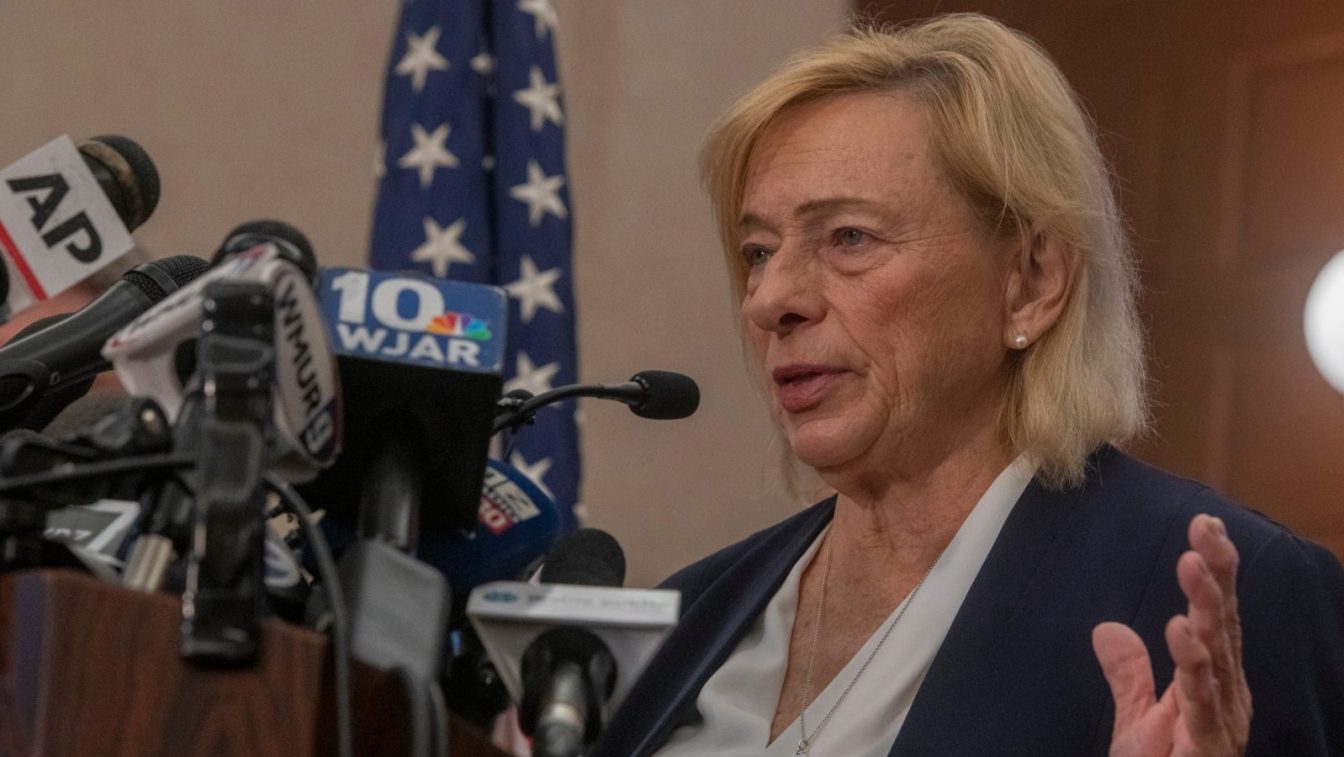
One day after Gov. Janet Mills allowed Maine to become the eighth state with regulated online casino gaming, Wall Street analysts are parsing what the unexpected move means for the industry and whether it could start a rock slide to additional state-level legalizations.
The consensus: Maine’s market will be small, but the political dynamics that got it across the finish line may matter more than the revenue projections.
“Maine passed with heavy opposition, with some polls showing 64% of the population opposing the legalization,” wrote Jordan Bender, an analyst at Citizens JMP Securities, in a note to clients. “We are not in the camp that believes one state legalizing iGaming will act as a domino effect into other states given complex state-by-state politics. That said, bills now being introduced (e.g., Virginia) also show opposition to iGaming bills, but Maine has shown that state politics can override popular opinion. Said another way, Maine should be viewed as a positive datapoint for states looking to legalize iGaming in the coming years.”
DraftKings and Caesars appear best positioned to benefit. Both companies already operate online sports betting in Maine through partnerships with the Wabanaki Nations, which are the four tribes granted exclusive rights to operate iCasino platforms under the new law. DraftKings partners with the Passamaquoddy Tribe, while Caesars works with the Mi’kmaq Nation, Penobscot Nation, and Houlton Band of Maliseet Indians.
“There are four licenses set to be issued when the state launches, and we expect DraftKings and Caesars to be front-runners given their existing online sports betting agreements with the two tribes,” Bender wrote, adding that the companies’ established customer databases give them “a clear advantage” in competing for those licenses.
Exclusive deals
Analysts at Truist Securities echoed that assessment, calling the development “a welcome one” for both operators.
“Both look set to have exclusive rights to offer iGaming on top of their existing OSB partnerships,” the firm wrote. “It’s unclear if more digital operators could gain access in the future, but for now we assume all others could be shut out.”
That exclusivity would sting some major players. FanDuel, BetMGM, and Fanatics all testified against the bill during the legislative process. The Maine Gambling Control Board (MGCB) also urged Mills to veto the legislation, arguing it could cannibalize land-based casino revenue and cost up to 200 jobs at the state’s two existing brick-and-mortar casinos.
Those casinos (Hollywood Casino Bangor, owned by Penn Entertainment, and Oxford Casino, owned by Churchill Downs) were left out of the new framework. Truist characterized the impact as “very modest to immaterial,” noting that the two properties account for just 1% and 3% of their parent companies’ gross gaming revenue, respectively.
Additionally, the structure of the bill upset state regulators.
“Cutting out Oxford and Hollywood Casinos entirely from offering iGaming is ill-advised and creates a monopoly that is harmful to consumers and the Maine workers employed by Oxford and Hollywood Casinos,” the MGCB wrote in its letter last month, urging a veto.
How much money?
In terms of market size, expectations are tempered by Maine’s population of roughly 1.4 million. Truist projects the state could generate more than $55 million in iGaming gross gaming revenue in its first year of operations, growing to more than $120 million by 2030. Citizens estimated $280 million to $300 million in cumulative revenue over the first five years.
“The state is small in terms of population, but it should make for a hyper-competitive market with two existing gaming companies,” Bender wrote.
One factor working in operators’ favor: a low tax rate on gaming revenue.
“Remarkably, the tax rate is only 18% on gaming revenue, fairly low in a time when gaming tax rates across the industry continue to increase,” Bender noted.
The average timeline from legalization to launch in the U.S. has been about 9½ months, according to Citizens, suggesting Maine’s iCasino platforms could go live by late 2026. Under state law, the tribes can begin offering online casino games 90 days after the upcoming legislative session adjourns.
Whether Maine sparks a broader wave of iGaming legalization remains an open question. Bills have been introduced in states like Virginia and New York, though opposition remains strong in many legislatures. The National Association Against iGaming has already announced plans to pursue a ballot repeal effort in Maine.
“Consensus thinking has been there would be no iGaming legalizations this year,” Truist wrote, “and it will be interesting to see if Maine is a one-off or a sign of more to come.”