How Buying Sports Cards Went From Sunday-Morning Fun To A RICO Claim
A Missouri lawyer says Whatnot’s box breaks and repacks are more illegal gambling than card collecting

2 min
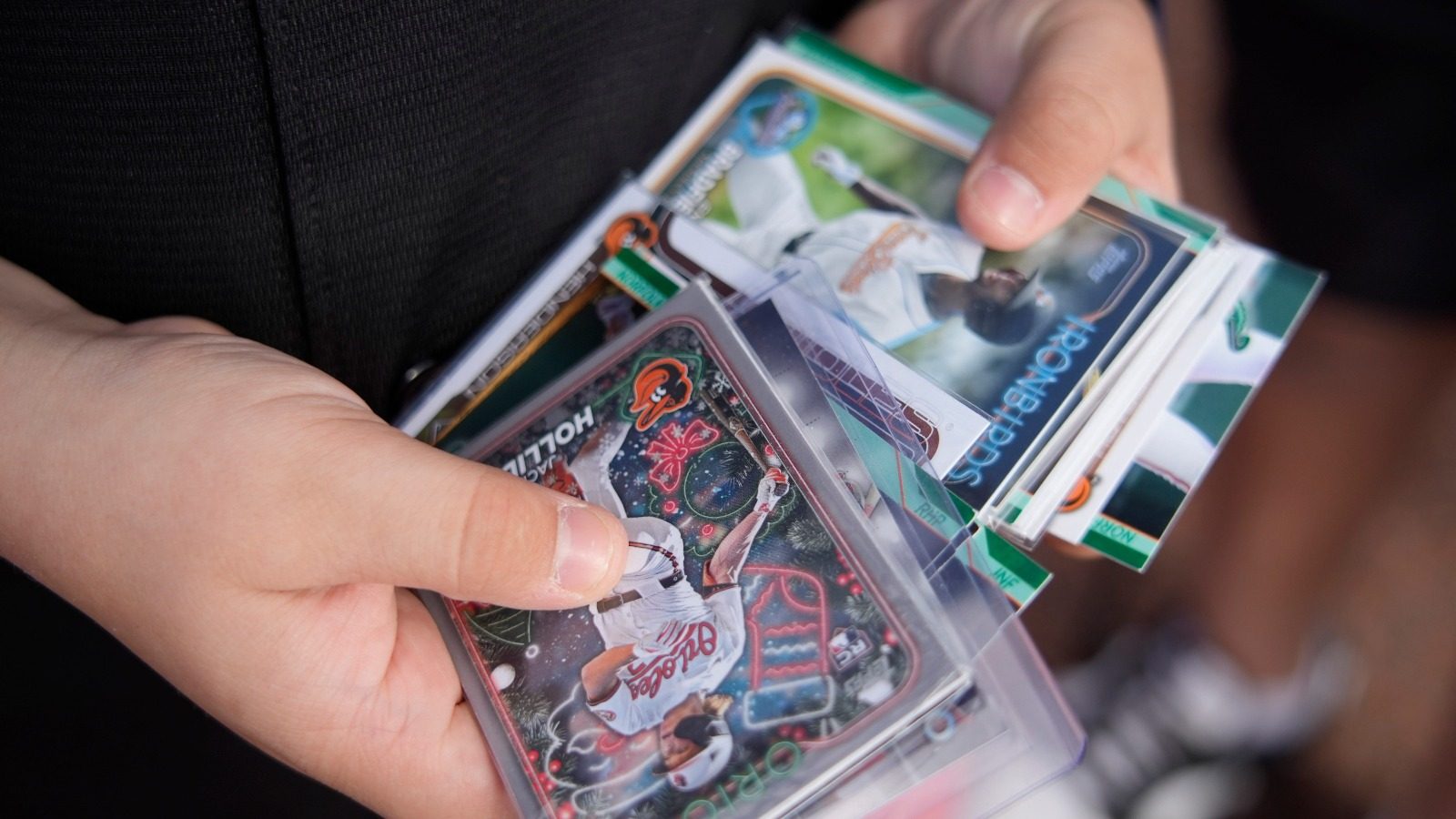
Many of us are old enough to remember when baseball cards were something little kids bought on Sunday mornings when they drove with their dad to the local stationary store. Dad bought the Sunday paper and gave sonny boy a buck or two to grab a rack pack or three.
Rack packs: For 59 cents in 1979, you’d get 39 cards.
Things have changed a bit in the “hobby.” Heck, that same 1979 rack pack can be yours today for the buy-it-now price on eBay for $250.
In fact, with the rise of insert and chase cards, cards with limited-production run, cards with pieces of memorabilia in them, autographed cards, and cards that sell for millions of dollars, some might even say buying packs of cards is nothing more than … gambling.
And that’s exactly what one lawyer is claiming in a series of 15 arbitration claims covering 30 clients against Whatnot, an online sales platform for the sports-card industry.
Paul Lesko, a lawyer from Missouri, is claiming random box breaks and repack breaks by Whatnot hosts constitute illegal gambling and are, in fact, violating the RICO Act, according to an article in The Athletic.
The arbitration claims have been filed in California, where Whatnot is headquartered. They say the box breaks break California’s laws on illegal lotteries and the repack breaks are illegal grab-bag lotteries.
“Whatnot represents that it operates a ‘marketplace’ where live-shopping helps connect ‘buyers’ and ‘sellers.’ This is a false front,” the cases claim, according to the article. “Functionally, Whatnot operates an unregulated online casino where it exploits its customer base by encouraging compulsive spending and in the process generates billions in revenue without providing the safeguards required of regulated gambling operations.”
Change the rules?
So what are the claimants asking for? According to the article, to treat Whatnot like a gambling company. They want randomized breaks and repacks deemed unlawful lotteries, money returned, damages, and the platform forced to add the kinds of protections gambling operators are at least supposed to have, including addiction warnings, self-exclusion, spending limits, and support resources.
Whatnot, meanwhile, has a shield: mandatory private arbitration. Unless a user opted out within 30 days of signing up, any dispute goes behind closed doors instead of into open court, according to The Athletic. And let’s be honest: Almost nobody downloads an app, then carefully studies the dispute-resolution language before buying into a break.
“We absolutely reject the characterization in this complaint,” Whatnot said in a statement to The Athletic. “Gambling isn’t allowed on Whatnot and we strictly enforce this policy. … Card breaks are a long-standing format in collecting — at card shops, conventions, and in communities that have thrived for generations. And while sellers who ‘break’ only make up 4 percent of sellers on our platform, we’ve taken care to bring that experience online in a way that holds everyone accountable. Whatnot shows happen live and on camera, sellers face real consequences when they break our rules. We’ve set the standard for how these formats work online and we’re committed to maintaining it.”
If you’ve never spent time in the world of box breaks and repacks, here are the basic mechanics. In a box break, people buy slices of unopened product tied to teams or players and hope the rip lands on their slot. In a repack, the sealed packs are gone; someone has already selected a card, then reboxed it, and sells the mystery. Either way, you’re paying real money for uncertain value. Sometimes you score. Sometimes you get smoked.
To be clear, not everyone in the hobby is thrilled with this method of collecting.
“The way the repacks are being done right now is purely gambling and it’s going to be an issue for our industry,” Upper Deck President Jason Masherah told The Athletic last year. “You can’t go out, sell a product, guarantee a return, put the values of every card out there. You’re determining the values of the cards. The beauty of the card market is that we have no idea what they’re going to sell for on the secondary market. These repacks, they’re determining the value. They’re buying and selling. They’re promising a return. It is 100 percent pure gambling the way it’s being done right now, and something bad is going to happen at some point.”