Whitmer Proposes Raising Michigan Top iGaming Tax Rate to 36%
Governor may also be priming for a fight by proposing a digital sports betting wager surcharge

2 min
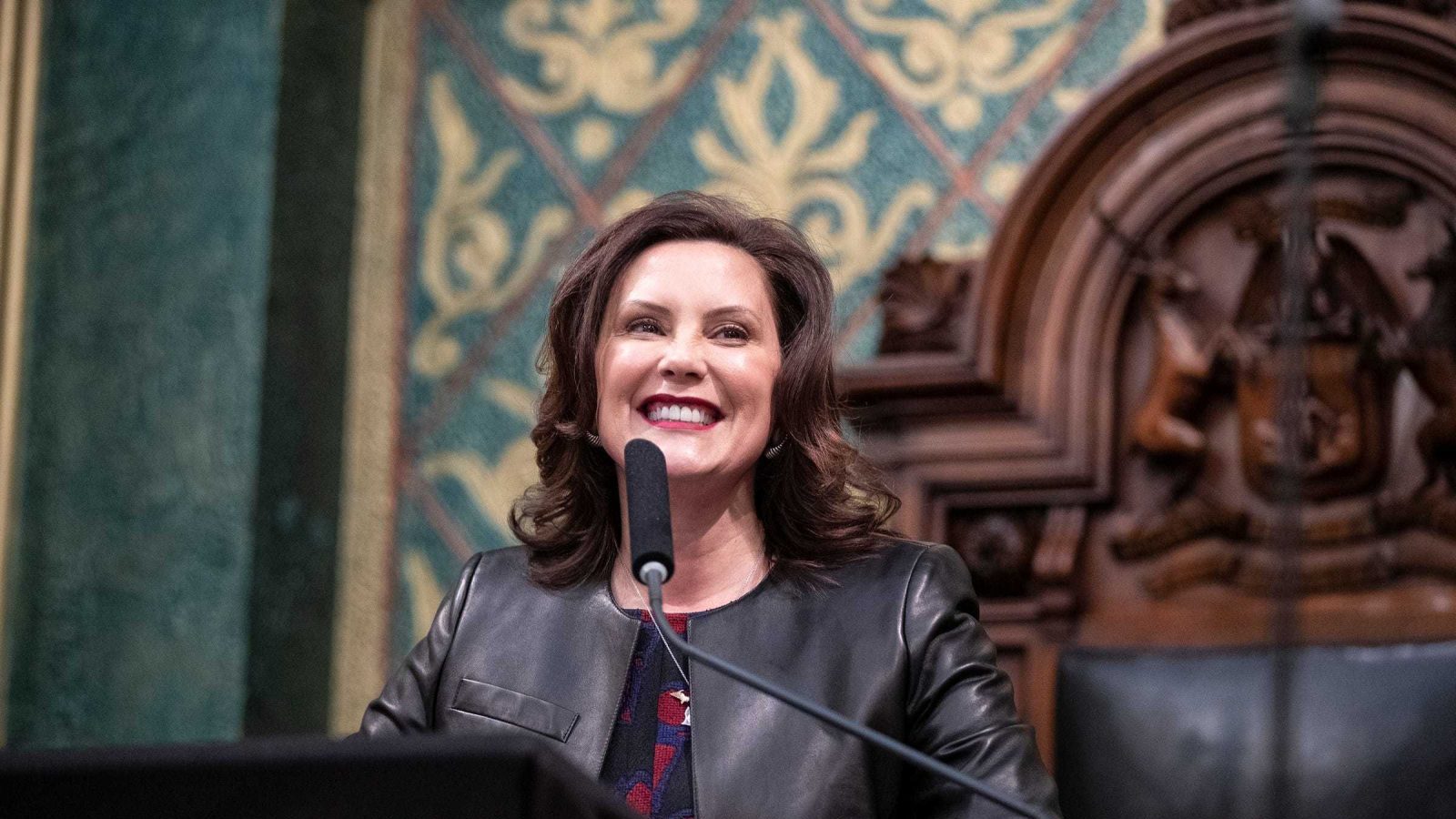
Michigan Gov. Gretchen Whitmer proposed Wednesday raising the state’s top online casino tax rate eight percentage points to 36% as part of her Fiscal Year 2027 budget.
Michigan online operators currently pay monthly progressive rates ranging from 20% to 28% based on adjusted gross revenue (AGR) figures. The first $4 million AGR is taxed at a 20% rate before increases of two percentage points at $8 million, $10 million, and $12 million. Licensees then pay the maximum 28% rate on all winnings above $12 million.
Whitmer’s threshold for the new 36% ceiling rate is $185 million AGR. The FY27 General Briefing Papers point out that percentage is still notably lower than the 54% levy Pennsylvania collects on slots, which is the primary iGaming revenue driver.
It also noted Pennslvania generated 10% less revenue than Michigan, but operators there remitted roughly 50% more. The other member of the “Big 3” when it comes to U.S. internet casino gaming, New Jersey, raised its tax rate from 15% to 19.75% last year.
Whitmer’s budget also proposes a much-derided per-wager surcharge for mobile sports betting with identical rates and thresholds to the one enacted in Illinois that became the first of its kind in the post-PASPA era. Operators would pay a 25-cent surcharge for each of the first 20 million wagers and 50 cents for any accepted bets after 20 million.
A higher ceiling tax and no more deductions
Almost every Michigan iGaming operator will no longer be able to deduct promotional credits from their gross revenue in 2027, which for most would be entering year six of operations. Those original licensees can deduct up to 4% this year, which is down from 6% in 2025 and 10% following launch in 2021 through 2024.
The General Briefing Papers pointed out only three operators — FanDuel, BetMGM, and DraftKings — met thresholds last year for the highest 28% rate to apply when revenue exceeds $12 million AGR. Some second-tier operators, most notably BetRivers, began crossing that threshold regularly in 2025.
Using last year’s gross revenue figures and the new $185 million AGR threshold, BetRivers ($212.1 million AGR) would have been subject to the higher rate, while Caesars Palace Online would have been just short at $182.1 million. Hard Rock Bet would likely remit at the higher rate after debuting with $33.6 million AGR in December. Overall, the state estimates the new levy would generate $192.8 million.
Lessons ignored?
Whitmer’s ask for a per wager surcharge, which is estimated to generate $38.8 million in receipts, is a curious one given the fierce blowback and downturn in year-over-year wagering volume in nearby Illinois. Sportsbooks there reported their largest monthly downturn in volume since enactment at nearly 25% in December after declines of 15%-plus in September, October, and November.
At the same time, the $62.2 million in revenue generated and paid primarily by FanDuel and DraftKings — a scenario likely to play out in Michigan as they are the top two digital sportsbooks — has already surpassed the $40 million estimated in the Illinois budget.
Additionally, the request comes after 2025 sports betting handle in the Wolverine State was flat compared to 2024; the $5.54 billion worth of accepted wagers was up only 0.6%. In contrast, Illinois still had year-over-year handle growth of 11.6% to $15.65 billion despite the downturn in wagering action.
Michigan operators, though, only pay 8.4% in state taxes on AGR, which is among the lowest in the country. The revenue estimate for the per-wager surcharge is notably larger than the $27.6 million all sportsbooks remitted in 2025 and more than the $37.1 million in receipts for the state and city of Detroit combined.