How A Supreme Court Case About Finance Accidentally Killed Casino-Game Patents
I came up with a pretty cool blackjack variation and was all ready to patent and sell it, but the US Supreme Court had other plans

5 min
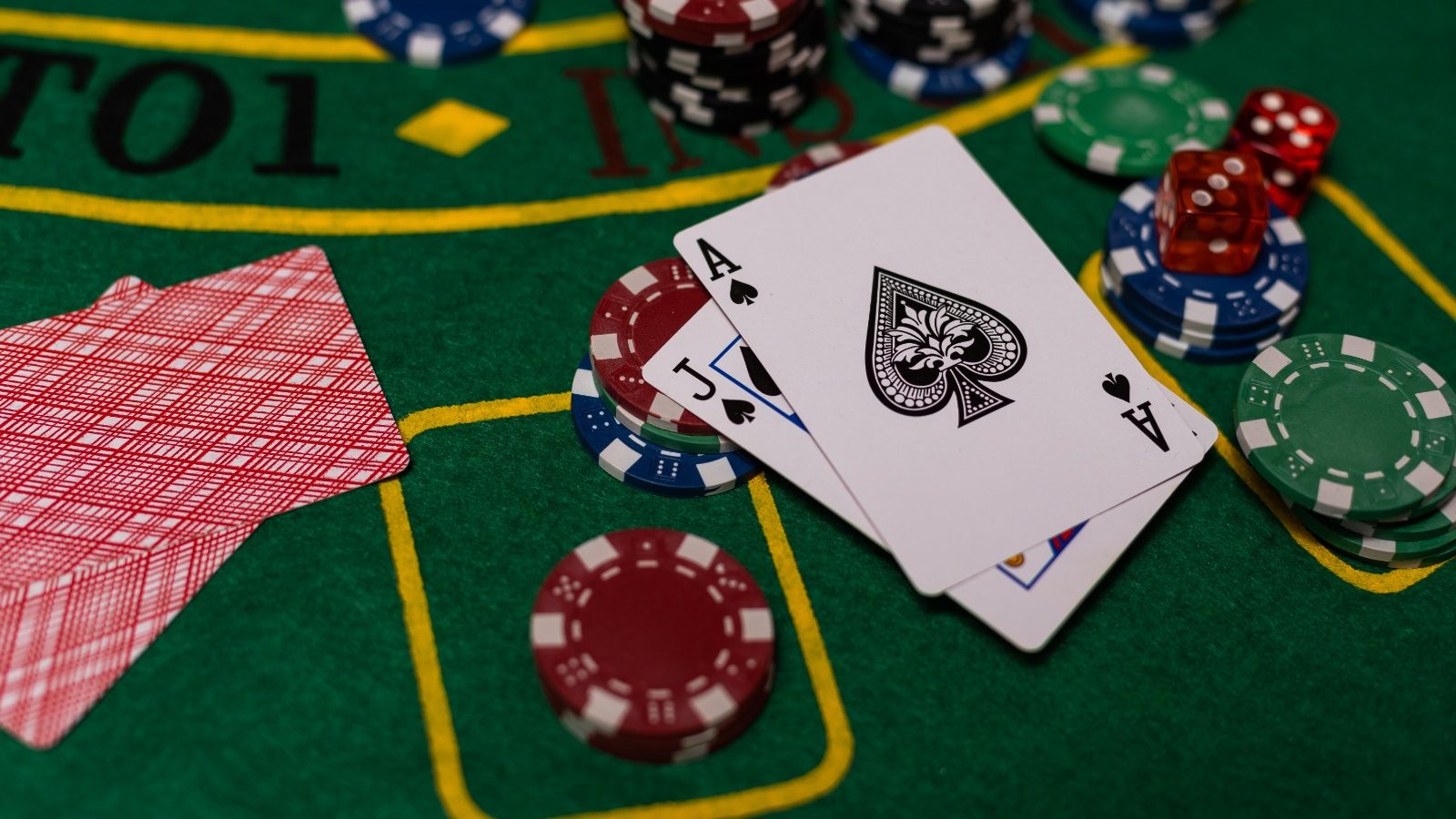
I had an idea for a blackjack variant. More like a side bet, I guess, but the idea was there. I just needed to test it, mathematically, run some statistics and probabilities and the like.
Unfortunately, I know less than nothing when it comes to advanced math. I took a probability and statistics class as a senior in high school, was hopelessly lost, got into college, and asked what would happen if I failed this class (I didn’t need it, but the school wouldn’t let me drop it, because it was first period or something). The college said it didn’t matter, and as a result …
… I put Aerosmith song titles as answers to math questions on my tests. Depending on the curve, I got an 18 or a 6 or somewhere in there.
As it turns out, “Mama Kin” isn’t going to be much help in figuring out the math behind my blackjack idea, “Lord of the Thighs” probably less so.
Luckily for me, I know how to bash my fingers into a keyboard and use AI, and wouldn’t you know it: Not only was my idea mathematically sound, it was also elegant. It would add a split second to the game, gives the house an 8% or 4.5% advantage, depending on the player’s choice, and it gives the player a 2/1 or 3/2 shot at winning more money. The variant is exciting, would create actual oohs and ahhs on the casino floor, and was clearly going to make me a very wealthy man once I patented my idea.
Sweet emotion, indeed.
But it turns out the United States Supreme Court had other plans.
I called Rich Goldstein, patent attorney, author of the American Bar Association’s Consumer Guide to Obtaining a Patent, founder of Goldstein Intellectual Property, and host of the podcast Innovations & Breakthroughs. If anyone could help me figure out how to protect my little brainchild, it was Rich. (Full disclosure: ChatGPT sent me his way. The robots are useful.) What I got instead was a crash course in how the American patent system accidentally crushed an entire category of innovation and why your favorite new table game might not exist yet.
Centuries of patent law — poof
For most of the 200-plus-year history of the U.S. Patent Office, games were patentable. Board games, card games, you name it. The method of play, the rules, the process, all of it qualified as patentable subject matter under Section 101 of the patent law. Think of it this way: When you pass Go and collect $200, that’s a patentable process. Goldstein has been doing this for over three decades and he’s filed plenty of game patents over the years.
Then came Alice Corp. v. CLS Bank International in 2014.
The case had nothing to do with casinos or card games. It involved a computer-based system for settling financial transactions — basically, using a middleman to make sure both sides of a deal hold up their end. The Supreme Court unanimously ruled that the patent was invalid, because it was nothing more than an “abstract idea” slapped onto a computer. Under Section 101, abstract ideas aren’t patentable and never have been.
Fair enough. But the fallout was catastrophic and not just for fintech.
“The major casualty of that was software of all kinds,” Goldstein told me. “Literally for at least the next several years, nearly every software application that was submitted to the U.S. Patent Office was rejected for this Alice abstract-idea proposition.”
And guess what: Card games and casino game variants got swept up in the wreckage. In 2016, the U.S. Court of Appeals for the Federal Circuit made it official in a case called In re Smith. That case involved a variant called Pacific Rim Blackjack. The court ruled that the rules for a card game are essentially a method of exchanging financial obligations based on card probabilities, which is exactly the kind of abstract idea the Supreme Court said was unpatentable in Alice.
Game over. Literally.
“Attempts after that, people trying to patent a variation on a card game, would be labeled by the patent office as an abstract idea with no patentable subject matter,” Goldstein said. “And they would get what’s called a ‘101 rejection.’”
It’s simple: Just invent a new deck of cards
It’s not that all games are dead at the patent office. If your game has some unique physical structure, like a novel apparatus, a special spinner, a trapdoor mechanism, some piece of hardware that goes beyond what’s printed on a board or dealt from a deck, you might have a shot. That’s because you’re no longer talking about a “process.” You’re talking about a machine or a composition of matter, different categories of patentable subject matter, Goldstein explained.
But a new set of rules played with a standard 52-card deck? The court in In re Smith was pretty clear: Shuffling and dealing cards are “conventional, traditional practices.” A new rule layered on top of old cards doesn’t cut it. (Two years later, the Federal Circuit reached the same conclusion about a dice game in In re Guldenaar, just to drive the point home.)
The court did leave one door cracked open, suggesting that a game involving a “new or original deck of cards” — some kind of novel physical composition of the deck — might survive the patent test. But no one’s tested that.
Kiss innovation goodbye
This is where the story gets bigger than my little side bet (which I’m telling you, is awesome).
“The whole point of the patent system is to encourage people to not keep it in their locked drawer, but to tell people about what they have in exchange for protection,” Goldstein said. “Now, when protection doesn’t seem likely, there isn’t an incentive for people to file patent applications.”
Think about what this means for casino gaming. Independent game inventors have no way to protect their creations. If you come up with a brilliant new poker variant and show it to a casino operator, what’s stopping them from just taking it? Without a patent, the answer is basically nothing.
So most new game ideas that we’ve seen lately have come from in house, Goldstein said. The casino companies develop them internally, launch them, and hope competitors are slow to copy. And who knows how many great ideas are sitting in someone’s head because there’s no upside to sharing them?
“It definitely creates caution for those releasing innovations,” Goldstein said.
Hope on the horizon
There may be light at the end of this tunnel. When John Squires took over as director of the U.S. Patent and Trademark Office in September 2025, he immediately started pushing back on the overuse of 101 rejections. Within days of taking office, he vacated a patent board decision that had rejected an AI-related invention, calling the exclusion of emerging technologies “troubling” and a threat to America’s technological leadership.
While Squires’ focus has been on AI and software, the broader signal is clear: The patent office is moving away from blanket 101 rejections that have plagued innovators across multiple fields, including gambling, for the past decade.
“It seems that the tide might be turning,” Goldstein told me. If you file a patent application now, he said, “When it gets reviewed, let’s say a year from now, it could have a totally different outcome.”
So what about people like me, sitting on ideas with no clear path to protection? Goldstein offered a few options. You can file a patent application now to stake your claim. If the legal landscape shifts, you’re first in line. You can focus on branding, like trademarking the name of your game, and build recognition around it. A competitor might copy your rules, but they can’t steal your brand.
Or, as Goldstein said, you can just keep it to yourself for the time being.
So I’m still sitting on my idea. And for now, it’s staying right where it is. I won’t be retiring yet.
I’m cryin’.