Florida Gambling Bills Advance, But Vets’ Slot Machine Pushback Threatens Final Passage
Five bills addressing multiple facets of gambling consumed by charitable slots debate, concerns

6 min
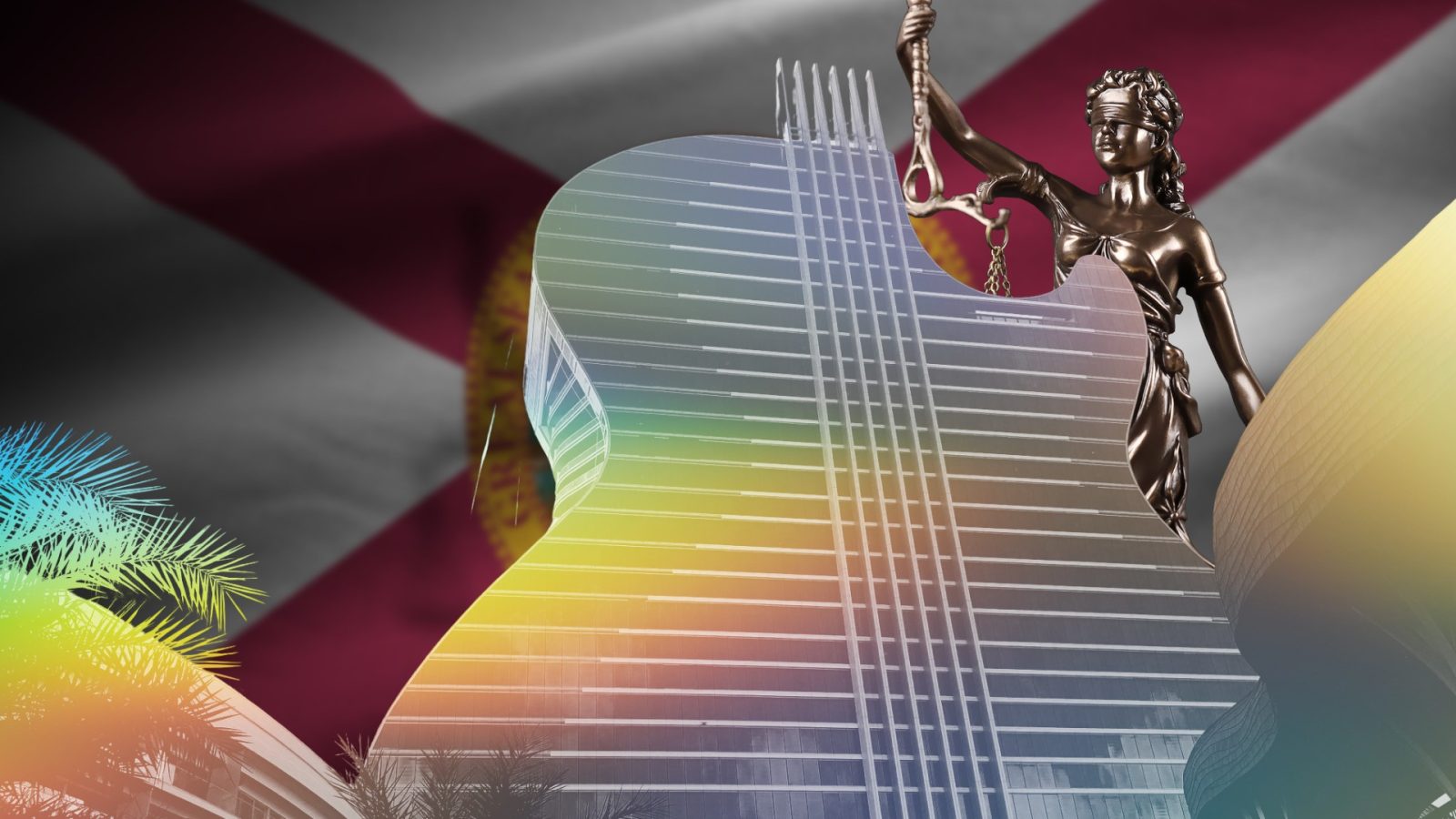
Three gambling regulation bills continue to move through the Florida Senate and two through the state’s House of Representatives, and most of them involve some niche aspect of regulation in a state where the Seminole Tribe of Florida — through a compact ratified in 2021 — holds a virtual monopoly on gambling with its Hard Rock brand.
HB 189, however, touches upon nearly every aspect of legal wagering.
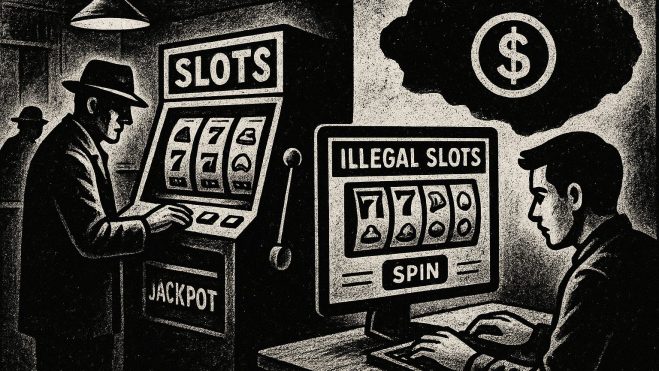
But one particular facet of it — policing the widespread use of illegal slot machines in casino-style arcades and philanthropic organizations — is most likely to derail it as it awaits a second reading in the House after passing successfully out of three committees, an expert in Florida gambling politics and law told Casino Reports.
“There are definite efforts to weaken the laws as it relates to gray markets, and it really stems from the VFW halls and their seeking clarification for the slot machines that they have,” said Marc W. Dunbar, a partner at Jones Walker in the government relations practice group and head of the firm’s Tallahassee office.
Gov. Ron DeSantis and the Attorney General’s Office, Dunbar added, have not offered “leadership” on meshing the multitude of gambling bills into the strong and enforceable type of action the Florida Gaming Control Commission (FGCC) wants, because of a tangle of competing interests.
Key in HB 189 would be instituting a process that would allow those operating slot machines to verify that they are legal. The vast majority of those would not pass, Dunbar said, which is why organizations like the VFW and American Legion are loath to undertake the process. While the penalty for continuing to offer these games would increase to a third-degree felony, headwinds remain strong.
Among those headwinds is Bill Helmich, an ex-Marine who lobbies on behalf of the VFW and is currently the interim executive director of the Florida Republican Party. Republicans hold the Florida House, Senate, and governorship.
Compromise possible in slots stalemate
h0189e.COM_Dunbar lists the Seminole Tribe among his legal clients, but he says he does not speak on the tribe’s behalf. He believes an amenable result is possible, though.
“The VFW halls have a strong lobby and they’re well-positioned,” he said. “I understand their arguments, but it doesn’t change the fact that the Seminole Tribe is paying [nearly] a billion dollars a year for exclusivity on slot machine gaming in the state of Florida, as well as other things. And so you can’t say, ‘OK, well, we’ll just give all the VFW halls the slot machines they’re looking for,’ because the tribe is not going to accept that. The problem is, while it may be a constituency that certain members of the legislature have a soft heart for, and they may have very valid arguments as to the way they use their money and all that other kind of stuff, it doesn’t change the fact that the compact says what the compact says.”
VFWs and their elected supporters stress the charitable funds donated to local communities that can be traced to these machines. Those donations could be matched, if not improved upon, Dunbar said, while adhering to current state law. He suggests a direct appropriation from the roughly $700 million yearly Seminole Tribe revenue share for gambling exclusivity that charitable organizations can use for philanthropy, in exchange for surrendering their slot machines.
“You probably could double the money you give to the VFW halls,” Dunbar said. “And you can do all of these wonderful community things. And all of the outward arguments are solved. The Seminole Tribe exclusivity is protected. The VFW halls, the good works that they do in their community, those are actually strengthened because you’re probably giving them even more money than they’re getting now.”
HB 189 covers many topics, faces tough route
Introduced by Rep. Dana Trabulsy, HB 189 would impact multiple areas of gambling regulation in Florida, including hot-button issues such as hardening penalties for involvement in sports betting corruption.
Other provisions in HB 189:
- Defining “internet gambling” as playing or engaging “in any game in which money or other thing of value is awarded based on chance, regardless of any application of skill, that is available on the Internet and accessible on a mobile device, computer terminal, or other similar access device and simulates casino-style gaming, including, but not limited to, slot machines, video poker, and table games.” This would seemingly apply to both offshore websites and sweepstakes casinos.
- Expanding criminal penalties for illegal gambling to a third-degree felony
- Strengthening oversight and ethics requirements applicable to the FGCC
- Tightening licensing and ownership disclosure standards
- Revising a previous version of the bill to allow local municipalities to enact their own gambling laws
- Legalizing fantasy sports contests
- Prohibiting FGCC members from accepting certain gambling-related jobs within a given timeframe
- Removing ownership interest thresholds for changes of ownership in pari-mutuel permits
Robert Jarvis, a law professor at Nova Southeastern University, said with just 16 days remaining in the legislative session, and Florida lawmakers’ historic inability to pass multi-faceted gambling bills, HB 189 likely “fails because of its own weight.”
Senate gambling bill meets same resistance
2026s01580.pre_.aeg_A Senate bill, CS/SB 1580, which includes many of the same provisions as HB 189, passed favorably out of the Senate Appropriations Committee on Agriculture, Environment, and General Government on Wednesday. But there, too, the entire debate centered around slot machines and the impact on VFWs and American Legions.
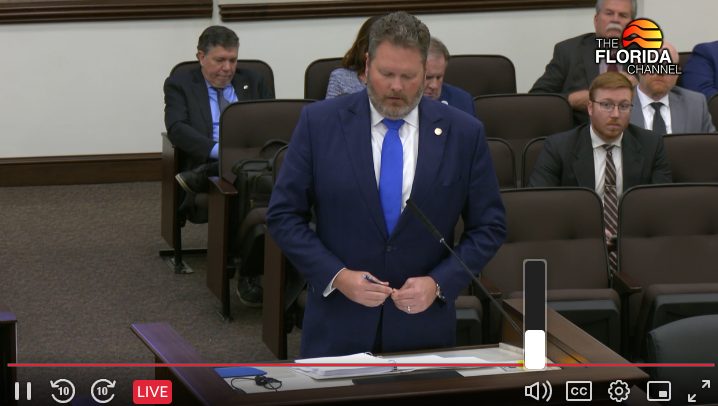
The testimony of two VFW members and Jonathan Zachem, representing the Amusement Machine Association of Florida, prompted Sen. Lori Berman to ask bill sponsor Sen. Jonathan Martin if there was room for compromise regarding the VFW situation.
Martin noted that language involving charitable halls scuttled a similar bill in the Senate two years ago, but assured the committee that “no one’s going to jail unless they’re an actual criminal, not a VFW.”
“[The bill provides] the ability for somebody who’s engaged potentially in a crime to walk down to law enforcement, the gaming commission, and say, ‘Tell me if I’m committing a crime,’” Martin explained. “And then if you believe I’m committing a crime, I’m not going to be in trouble as long as I get rid of this illegal device. Imagine a drug dealer walking down to the police department and saying, ‘Hey, is this cocaine that I plan on selling? If it is, don’t arrest me. It’s yours.’
“Frankly, it doesn’t exist anywhere else in law. But we put that compromise in there because we, as a body, didn’t want to go after veterans. That’s not the goal of this.”
Florida awash in gambling enterprises
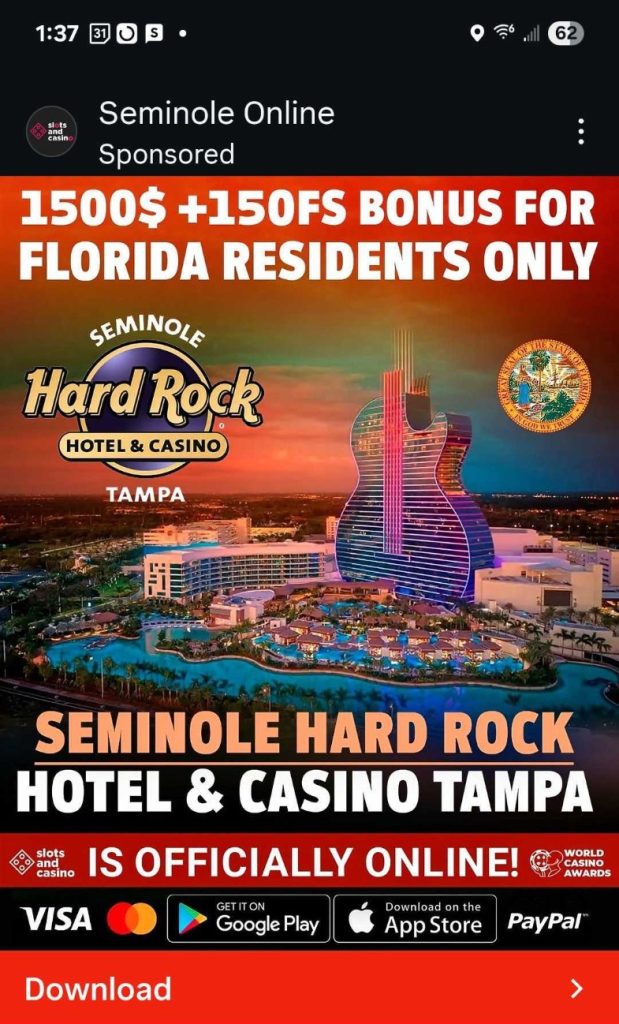
A Seminole Tribe spokesperson told InGame that the Seminoles do not comment on pending legislation. The tribe has also deflected questions about its protection of not only its monopoly, but its intellectual property in a state where social media users are bombarded with advertisements for offshore websites masquerading as legal Hard Rock online casinos. Online casino is not legal in Floirda.
The Seminoles have vigorously defended the rights spelled out in their compact previously, in 2019 shutting off revenue share payments to the state totaling upward of $330 million yearly because Florida regulators failed to shut down designated-player card games at pari-mutuel outlets deemed in violation to that compact. While the tribe has been quiet about this and the other incursions in the state, Trabulsy noted recently while testifying before the Commerce Committee that the presence of illegal slot machines represented an unfair business landscape.
“The Seminole Tribe paid the state of Florida, over the course of five years, $2.5 billion,” she said in that Commerce Committee hearing. “And when we have illegal activity happening where taxes are not being paid to the state, it’s just an unfair playing field, and it’s unintended.”
Huge gaps in enforcement despite high-profile busts
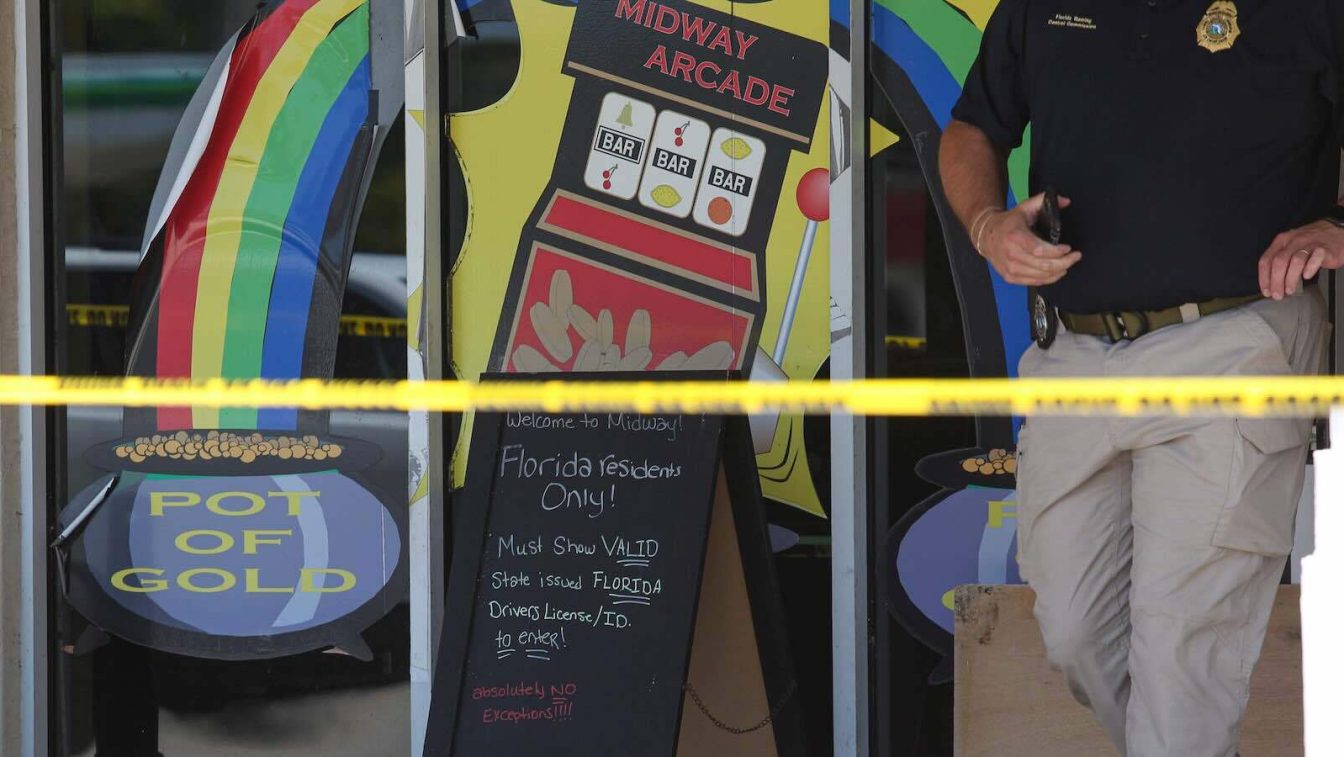
While the FGCC has touted raids of illegal slots operations in recent months, the arcades remain ubiquitous in the state.
Pick ‘em style daily fantasy sports games began leaving the state under regulatory pressure after Hard Rock International Chairman Jim Allen called them a form of illegal sports betting. But neither the state nor the Seminoles have publicly opined on prediction markets offering sports event contracts as a drain on Hard Rock’s sports betting enterprise.
Even DeSantis, who negotiated and shepherded the 2021 compact through the legislature, seems perplexed, telling CNBC last week: “In Florida, we kind of have a unique relationship with the Seminole Tribe of Florida. There was things done long before I was governor to give them exclusive rights over gaming. They also have the exclusive rights over sports betting. And so the question is: Is something like Kalshi, is that clashing with the laws of the state of Florida? Or is it separate? It’s more of a prediction [market]. So we’re kind of trying to get our mind around that.”
With numerous state legislators and regulators moving in the last year to make unregulated sweepstakes casinos illegal, national observers have seized upon one section of HB 189 as Florida’s move in that direction. The bill’s definition of “internet gambling,” cited above, would seemingly cover both illegal offshore websites and domestic sweepstakes casinos — but that language in HB 189 isn’t necessary, Dunbar said.
“The current law is capable of taking care of it,” Dunbar said. “We have language that if the gaming commission wanted to [it] could move against internet operations today. They just choose not to.”