Oklahoma Legislators Ban Sweeps By Overriding Governor's Veto
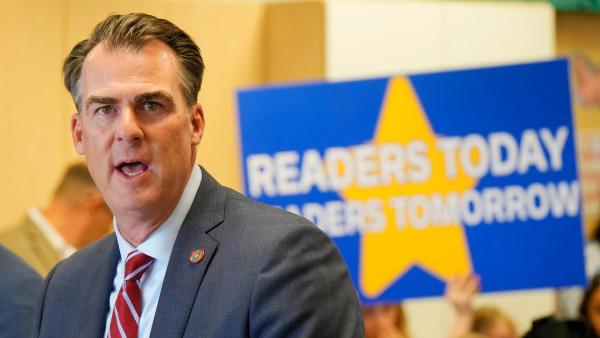
By an overwhelming margin, both the Oklahoma House and Senate voted to override Gov. Kevin Stitt's veto, thus banning sweeps casinos.

Sweepstakes-style casinos will be illegal in Oklahoma after the legislature overrode Gov. Kevin Stitt's veto.
Stitt this week signed a veto of Senate Bill 1589, written to outlaw dual-currency style casino games, after the state legislature overwhelmingly approved the measure. It had passed the House by a 65-21 vote and the Senate by a 48-0 margin.
Stitt’s rationale for his veto was posted to the state's website earlier this week.
“Oklahoma’s gaming laws must be clear, targeted, and fair. Senate Bill 1589 does not accomplish that end,” Stitt wrote. “This bill is so broad that it criminalizes everyday apps people use for fun. It also unnecessarily creates a new felony and extends criminal liability to businesses and service providers. That kind of vague and overbroad approach creates uncertainty for businesses operating in good faith and discourages innovation and investment in our state. Oklahoma can protect consumers without adopting criminal penalties that reach beyond the problem they are intended to solve.”
In rejecting his arguments, lawmakers voted 68-19 in the House and 34-10 in the Senate to override the veto.
The bill, which was carried by Sen. Bill Gollihare in the Senate and Reps. Kyle Hilbert and Scott Fetgatter in the House, now takes effect Nov. 1. It gives operators and their service providers roughly five months to exit the Oklahoma market.
Nuts and bolts
The bill itself is short but powerful. SB 1589 amends Oklahoma's existing gambling statute by adding definitions that pull dual-currency sweepstakes models squarely into the state's criminal gambling code. It defines "online casino games" as any gambling game accessed via internet-connected device that simulates slot machines, lotteries, bingo, or other prohibited games upon "risking any representative of value."
The bill defines "representative of value" to include "any and all currency used as part of a dual-currency system of payment that allows a person to exchange such currency for any prize, award, cash, or cash equivalent, or any chance to win any prize, award, cash, or cash equivalent.” That language clearly targets the sweeps operators.
The penalties extend well beyond the operators themselves. Under the amended statute, anyone acting as an "owner or employee, geolocation provider, gaming supplier, platform provider, promoter, or media affiliate" who deals in or provides support for such games is guilty of a Class C2 felony, punishable by a fine of $500 to $2,000 plus imprisonment.
That sweep across the supply chain is likely what Stitt was referring to when he argued the bill "extends criminal liability to businesses and service providers" and creates uncertainty for companies operating in good faith.

Jeff Edelstein is a longtime columnist, reporter, radio host, and fantasy sports aficionado, not necessarily in that order. He lives in New Jersey with his family.