Ruddock Report: The Record Scratch Arrives
Optimism for iGaming legalization abounded in January and February, but it’s now flaming out
4 min

Our monthly look at the online gambling landscape includes the current legal and regulatory scene, prospective online casino and online poker states, and significant trends to watch.
Early optimism has turned into pessimism, and we are barely three months into 2026.
The year kicked off with Maine Gov. Janet Mills’ surprise decision to allow the state’s 2025 online casino bill to pass into law, followed by the introduction of several more bills in other states, and then we got a second surprise when the Virginia House and Senate passed iCasino bills.
And then the record scratch happened.
The bills outside of Virginia have run into the usual legislative roadblocks, and while Virginia is heading to conference committee to try to work out the differences between the House and Senate bills, the overall mood has soured.
Let’s start with Virginia
The Virginia House and Senate have both passed similar, but not identical, online casino bills. The two chambers have designated their representatives for a conference committee to work out the remaining differences before the legislative session ends this coming Saturday.
Here are the differences:
- HB 161 calls for 5% of funds to go to the Problem Gambling Treatment and Support Fund. SB 118 requires just 2%.
- HB 161 also calls for 6% to go to the new Internet Lottery Hold Harmless Fund. SB 118 has no such provision.
- SB 118 creates the Modern Public Education Fund and dedicates 95% of tax revenue to it.
There are two other ways the effort could go sideways:
- Gov. Abigail Spanberger hasn’t enthusiastically supported the effort.
- The current bills contain a reauthorization clause requiring both chambers to pass the bills next year.
Are prediction markets helping or hurting?
One of the big unanswered questions is what (if any) impact the rise of prediction markets will have on legalization efforts.
Legalization supporters are certainly pointing to prediction markets as a reason to legalize sports betting and online casinos, but, much like the black-market bogeyman, there is little evidence that argument is resonating with lawmakers.
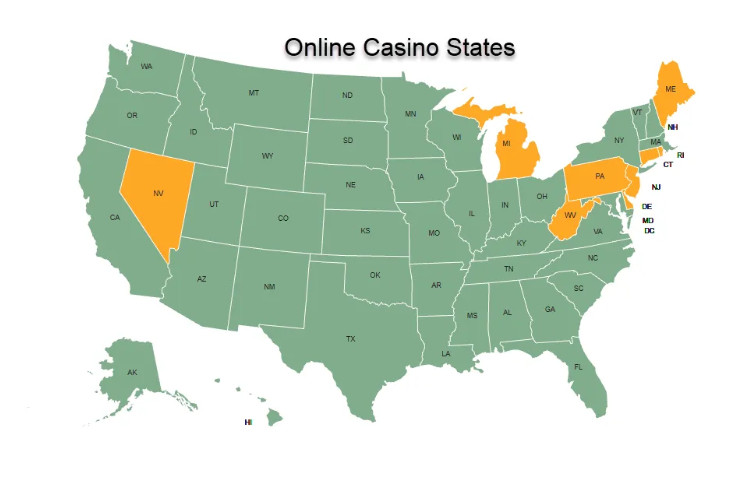
2025-2026 online casino bills
The Ruddock Report will revise this list as new bills are introduced.
Active bills
Hawaii
The bills have been widely reported to be effectively dead for the year, though the crossover deadline has not quite arrived yet — it’s this Thursday. Still, it appears these efforts to legalize iCasino have stalled out for the year.
Illinois
- HB 4797, sponsored by Rep. Edgar González, Jr.
- HB 4802 (poker-only), sponsored by Rep. Edgar González, Jr.
I’ve likened Illinois to the little engine that can’t, as there have been efforts to legalize online casinos in the state going back more than a decade.
There is certainly high-level support, as Gov. JB Pritzker called iCasinos an idea worth exploring last year. Pritzker’s 2026 budget says nothing about online gambling but does propose increasing taxes on existing casino table games.
More importantly, until the politically powerful VGT industry is on board, which is unlikely to happen anytime soon, legalization will remain out of reach. In January, the team at Citizens met with Accel Entertainment and was told by Accel management that “there is no shot” of iGaming legalization in the state.
And recall that the March 2025 hearing turned into an anti-legalization struggle session, when the crowd opposed to online gaming marched in small business owners to hammer home its point.
Rep. Edgar Gonzalez has filed two bills in 2026 — the first resembles last year’s effort, HB 3080, while the second is an online poker-only bill that has no text and simply reads, “Amends the Illinois Gambling Act. Adds a Section concerning online poker. Contains a Section heading only.”
Also working against Illinois is the ongoing effort to repeal the recently enacted city of Chicago tax on sports betting, and the authorization of VGTs in Chicago.
Maryland
State Sen. Ron Watson has introduced two separate bills, one to legalize online poker, and one that would legalize online casino games and bingo — SB 885 is paired with SB 761, which requires a statewide voter referendum in November 2026 for full implementation. The online poker bill is an interesting proposal that may be able to overcome the union and stakeholder opposition that has thwarted the state’s past online casino efforts.
A hearing is scheduled for this Wednesday at 1 p.m. in the Budget and Taxation Committee.
Massachusetts
- HB 4431, sponsored by Rep. David Muradian
Massachusetts held two committee hearings on online casinos in 2025, but a vote was never taken. A June 23 legislative hearing (on HB 332 and SB 235) was short and sweet, with testimony and no questions from the committee. No vote was taken at the November hearing in front of the Joint Committee on Economic Development and Emerging Technologies either, but lawmakers did ask questions, and most of the questions pointed to concerns about the existing harms of sports betting.
The upcoming launch of online lottery products will also make further expansion difficult, as Massachusetts Treasurer Deborah Goldberg said in December: “I, right now, am firmly against iGaming. They may not like me for that, but I gotta think about the people of Massachusetts, and that’s my top priority.”
New York
New York has frustrated online gambling supporters for more than a decade. Last year’s efforts barely got off the ground as the state was busy handing out downstate casino licenses. Now that the downstate casino licenses have been awarded, there is growing optimism that the legislature can now turn its attention to online, but there are still several hurdles to clear.
The major roadblock is the state’s labor unions and cannibalization concerns, and with three new casinos coming, that means thousands of new union jobs and three new land-based properties to voice concerns about online cannibalization. Nor are the three casino operators (Bally’s, Hard Rock, and Genting) online-focused companies.
And Gov. Kathy Hochul hasn’t shown any signs of supporting iCasinos.
Virginia
Virginia burst into the online casino conversation last year with two bills, SB 827, sponsored by Sen. Mamie Locke, and HB 2171, sponsored by Del. Marcus Simon. The existence of the bills wasn’t a surprise, but the attention they received certainly was. Still, stakeholder opposition and union concerns caused Locke and Simon to pull their respective bills in January.
Simon and Locke introduced new bills in January 2026, HB 161 and SB 118. The new bills include policies to address lottery and job concerns, as well as higher problem gambling funding. The bills have progressed to a conference committee (see analysis above).