Ruddock Report: Trifecta Of States Goes 0-For-3 In Online Casino Adoption
Virginia, Maryland, and Massachusetts weigh online expansion but ultimately turn thumbs down
5 min

Our monthly look at the online gambling landscape includes the current legal and regulatory scene, prospective online casino and online poker states, and significant trends to watch.
March was the proverbial kick in the stomach for supporters of online casino legalization, as three states were taken off the board: Virginia, Maryland, and Massachusetts.
Down goes Virginia
As reported last month, the Virginia House and Senate passed similar, but not identical, online casino bills earlier this session.
The House version, HB 161, called for 5% of funds to go to the Problem Gambling Treatment and Support Fund and 6% to the new Internet Lottery Hold Harmless Fund. The Senate version allocated just 2% to the Problem Gambling Treatment and Support Fund and did not contain a “Hold Harmless” fund, instead creating the Modern Public Education Fund with 95% of tax revenue dedicated to it.
Despite the differences being minor (in the grand scheme of things), a conference committee was unable to settle them, ending what would have been a fairy tale run for online casino advocates.
Of course, as noted last month, there were a lot of moving pieces behind the scenes that likely caused the legislature to push the bill off until 2027. Those included a lack of support from Gov. Abigail Spanberger and the legislature’s own get-out-of-jail-free card in the form of a reauthorization clause requiring both chambers to again pass the bills next year — a provision that signaled the legislature wasn’t fully on board with legalization.
Down goes Maryland
Maryland state Sen. Ron Watson has championed online casino legalization in each of the last three years, but like his previous efforts, 2026’s SB 885 proved to be a dud — Watson also introduced a poker-only bill, SB 884, but that was withdrawn on March 13.
A hearing on March 11 in the Budget and Taxation Committee highlighted the problem gambling and cannibalization concerns that derailed previous efforts, and the bill failed to pass the Senate before the March 23 crossover deadline. It is effectively dead for the year.
Down goes Massachusetts
A Massachusetts online casino bill sponsored by Rep. David Muradian is all but dead for the year after it was sent where Massachusetts bills go to die. In March, the Joint Committee on Economic Development and Emerging Technologies voted 11-0 to send H 4431 to study.
One paper-thin opening was put forth by Rep. Lindsey Sabadosa, who told local press earlier in March she would be surprised if the online casino bills pass on their own this session, but they could show up later as part of a bigger economic bill.
Muradian said he plans to refile the bill in 2027.
It’s possible, meanwhile, that Massachusetts will rein in its existing online gambling option pertaining to sports betting. Sen. John Keenan’s S 302 has passed committee and is now sitting in the Ways and Means Committee.
If passed in its current form, Keenan’s bill would upend the state’s sports betting industry with significant changes, intending to:
- Raise the tax on sports wagering from 20% to 51%.
- Prohibit in-play and proposition bets.
- Ban advertising during televised events.
- Prohibit daily wagers over $1,000 and monthly wagers over $10,000 without an affordability assessment (cannot exceed 15% of the person’s bank account balance).
- Prohibit operators, employees, affiliates, etc., from receiving compensation based on a percentage of wagers or deposits.
- Mandate annual submission of anonymized player data for research on addiction, harm minimization, and high-risk monitoring.
- Subject advertising of bonuses, parlays, odds boosts, reload bonuses, and risk-free wagers to consumer protection laws.
2025-2026 online casino bills
The Ruddock Report will revise this list as new bills are introduced.
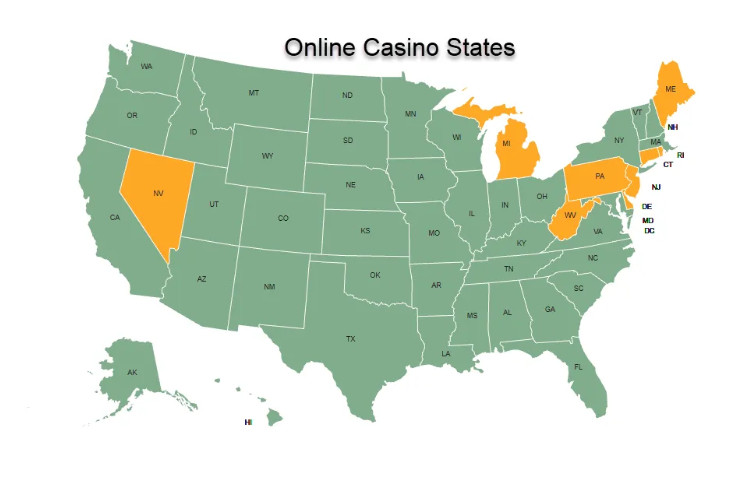
Active bills
Illinois
- HB 4797, sponsored by Rep. Edgar González Jr.
- HB 4802 (poker-only), sponsored by Rep. Edgar González Jr.
I’ve likened Illinois to the little engine that can’t, as there have been efforts to legalize online casinos in the state going back more than a decade.
There is certainly high-level support, as Gov. JB Pritzker called iCasinos an idea worth exploring last year. Pritzker’s 2026 budget says nothing about online gambling but does propose increasing taxes on existing casino table games.
More importantly, until the politically powerful VGT industry is on board, which is unlikely to happen anytime soon, legalization will remain out of reach. In January 2026, the team at Citizens met with Accel Entertainment, and Accel management stated that “there is no shot” of iGaming legalization in the state.
And recall that the March 13, 2025, hearing turned into an anti-legalization struggle session, when the anti-online crowd marched in small business owners to hammer home its point.
Rep. Edgar González Jr. has filed two bills in 2026. The first resembles last year’s effort, HB 3080. The second is an online poker-only bill that has no text and simply reads, “Amends the Illinois Gambling Act. Adds a Section concerning online poker. Contains a Section heading only.”
Also working against Illinois is the ongoing effort to repeal the recently enacted city of Chicago tax on sports betting and the authorization of VGTs in Chicago.
New York
New York has frustrated online gambling supporters for more than a decade. Last year’s efforts barely got off the ground as the state was busy handing out downstate casino licenses. Now that those licenses have been awarded, there is growing optimism that the legislature can turn its attention to online legalization, but there are still several hurdles to clear.
Opposition comes from the state’s labor unions and cannibalization concerns, and with three new casinos coming, that means thousands of new union jobs and three new land-based properties to voice concerns about online cannibalization. Also, none of the three casino operators (Bally’s, Hard Rock, and Genting) are online-focused companies.
And New York Gov. Hochul hasn’t given any sign of support for iCasinos.
Inactive bills
Hawaii
The bills did not meet the legislative deadline and are effectively dead for the year.
Maryland
Sen. Ron Watson has introduced two separate bills, one to legalize online poker, and one that would legalize online casino games and bingo. SB 885 is paired with SB 761, which requires a statewide voter referendum in November 2026 for full implementation.
A hearing on March 11 in the Budget and Taxation Committee resulted in no vote, as problem gambling and cannibalization concerns persist.
The bill failed to pass the Senate before the March 23 crossover deadline and is effectively dead for the year.
SB 884 was withdrawn by Watson on March 13.
Massachusetts
- HB 4431, sponsored by Rep. David Muradian
Massachusetts held two committee hearings on online casinos in 2025, but a vote was never taken. A June 23 legislative hearing (on HB 332 and SB 235) was short and sweet, with testimony and no questions from the committee. No vote was taken either at the November hearing in front of the Joint Committee on Economic Development and Emerging Technologies, but lawmakers did ask questions, mostly raising concern about existing harm from sports betting.
The upcoming launch of online lottery products will also make further expansion difficult, as Massachusetts Treasurer Deborah Goldberg said in December: “I, right now, am firmly against iGaming. They may not like me for that, but I gotta think about the people of Massachusetts, and that’s my top priority.”
Virginia
Virginia burst into the online casino conversation last year with two bills, SB 827, sponsored by Sen. Mamie Locke, and HB 2171, sponsored by Del. Marcus Simon. The existence of the bills wasn’t a surprise, but the attention they received certainly was. Still, stakeholder opposition and union concerns caused Locke and Simon to pull their respective bills.
Simon and Locke introduced new bills, HB 161 and SB 118, this January. The new bills include policies to address lottery and job concerns, as well as providing higher problem gambling funding.
The bills progressed to a conference committee, where no compromise could be reached to enable passage.