Slowly — And With Much Industry Silence — New Slot Tax Threshold Goes Into Effect
‘It’s a good step, a significant step,’ says Rep. Titus, though she’s not satisfied with the $2,000 limit

4 min
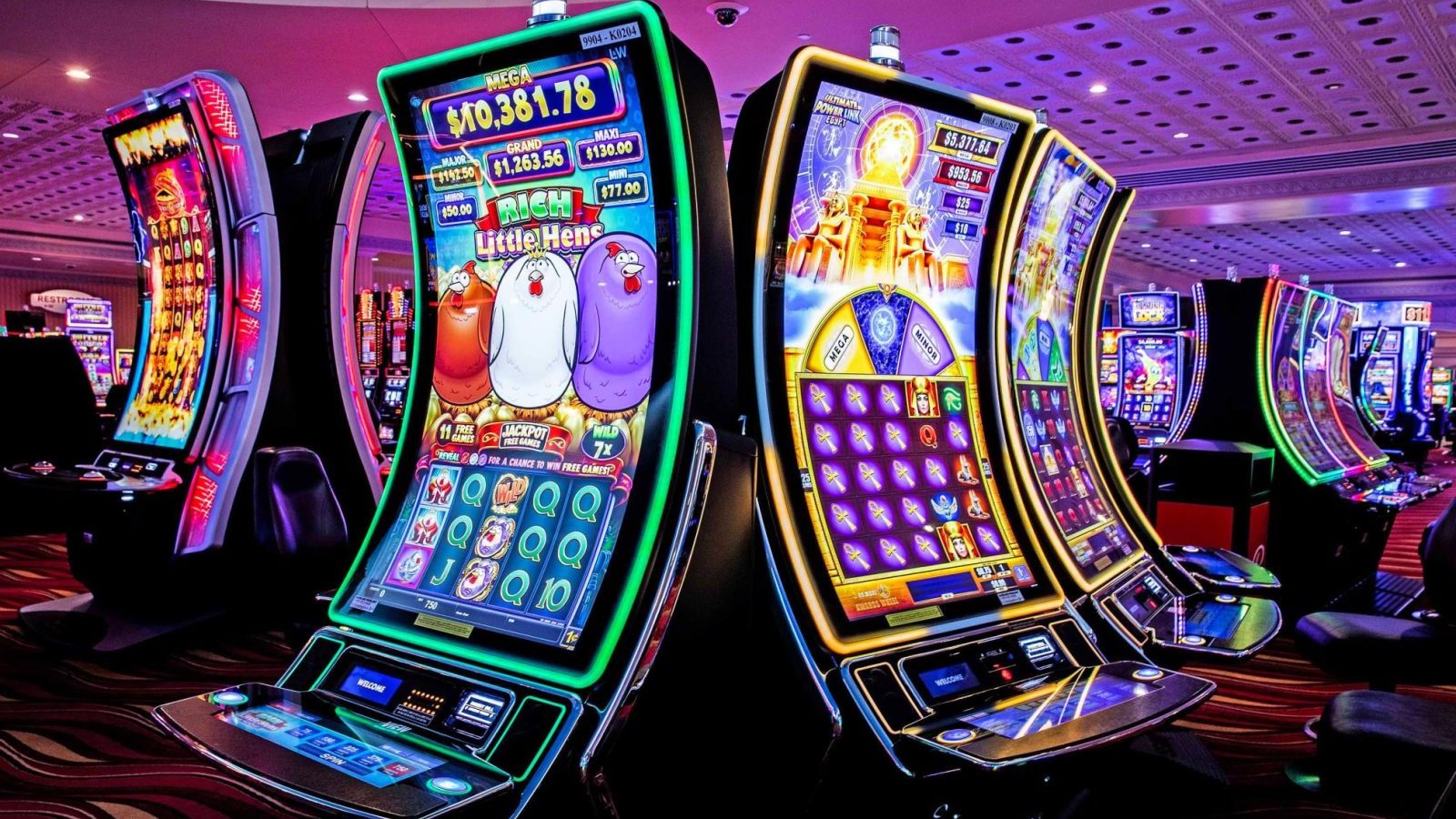
Tucked away in an obscure provision of the latest federal budget was a long-desired line item. The Internal Revenue Service, in a concession to inflation, adjusted the so-called “IRS lockdown” threshold.
Hitherto, when a slot machine hit a jackpot of $1,200 or greater, it froze up so that IRS paperwork could be filled out prior to payment. Now, that threshold has been reset to $2,000 per jackpot, indexed annually to inflation.
“Initially, if you looked at the Big Beautiful Bill provision, that’s 70433, it says that they’re amending a provision of the tax law, to change reporting requirements. It wasn’t clear whether that applied to slot machines or not,” Rep. Dina Titus, a Democrat representing Nevada, explained to Casino Reports. “It took a while for the industry to decide that it did,” further delaying implementation.
There have been few complaints about the change, which was regarded in the industry as long overdue — that $1,200 has been the magic number for 49 years, during which time inflation has not stood still.
However, since the tax provision was amended and went into effect Jan. 1, the industry wasn’t able to switch over quickly enough to palliate players.
The problem has been that each and every slot machine on the floor has to be recalibrated to take the new threshold into account. The casino can’t just flip a switch and make it so. Ergo, Las Vegas Advisor columnist Bob Dancer couldn’t find an inflation-adjusted machine until Jan. 17.
It took Wynn Resorts roughly two weeks into the new year to rejigger its slots, which has now been accomplished. Other casino companies didn’t want to talk about it. Station Casinos declined comment, while MGM Resorts International, Caesars Entertainment, and Boyd Gaming did not respond at all. Neither did one of the United States’ leading slot manufacturers, Light & Wonder, which answered a Casino Reports query with deafening silence.
“I mean, it sounded great on paper,” said Kevin Huddleston, partner at Finley & Cook, an accounting firm that consults with tribal casinos. “We should have fewer disruptions to the player play and less for the slot staff to deal with paying out those smaller jackpots.
“But when you get to thinking about it, the way those machines lock up varies some by vendor, and the vendors are still working to try to get those changes made in their systems so that the machines no longer lock up at $1,200.”
$2,000 is a nice start …
Plus, this period of adjustment will now be an annual event. “That might be the best part of the bill, the fact that it’s indexed to inflation,” Titus, a longtime advocate of higher jackpot thresholds, said.
“It’s been since ’77 that the $1,200 has been in effect and we don’t want to have to wait another 50 years before you change it again from $2,000,” she continued. “Having that indexed to inflation keeps that from happening. They’re not stuck at one figure. It’s flexible. As inflation increases, so does that limit.”
Even so, Titus is not accepting of the new status quo. “It’s a good step, a significant step,” she said. “But we have calculated what it should be to keep up with inflation and that should be $5,000, not $2,000.”
Barring a dramatic, new change in the tax code, it’s unlike to get that threshold to five dimes anytime soon. The annual changes will be incremental. But that doesn’t mean they won’t be a hassle, whether for players, casinos, or slot makers.
“It’s not going to be $2,000 except for 2026, the beginning of 2027,” Huddleston explained. “We should get notification that it’s indexed for inflation and went up three or four percent. So that has to be something that can be changed on the fly going forward.”
“You’re dancing with the devil and you’re dancing with the angels,” added casino consultant Steve Browne, who remembers when times were far worse. “They were locking up at $100, $200, $300 hand pays, well before a $1,200 jackpot.”
Mostly pros, but also some cons
Titus said her casino constituents are thrilled with the new rule — especially with its reduction in paperwork. “It’s good for the industry because now they don’t have to shut down the machine every time somebody hits $1,200. Those thousand-dollar jackpots are not that uncommon,” she reported. “That is a bonus, and they don’t have to do so much bookkeeping afterwards.”
“It’s going to save us money and it’s going to make it easier operationally on the floor,” Browne countered, “but it’s just another barrier to your employees and your customers getting together.”
Even so, Titus felt that casino customers were happier, at least in theory. “The players like it because they don’t like to have to shut down a machine they think is hot,” she said, showing a canny knowledge of player tendencies. “When they hit a jackpot they want to keep playing. So it’s a win-win for the player and the casino.
“They estimate there are about 60,000 slot machines in Las Vegas alone, so you see what a big impact this could have,” added the Nevada congresswoman. “We’ll continue to work with them [the IRS] to continue to increase it to $5,000 over time. But we’re glad at least that this has gone into effect.”
Not everywhere. Massachusetts has its own threshold of just $600, which is a sore spot with casino operators in the Bay State.
“Without raising the threshold in Massachusetts, players in the Commonwealth will face more disruptions and delays than if they were playing the same games in neighboring states,” warned executives from Encore Boston Harbor, MGM Springfield, and Plainridge Park Casino. “This creates a real threat that customers will opt to patronize nearby out-of-state facilities,” they complained to Speaker of the House Ronald Mariano in a Jan. 26 letter.
Also, Illinois has been blithely ignoring the $2,000 rule on payouts, as disgruntled players have been discovering. According to Las Vegas Advisor, responding to reader complaints from the Land of Lincoln, “The state continues to treat gambling winnings … as taxable income at its flat, 4.95 percent rate and maintains a lower threshold tied to the prior federal rules.”
Of course, Congress took with one hand from players what it gave with the other. Thanks to Sen. Mike Crapo, an Iowa Republican, only 90 percent of gambling losses are now tax-deductible. It’s a move that irks Titus and many players alike — but that is a fight for another day.