UK Trying To Crack Down On Offshore Sponsorship, US Should Be Watching Closely
For American regulators and leagues, the challenge lies in closing loopholes early

5 min
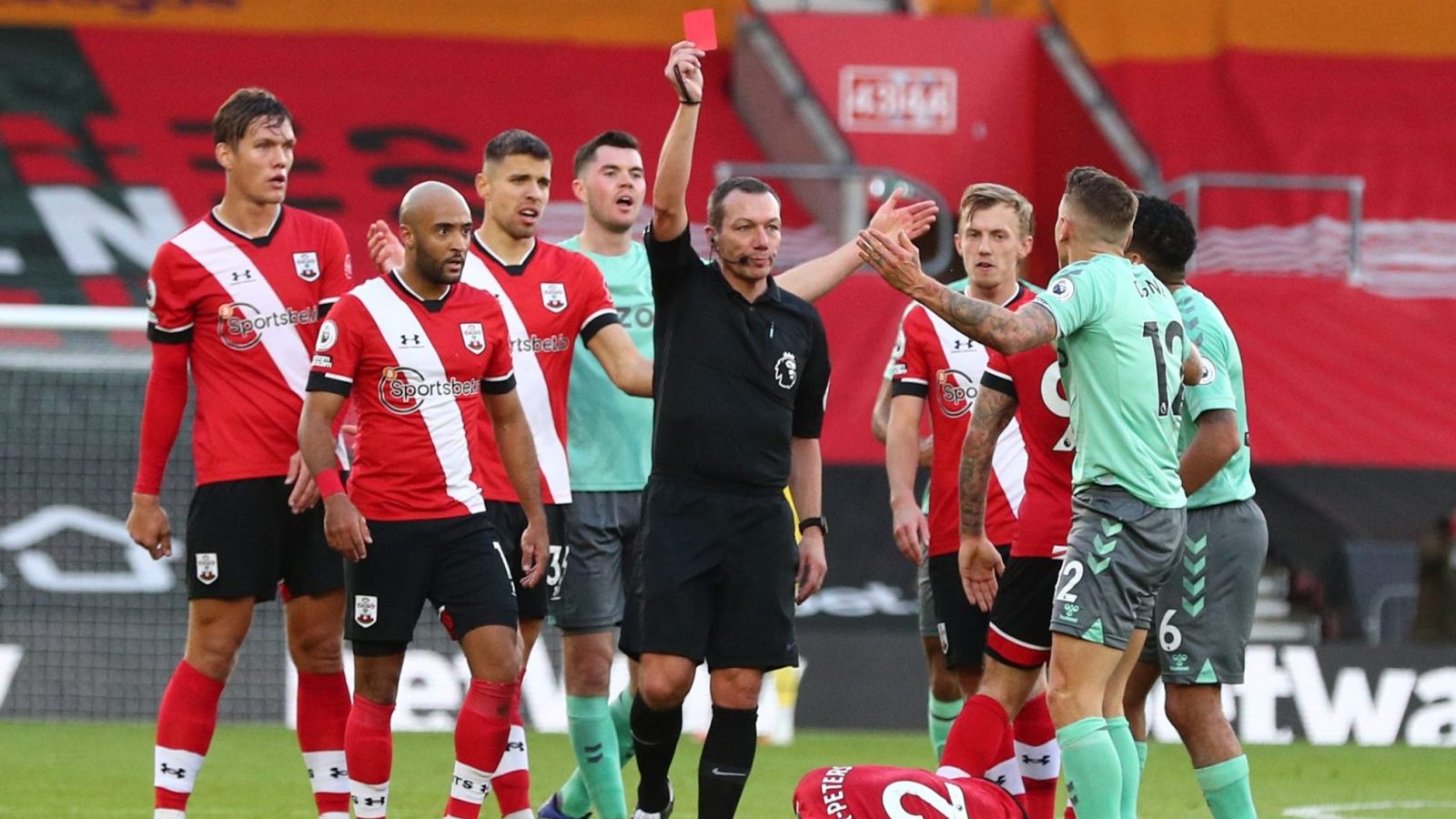
The U.K. government’s latest attempt to crack down on unlicensed gambling operators has exposed an uncomfortable truth at the heart of modern sport: Some of the most visible soccer teams in the world are being sponsored by companies that, in many cases, are not legally allowed to operate in the very markets where their branding is most prominent.
What began as a niche regulatory concern has quickly become a wider debate about loopholes, global betting markets, and the limits of enforcement in an increasingly digital gambling economy.
The immediate trigger is a growing number of sponsorship deals between Premier League clubs and suspiciously opaque betting brands. Newcastle United’s recent partnership with 8XBet has drawn scrutiny, not necessarily because of any proven wrongdoing, but because of how little is publicly known about the company. At the same time, other clubs have previously worked with brands linked to white-label arrangements, where a gambling operator effectively “borrows” a license from a separate, regulated entity in order to access certain markets. The U.K. government has now signaled its intention to close this gap, warning that unlicensed operators are using sports sponsorship as a backdoor into British and global audiences.
At the center of this issue is a structural quirk of the gambling industry. White-label deals have historically allowed smaller or offshore betting companies to operate under the umbrella of a licensed provider, giving them legitimacy without requiring full regulatory scrutiny. In practice, this has enabled a proliferation of brands — many of them targeting overseas markets — to appear on the shirts of English soccer teams. As Play the Game has reported, some of these operators form part of complex corporate networks, with links that extend into jurisdictions associated with weak oversight and, in some cases, alleged connections to activities such as money laundering and consumer scams. One investigator quoted in Play the Game’s report described the ecosystem as “hydra-like,” with new entities emerging as quickly as others are shut down.
There’s money to be made
For soccer clubs, the arrangement has been financially attractive. Gambling companies have long been among the most lucrative sponsors in the sport, particularly for teams in the top tier. The global reach of the Premier League makes it an ideal advertising vehicle, especially for operators targeting audiences in Asia, where betting demand is high but regulation varies significantly by country. A logo on a Premier League shirt does not just reach British fans; it is broadcast to millions across continents, offering instant brand recognition in markets where direct advertising may be restricted.
The U.K. government’s concern is that this system allows unlicensed operators to benefit from the credibility of English soccer while avoiding the consumer protections required of domestic firms. In its official communications, the government has warned that illegal gambling operators often lack safeguards such as identity verification, anti-money laundering checks, and responsible gambling tools. The risk, in the government’s view, is not only financial harm to consumers, but also the potential for organized crime to exploit these platforms.
Yet the proposed crackdown raises as many questions as it answers. Enforcement, in particular, is far from straightforward. Even if the U.K. were to ban clubs from partnering with unlicensed operators, the global nature of soccer broadcasting complicates matters.
A company targeting customers in Southeast Asia, for example, may have little direct interaction with U.K. consumers, even if its branding appears in Premier League matches. Policing such arrangements would require not only domestic regulation but also coordination across jurisdictions, something that has historically proven difficult in the online gambling sector.
There is also the question of whether the industry will simply adapt. Professor Leighton Vaughan Williams suggests that changes to sponsorship rules are unlikely to eliminate gambling advertising altogether. Instead, he argues, the impact will be more subtle, “less about a straightforward loss of customers and more about a reallocation of marketing exposure.”
The front-of-shirt logo may be the most visible asset, but it is only one part of a broader commercial ecosystem. Gambling brands, Vaughan Williams says, are likely to remain present through sleeve sponsorships, training kits, and in-stadium advertising, even as scrutiny increases on operators outside the U.K. regulatory framework.
This idea of redistribution rather than removal is important. Soccer clubs are unlikely to walk away from gambling money entirely, particularly when alternative sponsors may not match the same financial terms. Instead, the market may shift toward more tightly regulated companies, or toward different forms of branding that achieve similar reach without triggering regulatory concerns. In that sense, the government’s intervention could reshape the landscape without fundamentally changing the relationship between sport and betting.
How does this translate to US?
For a U.S. audience, the relevance of this debate lies in its potential to foreshadow similar challenges. Since the legalization of sports betting across multiple states in 2018, American leagues have embraced partnerships with licensed operators at an unprecedented scale. The NFL, NBA, MLB, and NHL have all entered into agreements with sportsbooks, integrating betting content into broadcasts and digital platforms. While these partnerships are, for now, limited to regulated companies, the rapid growth of the market raises questions about how long that boundary can be maintained.
One emerging parallel is the rise of prediction markets such as Polymarket and Kalshi, which occupy a regulatory gray area distinct from traditional sportsbooks. While not identical to the white-label betting arrangements seen in the U.K., they illustrate how financial innovation can outpace regulatory frameworks. The fact that some leagues are already engaging with these platforms while others remain cautious suggests a familiar pattern: experimentation followed by scrutiny and, eventually, attempts at regulation.
The U.K.’s experience is a warning for the rest of the gambling world. Once a loophole is established — whether through white-label licensing or another mechanism — it can quickly become embedded in the commercial fabric of sport. Closing that loophole after the fact is significantly more difficult than preventing it in the first place. For U.S. regulators and leagues, the challenge will be to balance the commercial benefits of gambling partnerships with the need to maintain oversight and consumer protection.
There is also a broader cultural dimension to consider. Gambling advertising, particularly when tied to popular sports teams, carries an implicit endorsement that can shape consumer behavior. In the U.K., the visibility of betting brands on soccer shirts has long been a source of debate, especially given concerns about problem gambling. The presence of unlicensed operators amplifies these concerns, as it raises the possibility that consumers may be drawn toward platforms that lack basic safeguards.
At the same time, the global nature of modern sport complicates any attempt to draw clear boundaries. A Premier League club is not simply a British institution; it is a global brand with fans in dozens of countries. Sponsorship deals are negotiated with this international audience in mind, meaning that regulatory decisions in one jurisdiction can have ripple effects elsewhere. The U.K.’s crackdown, therefore, is not just a domestic policy shift, but a signal to the wider industry about the direction of travel.
Evolution, not eradication
Whether that signal will lead to meaningful change remains uncertain. As Vaughan Williams notes, the likely outcome is “a shift in visibility rather than a complete withdrawal.” Gambling companies will continue to seek out ways to align themselves with sports, and clubs will continue to weigh the financial incentives against reputational and regulatory risks. The dynamic between the two is unlikely to disappear; it will simply evolve.
In that sense, the controversy surrounding Newcastle United and 8XBet is less an isolated incident than a snapshot of a broader transition. The gambling industry is becoming more complex, more global, and more difficult to regulate, while sports remain one of its most effective marketing channels. Governments can attempt to tighten the rules, but the underlying incentives remain powerful on both sides.
For the United States, the lesson is clear. As sports betting continues to expand, the question is not just how to regulate what exists today, but how to anticipate what comes next. The U.K.’s struggle with unlicensed sponsors shows how quickly a regulatory gap can become a systemic issue. Avoiding a similar outcome will require vigilance, coordination, and a willingness to adapt as the market evolves.
Ultimately, the debate is not about whether gambling and sport should intersect. They already do, and will continue to do so. It is about how that intersection is managed, who benefits from it, and who bears the risks.
The U.K.’s crackdown is one attempt to answer those questions. Whether it succeeds may determine not only the future of soccer sponsorship, but also the shape of the global betting industry for years to come.