Warren Buffett On Legalized Gambling: ‘I Don’t Like Things That Make A Sucker Out Of People’
The retired billionaire said in a recent CNBC interview that state-taxed gaming "relieves the taxes on me or other rich people."

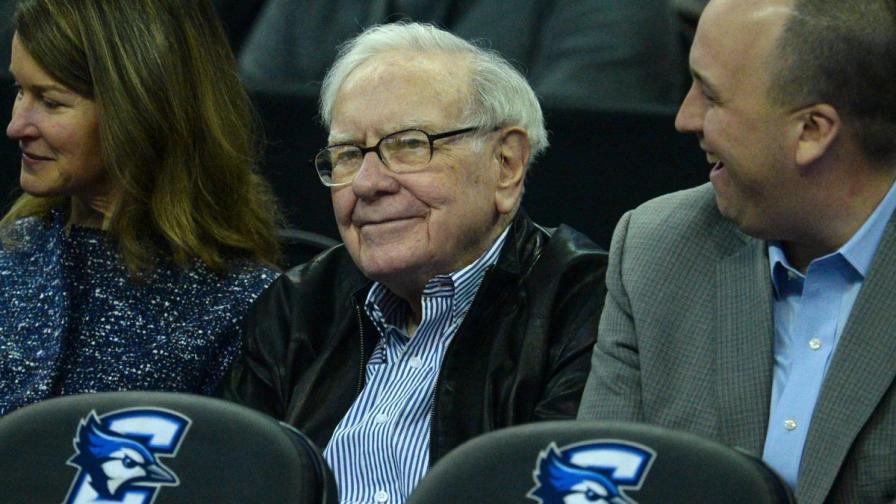
In his first sit-down interview since officially retiring as CEO of Berkshire Hathaway at the start of 2026, Warren Buffett, the 95-year-old investor and philanthropist who is estimated to have a net worth of about $140 billion, recently voiced to CNBC his stance on the spread of legalized gambling.
The short version of Buffett’s take: It’s bad for the common person and it indirectly benefits the rich.
And in a Sunday morning post on social media site X that gained significant traction, Aakash Gupta, host of The Growth Podcast, broke down the math and came to the same conclusion as Buffett.
“Nine US states have no state income tax,” Gupta wrote. “Seven of those nine run state lotteries. Seven of those nine have legalized sports betting. The states most committed to never taxing wealth are the same states running the largest extraction machines on people who cannot afford to lose. Read it as policy.”
During his CNBC interview that prompted Gupta’s post, Buffett noted that when he was a kid, gambling was only legal in one state, Nevada.
“But once people saw that was working, other places took it up,” Buffett said. “And of course, rich people love it, because they don’t have to pay — I mean, to the extent that the states raise money from people who, where the dollar really means something to them, actually relieves the taxes on me or other rich people. I mean, it’s not direct, but it’s the net effect.
“I don’t like things that make a sucker out of people. I particularly don’t like them when the government sponsors them. … I don’t think the function of the government is to play its people for suckers.”
Crunching numbers
Gupta dissected some of the numbers behind the opinion, with a particular focus on sports betting and lottery.
In 2025, Gupta wrote, gamblers bet $165 billion at legal U.S. sportsbooks and lost $16 billion. Tax rates vary, but every regulated betting state collected taxes on the sportsbook wins, with New York leading the way with more than $1.2 billion in tax revenue.
The lottery numbers Gupta singled out are, unsurprisingly, much larger and more lopsided.
“State lotteries generate over $90 billion a year,” Gupta wrote. “The bottom half of income earners account for roughly 70% of total spend. The average lottery player makes $38,000. A household earning $20,000 spends three times more on tickets than one earning $30,000. The implicit tax rate, meaning whatever the state keeps after prizes, runs 30 to 50% depending on the game. No other revenue source in America has that base and that rate.”
CNBC’s Becky Quirk noted to Buffett that her father used to say the lottery was a tax on the stupid, and the nonagenarian billionaire promptly agreed, “It’s a tax on stupidity.”
Neither Buffett nor Gupta directly addressed brick-and-mortar casinos or online casinos, though clearly the same principles carry over even if the numbers vary.
“The state needs revenue,” Gupta pointed out. “It can raise income tax on the top decile, or it can run a lottery plus a sports betting tax. The second option raises the money from the people who can least afford it. The first option becomes politically optional. New York's $1.2 billion in 2025 sports betting tax is $1.2 billion the state did not have to ask of someone earning $5 million.”
Responses to Gupta’s comments varied, but one common reaction was to shift the onus away from the state government legalizing gambling and toward the consumer who chooses to play games where the odds favor the house.

Eric has been a professional editor and writer for more than 25 years, including nearly 20 years of experience covering the gambling industry. He was editor-in-chief of the poker magazine All In from 2005-2015 and manag…