Know When To Walk Away: Former Poker Pros And The Black Friday Diaspora
From crypto to DFS and beyond, players scattered in different directions to reinvent themselves

12 min
To the average American, the words “Black Friday” evoke images of bargain hunters stampeding into stores to lock in big-ticket items at special holiday prices.
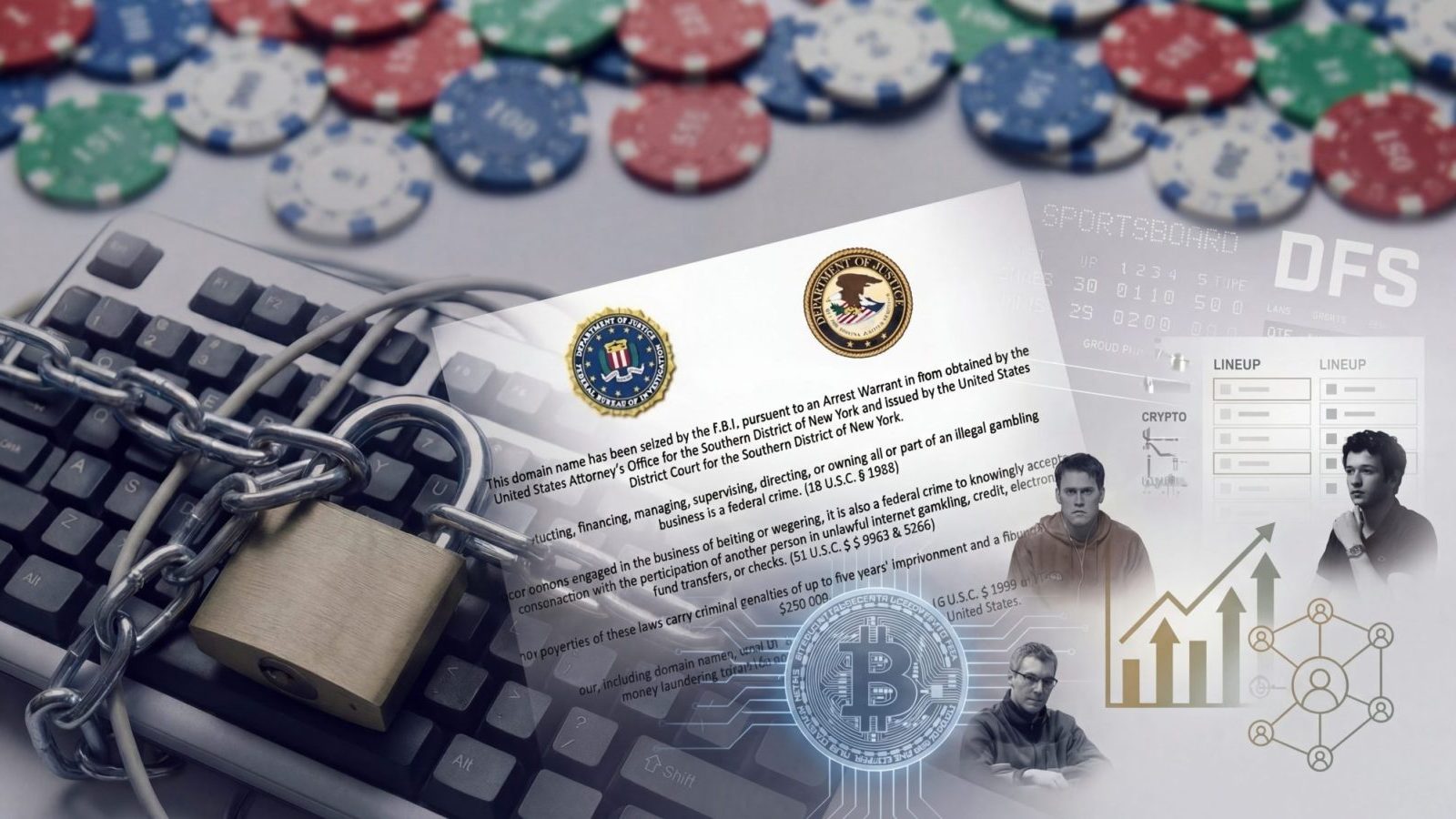
To online-poker-playing Americans, the words “Black Friday” mostly evoke a singular image, and it’s of a Department of Justice logo on their computer screen telling them the domain of their favorite site has been seized by the FBI.
If you were a recreational online poker player, April 15, 2011 was depressing. If you were a professional online poker player, April 15, 2011 was devastating. The DOJ effectively put a padlock over your office door.
Some 4½ years after the passage of the Unlawful Internet Gambling Enforcement Act (UIGEA) of 2006 — which was attached under cover of night to an unrelated, sure-to-pass port security bill and just like that made processing payments in connection with online gambling illegal in the U.S. — Black Friday delivered the knockout blow. On PokerStars, Full Tilt Poker, and Absolute Poker/UltimateBet, the biggest online poker sites still serving U.S.-based customers in 2011, players were greeted with those DOJ emblems instead of virtual tables, and funds on those sites were — at least temporarily — inaccessible.
It was online poker’s darkest day. But for some poker pros, it ultimately proved illuminating.
For all the existential grief and financial hardship Black Friday brought, it also served as a kick in the pants to convince some players to explore doing something else with their lives.
Here are the stories of three former poker pros, the soul-searching they did following Tax Day in 2011, and the new career paths they found as Black Friday pushed countless brilliant poker minds in alternative directions.
The entrepreneur and investor
There are a lot of ways your life can go wrong when you win over $1 million in a poker tournament at age 19.
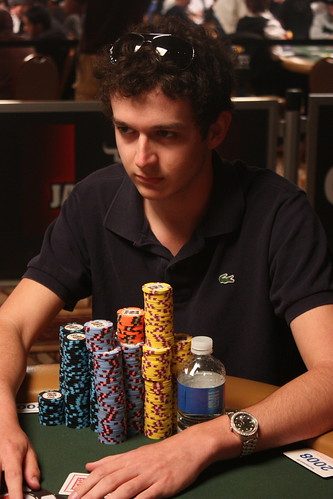
In March 2006, at the European Poker Tour’s Grand Final event in Monte Carlo (where the legal gambling age was 18), Jeff Williams, then a college kid at the University of Georgia, outdueled a field of veteran poker players from all over the world to win a pre-tax payday of $1,084,036. He finished college, but he says it was “not an academic triumph, by any means.” From that EPT win onward, in his mind, Williams was a poker pro.
He had his share of in-person World Series of Poker cashes after turning 21 — finishing second in a bracelet event in ’08 and third in another one in 2010 — but Williams was mostly an online pro. He’d play almost every type of game — sit & gos, the busy Sunday multi-table tournament grind, heads-up Omaha cash games, you name it. And he played on all the sites: Full Tilt Poker, PokerStars, UltimateBet, even some of the lower-profile digital cardrooms like Cake Poker.
On April 15, 2011, as best he can recall, there was a Friday 1 p.m. $100 tourney on ’Stars that he typically played, so Williams logged in just like he would any other day.
“I saw the [DOJ] logo,” he recalls. “It was a very jarring moment, no doubt.”
As Williams struggled to process his new reality, one immediate concern was the money he had tied up on the sites. PokerStars “paid right away,” he notes. But Full Tilt, famously, did not — player funds had not been segregated on the site, leading to terms like “Ponzi scheme” getting thrown around. It was substantial money for Williams: “We were under seven figures,” he says, “but we were deep into six.”
He recalls that at one point Full Tilt money was trading at about 12 cents on the dollar, but Williams held out. It wasn’t until 2014, after PokerStars’ parent company bought Full Tilt, that players started getting paid. Eventually, everyone was made whole.
In the meantime, immediately after Black Friday, quite a few of Williams’ poker pro friends left the country. Vancouver, Canada, and Playa del Carmen, Mexico, were two particularly popular spots. But Williams’ family was in Atlanta, as was his girlfriend (who would later become his wife) and her whole family. So Williams, 25 years old when Black Friday hit, stayed put.
One logical option — becoming a live poker pro — wasn’t logical for Williams.
“It was never my cup of tea,” he says. “I liked playing eight tables at a time. If you’re playing for enough money, I guess one table can be exciting, but … I never seriously considered it.”
Instead, Williams engaged in a year or two of “flailing around.” He tried day trading. He bought some real estate. Nothing stuck until he applied to business school. He was accepted at Georgia Tech and enrolled in 2013, paying his own way with his poker winnings, and got his MBA in ’15.
In 2016, around his 30th birthday, Williams finally joined the 9-to-5 (or thereabouts) working world for the first time. He co-founded U.S. Strategic Capital, a venture fund investing in startups across the Southeast. They lend short-term capital to small businesses, typically between $500,000 and $5 million, and Williams is the managing director.

He’s now nearly 40, a dad, a guy who often wears suits — a far cry from the 19-year-old who conquered Monte Carlo (and thankfully did not become a cautionary tale about the pitfalls of becoming a young poker millionaire) or the 25-year-old who was preparing for just another work day on the couch on the day everything changed. He barely plays poker anymore, and when he does, he’s usually reminded quickly of how much the game has evolved. “If you’re not putting in the work,” he says, “you become the fish.”
For plenty of poker pros, Black Friday was a disaster. But it was the best thing that ever happened to Williams.
“Everybody’s situation is different, but for me, it was a very good thing,” he says. “It was time to start finding my way in the world. I think I would have probably just kind of grinded along in poker for a long time, and this was a way to force me out into the world and see all the other stuff there. I’m sure for some people, Black Friday was the worst day of their life, and I totally empathize with that. But, for me, in my situation, it forced me to do a wholesale rethink and it turned out to be very good.”
The DFS pro and CEO
Daily fantasy sports emerged from a loophole in the very same UIGEA that effectively ruined online poker in the U.S., so it was in some ways ironic that countless online poker pros migrated to DFS when Black Friday hit.
Taylor Caby’s path from poker to DFS was unlike everyone else’s, though. Not only does he have the unique full-circle experience of once running a poker training site and now serving as CEO of a fantasy sports training site, but he also was well into plotting his transition from poker to DFS by the time April 15, 2011 arrived.
“It hadn’t been publicly announced yet, but when Black Friday hit, we were building DraftDay and it was like four or five months from being launched,” Caby recalls. “Most of my time was already going into that, and I was down to playing poker maybe five to 10 hours a week.”
DraftDay — not to be confused with the 2014 Kevin Costner movie that shares the same name, albeit with a space between the words — was one of those early DFS sites that … well, that turned out not to be DraftKings or FanDuel. But Caby, 27 when Black Friday happened, came to it with experience already as a gambling entrepreneur. At just 21, he co-founded CardRunners, a poker instruction site before poker instruction sites were trendy. CardRunners partnered in 2008 with Full Tilt, and Caby became a sponsored Full Tilt pro with an obligation to play online at least a few hours a week even if running companies and preparing to launch other companies took up most of his time.
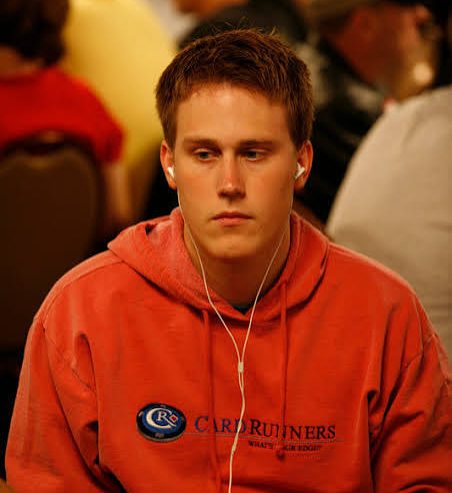
Caby was in the CardRunners office, which would become the DraftDay office, on the day everything changed for everyone working there.
“I actually vividly remember saying something like, ‘This could be a moment that we’re all going to remember for the rest of our lives,’” Caby reflects. “Online poker had so many ups and downs, but I just sort of had this gut feeling that this was different.”
Caby’s immediate concern on Black Friday was not the low-five-figure amount he says he had in play on the sites, but rather all the business complications he had to address given that more than half of CardRunners’ subscribers were U.S. poker players whose memberships were about to become nearly worthless to them. Over the ensuing months, CardRunners had no choice but to lay off some of its staff.
And meanwhile, Caby was taking a highly volatile leap with DraftDay.
“We now know that daily fantasy became a huge industry, but at the time it was incredibly speculative,” he says. “It was a longshot bet.”
Caby and his cohorts ultimately sold DraftDay in 2014 (not for any substantial financial win, he notes), and that’s when he fell into the more typical former-online-poker-pro career path: playing DFS professionally, which he did from 2014-18.
“The only thing that’s been consistent throughout my whole life is that I’ve always wanted to try to make money,” Caby says, a statement that makes him sound like a ruthless capitalist, when in fact he’s just always had an industrious streak. “Whether I was pet sitting or shoveling snow or playing poker in high school, I always wanted to try to make a few extra bucks. I always wanted to be financially independent. And for a time, when the poker boom was going on, poker was just the best means to do that. Then the same thing with DFS, it was just a good moment in time in terms of profit opportunity.
“It’s not like I ever set out with a goal of ‘I’m going to become a gambler’ or ‘I’m going to become a CEO.’ I was just always open to finding the right opportunities for me.”
As sports betting legalization began to spread in 2018, Caby briefly took a position as BetRivers’ sportsbook director, but he left after less than a year because a more appealing opportunity to dive into something new in the fantasy space emerged.
Adam Levitan and Evan Silva, two DFS pros Caby knew casually, decided to launch Establish the Run (ETR), a fantasy sports training site. The long-ago CardRunners founder seemed a perfect candidate to be the CEO and handle the business side.
ETR launched in 2019, and six years later, it’s thriving with 20 full-time employees and about 40 part-timers.
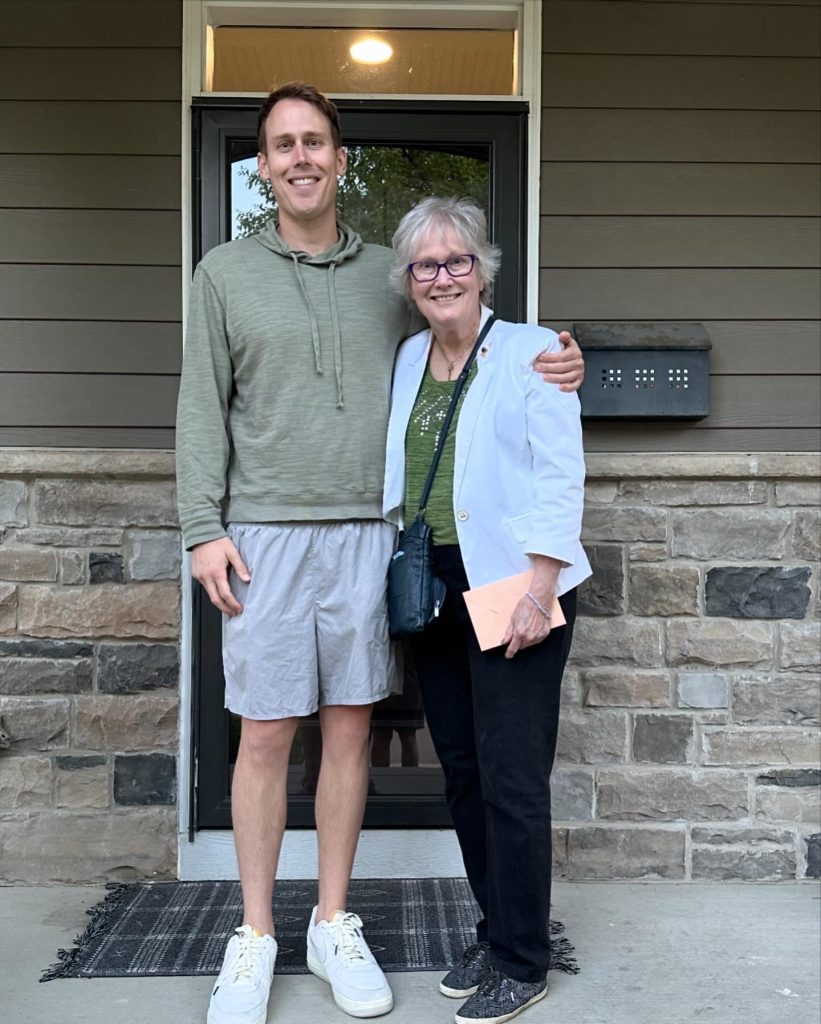
It seems Caby, now 42, has found his calling. At the very least, he says he enjoys working in the fantasy sports world and playing DFS (which he still does) more than he generally did working in the poker world and playing poker (which he very rarely does).
“It’s so hard to say what I’d be doing now if Black Friday hadn’t happened,” he says. “I don’t want to say I’m fortunate Black Friday happened, because I don’t know if that’s necessarily true. But I think that I’m fortunate in terms of the outcome and to be doing what I am now.”
The crypto adviser and life-hacker
All work and no play makes Jonathan Levy a dull boy.
Right around the turn of the century, when Levy was in his late 20s, he learned something about himself: His preferred lifestyle involved working as little as he needed to in order to have a comfortable life.
He was working full-time at an autism treatment center when he decided that particular structure — 9-to-5, reporting to a boss — wasn’t for him. But when he gave notice, his bosses found that his position was hard to fill, so they made him a part-time contractor. And he soon discovered that, with the company referring clients to his private business, he was earning about four times as much money. And Levy decided rather than work a full week for four times the money, he might like to work one-quarter the hours for the same money he’d previously been making.
“That became the paradigm for me,” Levy, now 54, recalls. “I’ve been very lucky, without question, but I’ve been able to make it work. I just look for answers that start with, ‘We’re not going to work more than two hours a day.’”
Levy’s poker story starts like so many people’s: watching Chris Moneymaker win the World Series of Poker on ESPN in 2003. He started playing casually, he read an Ed Miller book on limit hold’em strategy, and soon he found that he could make “enough money to get by” playing limit hold’em online from his home in Portland, Oregon for two or so hours a day.
He would multi-table, up to 11 tables at once — he says 11 tables “was a breathless experience, it was so intense” — at limits as high as $10/$20, mostly on PokerStars and Full Tilt, and “people were making big enough mistakes that I could just play a pretty basic strategy and make money.”
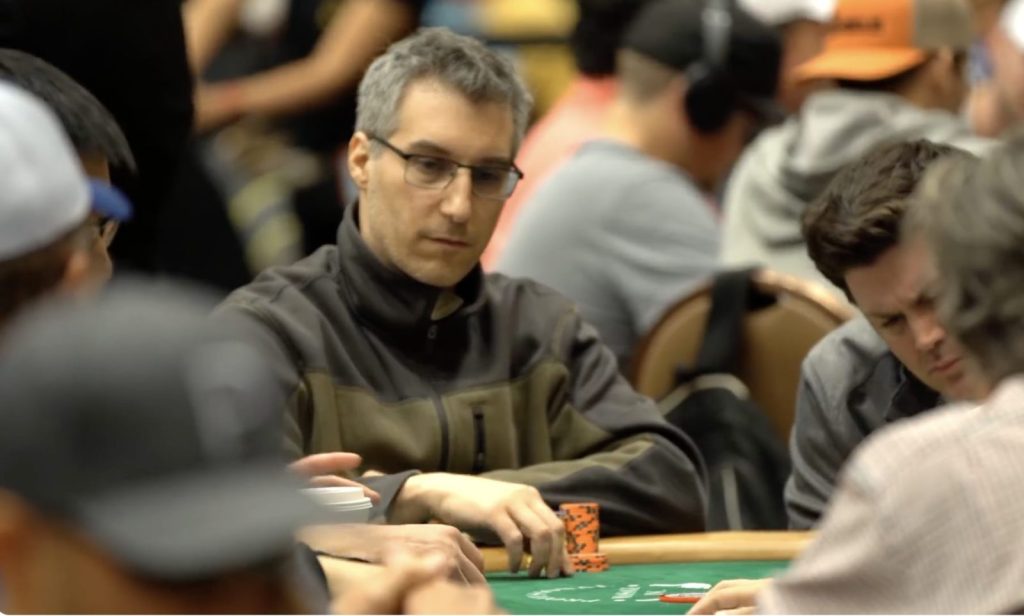
That did the trick for Levy — until April 15, 2011. “I just remember it not feeling real,” he said. Just a couple of months before, he’d invested in a new computer specifically for his career as an online poker pro, a fancy, relatively professional setup, and now there were no remotely trustworthy poker sites to play on. And he was instantly lost.
“It was just a weird spot to go from, ‘Hey, I play a game for a few hours a day, and it’s pretty easy,’ to, ‘What am I gonna do here? There’s no obvious thing for me to do.’ It was a very strange spot.”
By virtue of being a fixed-limit player, meaning he didn’t need to bring massive amounts of cash to the tables because stack size isn’t a factor, Levy didn’t have much money locked up on the sites where he played — about $5,000, he estimates. That was the good news.
The bad news was he had no immediate ideas on how else to start earning money.
Levy was, and is, unmarried — “I’m as free as they come,” he says, “a free soul” — which was a key factor in his rather flexible lifestyle choices as he bounced around for the next few years.
He didn’t love playing poker enough or make enough money doing it to consider what would have been a relatively easy move from Portland to Vancouver. Instead he found the easiest gig imaginable: renting out his apartment on AirBnB and staying at the apartment of a friend who was rarely in town. Levy mixed in some live limit hold’em at a nearby cardroom, making enough playing twice a week to live comfortably as a single guy in Portland.
He also did some poker coaching, and launched a poker podcast — it went through a few names before landing on The Poker Guys — in which he and his co-host broke down a televised hand, and it caught on enough for them to earn solid side income through advertising and partnerships.
It was in 2014, though, that everything changed. A friend Levy had met playing poker hired him to “research this thing called Bitcoin.” Levy did a fine job on that temporary gig, which led to his friend asking him to research how best to make money in Bitcoin. So Levy dug in deeper and reached what turned out to be a sharp conclusion: that the best move at that time was to buy Bitcoin and hold it.
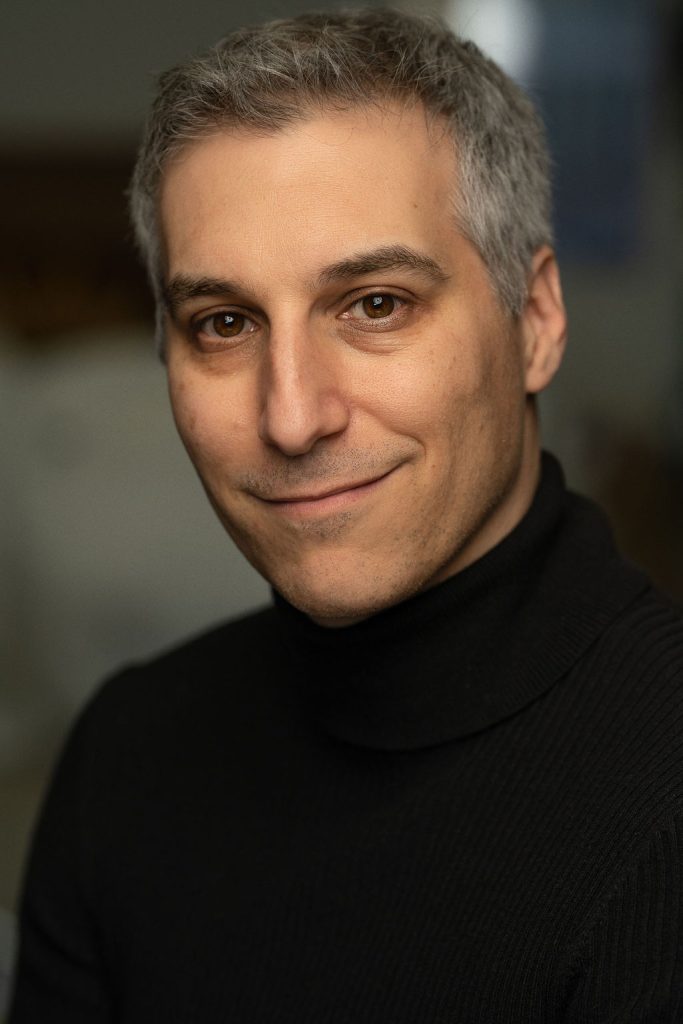
Fast-forward about a decade of making money investing in cryptocurrency, and in March of this year, Levy and two colleagues founded Insomnia Crypto, advising people on how best to manage their decentralized assets.
Uh-oh — starting his own company? That sounds like a potential 40-hour-a-week time commitment, doesn’t it?
“No, not even close,” says Levy, who now lives in New Hampshire. “We might have a meeting every day for an hour or so, and then we move some stuff around for another hour, and that’s it, about two hours a day. Hopefully less most days.”
Levy barely plays poker at all anymore, and “I have not missed it,” he says. He’ll occasionally find his way to the odd private mixed game with unusual rules, but hold’em? “Oh no, I don’t want to play hold’em at all,” he says. “Like, I’ll sit at a table and I just hate being there so much that my whole body wants to leave.”
Clearly, life as an online poker pro was bound to end sooner or later for Levy. Black Friday just forced the end sooner than he might have expected, and led him — eventually, after much searching — to a line of work he finds rewarding.
Not rewarding enough to want to do it for more than a couple of hours a day, but rewarding just the same.
Fold your cards, spread your wings
Williams, Caby, and Levy are just three of probably thousands of examples of professional players driven out of poker by that DOJ logo. For some it happened immediately, and for others it came after some degree of delay. But the stories are endless.
There are major names from the early days of the poker boom like Annie Duke and Phil Gordon who, for assorted reasons, and amid affiliations with tarnished brands — UltimateBet and Epic Poker for Duke, Full Tilt for Gordon — drifted from poker after 2011 and never really returned.
There’s Annette Obrestad, the Norwegian wunderkind who in 2007 became the youngest player ever to win a WSOP bracelet and is now a Vegas-based makeup influencer.
There’s Yale grad Alex Jacob, who won more than $2.6 million in poker tournaments but achieved greater fame as a Jeopardy! champ and went on to create School of Trivia.
There’s Haseeb Qureshi, who became a poker millionaire in his teens, was just 21 in 2011 when he left the game behind, and now is the managing partner of a crypto fund.
One thing they all have in common is high intellect. Poker’s loss generally became the gain of some other vertical.
Poker is often described as a hard way to make an easy living. Black Friday forced a lot of poker pros to make decisions that seemed hard at the time but were perhaps, in retrospect, quite easy.