Geezers And Grifters: Why Illegal Casinos In Florida Won’t Go Away
The often mob-affiliated slot parlors are an ongoing problem in the Sunshine State

8 min
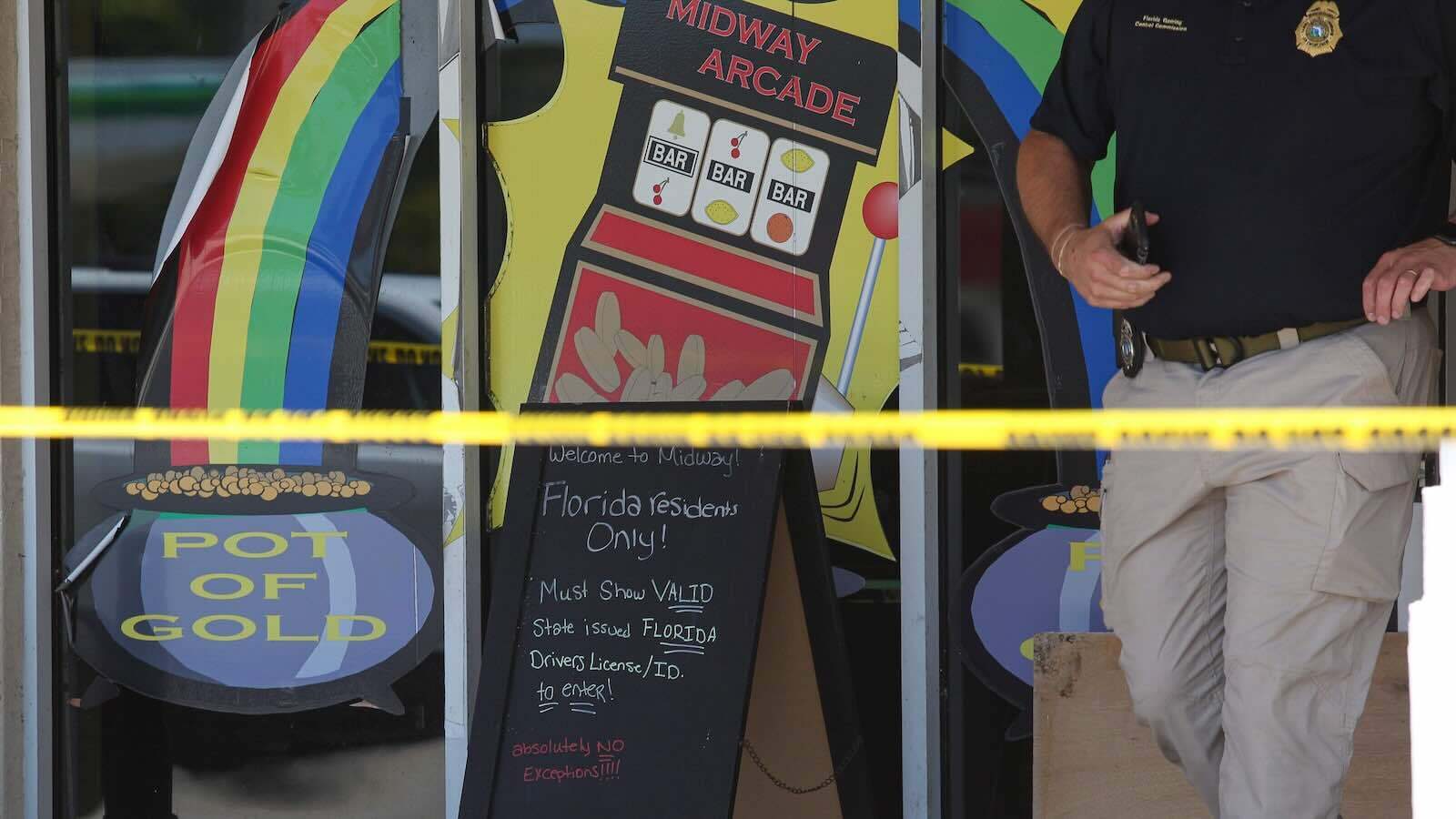
On July 15, law enforcement descended upon Il Vilaggio, a popular senior-citizen hangout in Lady Lake, Florida. In addition to geriatrics, the constabulary found 190 slot machines and seized $349,000 cash. Lounge owner Rima Ray was charged with money laundering and keeping a gambling house. It was estimated that $24 million in gambling proceeds had flowed through Il Vilaggio since it had opened in January 2023.
The trouble for the oldster haunt was that — except for eight commercial casinos, eight tribal ones, one horse track, and one online sports betting app — gambling is very much illegal in the Sunshine State. That does not prevent scores of unlawful, hole-in-the-wall casinos from operating in broad daylight, as attested by Il Vilaggio’s 31-month run of luck.
The problem is so noxious that the Orlando Sun-Sentinel devoted an in-depth, three-part investigation to black-market casinos. In Palm Beach County alone, six storefronts had been raided — and subsequently reopened.
Such dens of iniquity ranged from “a dim room about the size of a fast-food restaurant” to what you might encounter at a Dotty’s in Las Vegas: “25 or 30 machines, an ATM machine, free coffee, fountain drinks and bags of cookies and potato chips.” Some joints were sufficiently audacious to operate openly, with “brightly lit signs, Facebook pages, business licenses and weekly promotions.”
Newcomers to the Florida demimonde from neighboring Georgia have taken to advertising in newspapers. “There is a lot of money involved,” cautioned one attorney. “It’s a cash industry,” one that’s both widespread and extremely difficult to eradicate.
Its audacity extended to, during the COVID-19 crisis, applying to the Trump Administration for Small Business Administration loans, nine of which were granted and most of which have been forgiven. Taxpayers were bilked out of $500,000.
Many played, few paid
Players themselves might be forgiven for thinking these gambling dens were the real item. They are often stocked with brand-name slot machines, mostly obtained secondhand (in one exotic case, by way of Honduras). It’s not a Florida-only problem. The American Gaming Association (AGA) estimates that there are 870,000 legitimate slot machines in the United States … and 600,000 unlawful ones.
These devices are set to pay out anywhere from 92% of coin-in to a stingy 50% — if they pay at all. The Florida Gaming Control Commission found a Brevard County device that hadn’t paid a jackpot in 4,000 spins. Nor is there any legal method of redress if you get stiffed.
The ubiquitous gambling hangouts are particularly popular with senior citizens who balk at driving to a parimutuel or tribal casino. But they are hardly mom-and-pop small businesses.
The poster child for the problem is suspended Osceola County Sheriff Marcos Lopez, who was arrested in June. His incarceration was the culmination of a two-year probe, and the affidavit, once unsealed, charged the lawman with “a multifaceted role in the expansion and protection of” a $21.6 million illegal-gambling enterprise. Lopez was accused of obtaining leases for slot arcades and even acting as their bagman.
The sheriff was able to make $1 million bail and was, at press time, the only member of the alleged criminal ring still at liberty. Even mastermind Krishna Deokaren had pled out.
Difficult to prevent
Floridians appear divided as to whether the current laws are difficult to enforce. “The laws are pretty clear. The problem is resources,” lamented Steve Geller, an attorney and former state senator. He asked, “If you’re the county sheriff, are you going to prioritize breaking and entry, rape, murder, or are you going to prioritize cracking down on the adult arcades? The answer is they’re not going to pay a lot of attention to them.”
Added a gambling industry expert, “At the end of the day, if the end result of all of that is a misdemeanor, it’s not exactly a great incentive for law enforcement to dedicate the time and the resources necessary, if these people are just going to get off with a slap on the wrist.”
Polk County Sheriff Grady Judd told Casino Reports that the Florida statutes aren’t hard to implement but can be complicated: “Even with our proactive approach to enforcing the law, we had to call in the experts to look at some of the machines — to differentiate for us whether they were legal machines or illegal machines.”
Judd also believes that there’s a lack of public comprehension. “Quite frankly, I don’t know that the average person can tell the difference between legal gambling and illegal gambling,” he opined.
The lawman cited the hypothetical of a slot machine in a tribal casino on one side of the street and in a slot arcade on the other side. Same machine, totally different legality. And it’s a legality that’s further complicated, he argued, by the vast numbers of people flooding into Florida for vacations, ignorant of the finer points of casino law. “Now, on top of that, some jurisdictions have apparently thrown their hands up.”
A belated response
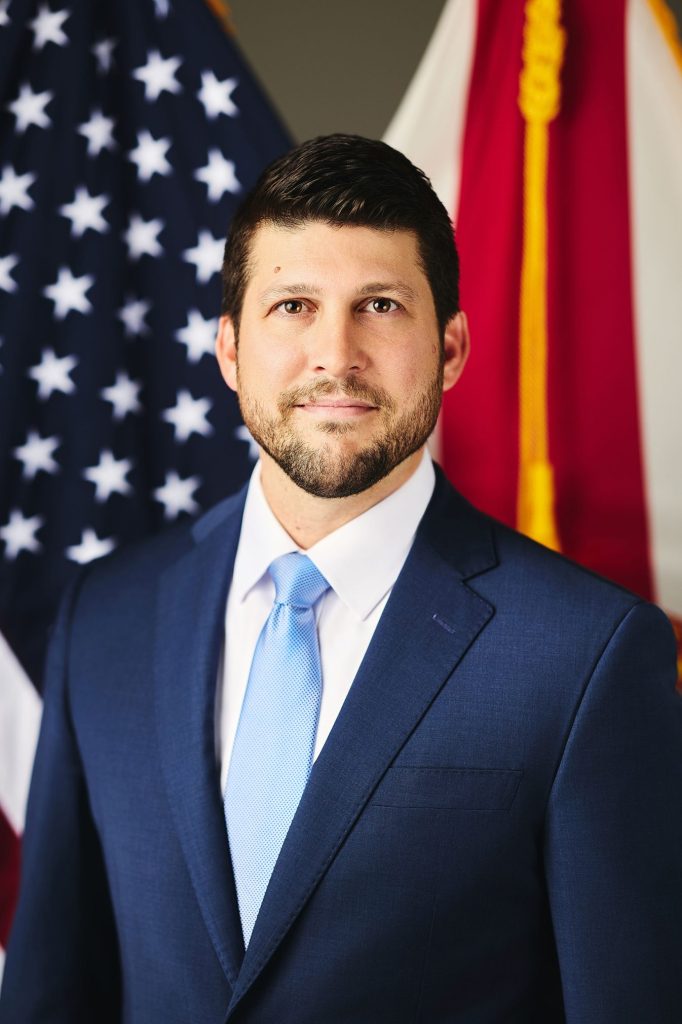
There has been pushback from Florida law enforcement of late. Following the December 2024 exposé in the Sun Sentinel, the pace of crackdowns appears to have accelerated. On Nov. 24, new Florida Attorney General James Uthmeier (pictured below) tweeted a proposal to make illegal gambling a felony rather than the current misdemeanor. (Uthmeier was unavailable for comment.)
The AGA was quick to applaud. “The continued spread of illegal slot machine parlors across that state of Florida undermines the integrity of the legal market, increases crime, and leaves the public vulnerable,” stated Vice President of Governmental Affairs Tres York. “We are encouraged by the Florida Attorney General’s support of legislation to strengthen criminal penalties for operating illegal slot machines in the shadows, and we commend the Florida Gaming Control Commission along with local law enforcement in their continuous efforts against these dangerous operations.”
State Rep. Michelle Salzman had made a similar proposal to Uthmeier’s in the previous legislature, as did her GOP colleague, state Sen. Jonathan Martin. The latter raised the concern that the tolerance of unlawful slots in Florida would terminate the state’s multi-billion-dollar compact with the Seminole Tribe. However, both bills were quashed and neither Salzman nor Martin responded to Casino Reports’ repeated queries.
Neither did former Palm Beach County Sheriff Keith Pearson, who may have paid the price of anti-gambling raids by being voted out of office in 2024. Don’t cry for Pearson, though. He subsequently landed a sinecure with the Department of Homeland Security.
In addition to the wrath of gamblers, law-enforcement officials find themselves going up against the Veterans of Foreign Wars, American Legion, and others who themselves use slot machines to raise money, and who have been credited with blocking action in Tallahassee.
Punishment to fit the crime?
Whether or not the legislature steps up, Manatee County Commissioner Tal Siddique is looking at another avenue of deterrence. He’s proposed an ordinance that, following the example of Marion County, would levy a $250-per-machine penalty on operators of unlawful slot arcades. At present, the state only imposes a flat fee for possession of illegal gambling devices.
“One of the gaps in state statute is that, at a certain point, the penalty was changed from a felony to a second-degree misdemeanor for the possession and operation of unlicensed machines. That led to an explosion in the operation of unlicensed machines,” Siddique lamented.
Siddique also hoped to remove what he describes as the subjectivity of enforcement, whereby an operator might be indicted for each machine he has — or might receive one, flat charge. “There’s an inconsistency in how the law is applied,” he told Casino Reports.
The proposed ordinance is currently with the Manatee County attorney, who is vetting its constitutionality. It passed an initial reading by the county commission narrowly, 4-3. Among those against Siddique’s bill was Chairman George Kruse, who groused, “All this is is protecting stupid people from themselves, and that’s not my job.” (Messages to Kruse were not returned.)
A victimless crime?
Florida attorney and former state Sen. Geller is familiar with that mindset: “‘It’s where people will go and spend $10 or $20,’” he characterized it. “’They’ll hang around for three hours and get a free lunch. Why should we crack down on that?’
“I’m sure there are a few people that do that but there’s also a lot of people that lose their life savings.”
Someone who also took a less laissez-faire view was Jennifer Kruse, executive director of the Florida Council on Compulsive Gambling (FCCG). She tracked a 71% spike in hotline calls directly attributable to slot arcades, which remained open during COVID-19, unlike lawful casinos.
Kruse was unable to speak to Casino Reports but her office told us that 41% of hotline callers report financial problems directly related to gambling — a figure that jumps 11 to 12% when illegal arcades are involved. The FCCG said the arcades prey on lower-income players, ones making $48,000 to $52,000 a year, on average.
Not being part of the legal, regulated gaming industry, slot arcades aren’t part of the responsible gambling infrastructure, unaware that some of their patrons might have problems and need to self exclude. “Perhaps even more importantly, not only do they not know, they truly don’t care,” asserted our industry expert.
Complicating the bust/don’t bust dilemma faced by law enforcement is the propensity for crime to flourish in the immediate vicinity of slot arcades. “Criminals stake out places where people gamble because they know people there have money,” stated Judd. “Frequently you see that property values may go down and other criminal activity increases.”
Siddique echoed Judd, noting that incidences of assault and robbery near arcades helped motivate his attempted crackdown.
“It’s a story as old as time,” added the industry expert. “We see that in Florida, as well as in other states where there are unregulated slot machines in bars and gas stations. … There is almost always a broader nexus of crime that goes along with these types of activities.”
The Russian factor
Enforcement is complicated by the alleged presence of the mob. “Whether it’s Eastern European or Russian or whatever the case may be, there are a lot of instances where those locations are actually being run by organized crime,” the expert asserted.
Geller agrees. “I have been told by the regulators that, in certain parts of the state (for example, the Jacksonville area) that it’s largely run by Eastern European organized crime,” he related. “They use it just to make money, but it’s also useful for money laundering.”
This can make policing the arcades a perilous endeavor. Many lurk behind black windows, rendering their goings-on invisible to the outside world and making the use of undercover officers imperative. “Considering what I just said about the organized-crime nexus, that makes law enforcement particularly nervous: sending an undercover officer into an organized-crime den,” said the industry expert.
Nor do law enforcement’s problems end there. “You have to go to a judge and get a warrant, then execute the search warrant, then you have to confiscate the machines,” said our expert. “Then you have to figure out where to put the machines, because you need it for the legal case.”
That can be a problem, as the confiscations often run into hundreds of devices and storage can be at a premium. Only once the matter has been adjudicated to the law’s satisfaction can they be disposed. Speaking of which, Florida Gaming Control Commission Enforcement Director Carl Herold didn’t have time to talk with Casino Reports about illegal slots … perhaps because he was busy with a media event at which Brevard County officials smashed renegade slot machines.
A game of Whac-a-Mole
Even so, “the criminal penalties are not stiff enough to deter these people from continuing their conduct,” the industry expert complained. “Resources are always a problem. Florida law enforcement and the Florida Gaming Control Commission have been very, very active. They’re busting places left and right. They’re confiscating hundreds and hundreds of machines. But it is, to some extent, a game of Whac-a-Mole.”
Indeed, until penalties are stiffened and gambling dens are designated a top-line priority for law enforcement, the situation in the Sunshine State appears unlikely to change. As some lament, for every arcade that is kiboshed, at least one more springs up in its place.
“My advice is go to the legal gambling establishments that are permitted by the state, and have a good time,” were Judd’s parting words of wisdom. “But if you gamble illegally in Florida, and certainly in Polk County, you’re going to be arrested and we’re going to seize your assets.”