Gamblers Have One Year From Today Before The 90% Cap Hits Home
Next April 15 may be a very dark day for gamblers as they'll have to potentially pay taxes on income that doesn't exist.

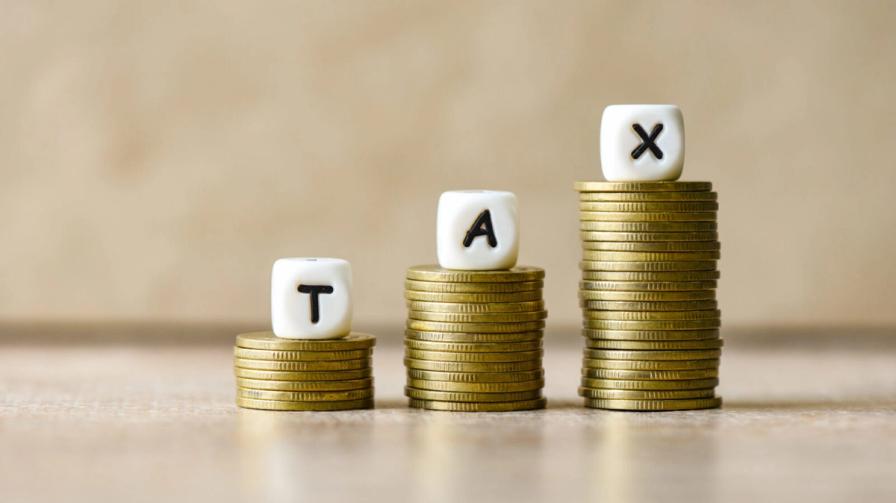
Despite support from both sides of the aisle, despite common sense, despite numerous bills, amendments, and prayers making the rounds, it's looking increasingly likely the 90% cap on deductions for gambling losses is here to stay.
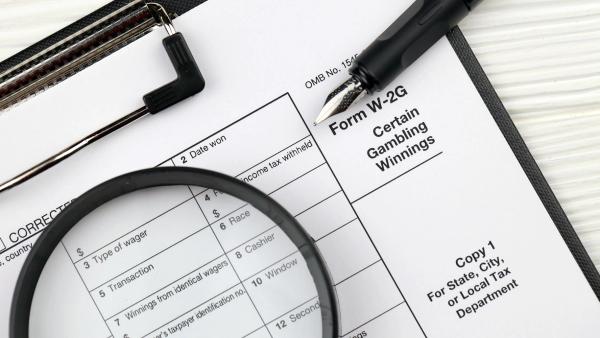
And with today being tax day in America, that means gamblers have one year until the 2026 bills come due, a year in which they will run the risk of paying taxes on what amounts to, very literally, phantom income.
Existential crises don't come much bigger.
So what's a gambler to do?
It's not exactly cut and dried.
Christopher Dierkes is hedging everywhere he can. In fact, that's basically the reason he took the job as director of trading for Novig.
"It was part of the reason why I'm dropping some of my personal betting and focusing more on Novig, and why I moved to Novig," Dierkes said. "Pretty much to guarantee myself a salary. It's crazy."
Before the cap, Dierkes was an aggressive bettor. He'd have months of downswings, but it didn't matter. The math worked over time. Now a losing month -- or week, or day -- isn't just a losing month. It's a potential catastrophic tax event.
"If you told me I have to pay 10 percent more taxes, I would hate it, but I would still take it. I would pay it and I wouldn't change my behavior at all," Dierkes said. "But there are some interpretations of this where every bet is a session, and my tax rate would go from 40 percent to 95 percent, and at that point I'm just not going to be betting at all."
He also recognizes another option.
"I wouldn’t, but some people might just be like, 'Well, f**k it, I'm just not going to pay any taxes. I'm just going to conceal all my income.'"
One high-denomination machine player, who spoke on the condition of anonymity, didn't mince words when it came to this option.
"The change is so ridiculously punitive and the IRS is so castrated that the law really has no effect,” they said. “I already have $10 million in W-2Gs for 2026. So I effectively already have $1 million in taxable income. The math is pretty clear to me. Pay an effective 200 percent tax or live with a less than 0.1 percent chance of being audited."
Let’s have a sesh
All of this hinges on a question the IRS hasn't bothered to answer: What counts as a session?
"Is one bet one session? Is one account, like a DraftKings or a FanDuel, one session? Is it a period of time? These are all things the IRS has not laid out clearly, and it's up for interpretation," Dierkes said.
The math makes the stakes clear, as Dierkes explained. Say you make 10 winning bets at $1,000 each and eight losing bets at $1,000 each. If every bet is its own session, you'd have $10,000 in gains and only $7,200 in deductible losses -- 90% of $8,000 -- leaving you paying taxes on $2,800 despite only winning $2,000. But if those same eight bets fall in a single quarter, you just net out to $2,000 in profit, no losses to deduct, no cap to worry about.
"Tell me a sports bettor that wins 100 percent of his bets -- it doesn't exist," Dierkes said. "Now, tell me a professional bettor that doesn't have a losing quarter. Those people actually exist, quite a lot, because there are so many bets in a quarter that the variance reduces."
So he's changed his entire approach. Instead of chasing every thin edge, he's sacrificing expected value to reduce variance.
"So instead of expecting to earn $100 for the year, I'm expecting to earn $75, but the odds that I have a losing month now decline drastically," Dierkes said. "I can't risk paying more taxes than I profited."
Same boat
Former World Series of Poker champion Greg Raymer is keeping his head down and hoping for the best.
"I'm going about business as usual. And hoping Dina Titus and other politicians will fix this stupid little piece of legislation," Raymer said. "If anything, we should be like the U.K. and not tax gambling winnings at all. But politicians do always just seem to be looking for more ways to screw us over than ways to help us."
Professional gambler Gina Fiore said the timing was fortunate for her -- she was already on her way out.
"I was luckily transitioning from professional gambler to entertainment -- books, TV, podcasts -- so I've mostly escaped the hit of the provision," Fiore said. "In general, players who use P2Ps or beards online, and issue them 1099s, are just going to have an accounting and tax prep headache more than usual."
The ripple effects are showing up at the window, too. Jeff Benson, director of operations at Circa, said the sportsbook is feeling the squeeze.
"We've seen a significant handle reduction this year as people have lessened or stopped gambling or moved a lot of their action to prediction markets," Benson said.
Ah yes. Prediction markets. That's a whole other disaster. As Wired reported last week, nobody really knows how to file taxes on prediction market wins and losses, either. The IRS has issued zero guidance. Accountants are split on whether to treat them as gambling, financial derivatives, or regular income. So if you're a bettor eyeing prediction markets as an escape hatch from the 90% cap, you may just be trading one tax nightmare for another.
Which brings us back to Dierkes. He sees two possible paths to relief: Congress repealing the cap, or the IRS issuing guidance that defines a session as something longer than a single bet.
His odds on Congress, prediction-market-style?
"I'll give you it for 0.1 cents,” he said. “It's not happening."
And IRS guidance defining a session as a quarter or a year?
"You can have it at 60 cents."
In the meantime, he's doing the only thing he can. Betting less, betting smarter, and cashing a paycheck.

Jeff Edelstein is a longtime columnist, reporter, radio host, and fantasy sports aficionado, not necessarily in that order. He lives in New Jersey with his family.