NYC Casinos’ Bumpy Start: Underperformance At Resorts World, Delays At Metropolitan Park
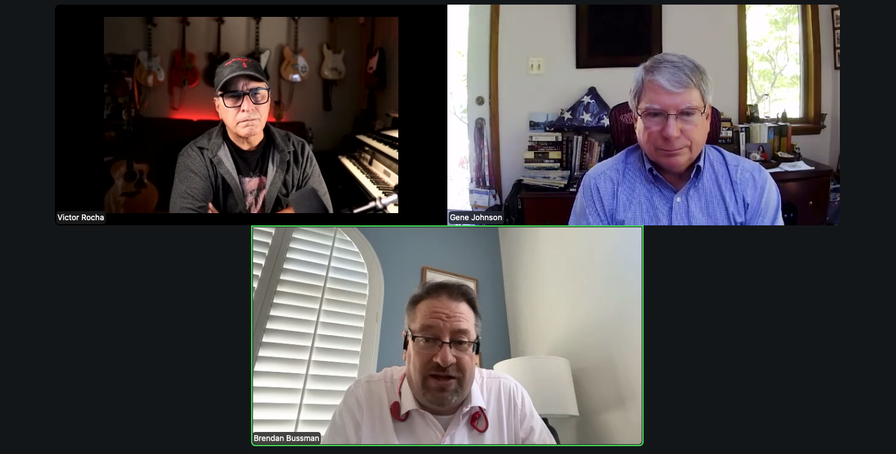
Industry consultants Brendan Bussmann and Gene Johnson analyzed with host Victor Rocha the regional impacts of New York City's new casinos.


Veteran gaming industry consultant Brendan Bussmann, the managing partner at B Global Advisors, believes Resorts World New York City might have made a strategic error rushing to launch table games in late April. The Genting-owned property, expanded from the racino that first opened on the site of the Aqueduct Racetrack in Queens in 2011, renovated its third floor and began dealing downstate New York’s first legal table games an estimated four years ahead of its competition. But at what cost?
“You only have one chance to make a first impression,” Bussmann said Wednesday as a guest on The New Normal webcast, titled “Tribal Gaming in the Shadow of Manhattan: The Fight for Market Share in the Northeast.”
Bussmann continued: “If you piecemeal that along … people will see it [in its partially complete state] and say, ‘Eh, I’m not going to go back.’ And Resorts World now has to figure out how to get that person back. If they had waited six months, they could have made a big splash.”
Early reporting echoes Bussmann’s sense that the splash was not the super-soaker it could have been. GGR Asia wrote last week that investment bank Maybank declared average per-table revenue in the first six days “underwhelmed,” coming in 37% below expectations.
Resorts World did not respond to multiple inquiries from Casino Reports for comment.
Resorts World’s forthcoming chief competition, the Hard Rock Metropolitan Park project tabbed for the Citi Field parking lot across the borough, isn’t off to such a hot start either. As the Queens Daily Eagle reported last Friday, construction on that $8 billion resort is already more than five months behind schedule — potentially good news for Resorts World and for the Bally’s project licensed for a former Trump golf course in the Bronx.
“I expect Bally’s will open about six months sooner than Metro Park,” predicted Victor-Strategies Executive Vice President Gene Johnson, the other guest of New Normal host Victor Rocha.
Corridors, casinos, cannibalization
The webcast conversation was largely focused on the impact the three new casinos in various New York City boroughs will have on other properties in the same general region, from Atlantic City to Connecticut to upstate New York to eastern Pennsylvania. Rocha asked if the downstate New York properties would be populated by new casino customers or would cannibalize the other casinos’ existing customers, and Bussmann replied simply with “Combo.”
Johnson framed the impact this way: “Everyone said Pennsylvania [opening casinos] was going to kill Atlantic City. Well, it had an impact. But it didn’t kill Atlantic City.”
Tribal and commercial casinos up and down the Northeast Corridor are threatened by New York City competition, Johnson said, but that’s just going to force them to step up their games with more offers and attractions. He singled out Mohegan Sun in Connecticut as being particularly proactive to compete with the changes coming.
Rocha named the Oneida tribe, which runs the Turning Stone property in Verona, New York, as another one that has “been very forward-looking, on offense, instead of waiting for the sky to fall.”
Bussmann said he believes the region can support all of the casinos because it’s so densely populated, and the bottom line for Rocha is that expansion and competition like this “force everybody to become better businessmen. I think it’s going to force everyone else to do better and be on their games.”
During the bidding process, it was projected that the three new casinos coming to New York City would make a collective $5.5 billion in annual revenue by their third year of operation, but Johnson feels only Bally’s is likely to hit its projections — in part because its projection was the most modest of the three, and in part because its Bronx location is the most convenient and “it will draw people from western Connecticut.”
One of the great shocks of the licensing process came when MGM Empire City, which like Resorts World planned to expand an existing racino, pulled out last October despite seemingly being on track to receive one of the three available licenses. Said Johnson: “That’s not such a bad decision for them. They still have their property, and they don’t have to pay a $500 million license fee.”
Bussmann agreed, saying he “respected the decision” from MGM, and he asked of Resorts World paying for its full casino license, “Is the juice worth the squeeze for them?”
Other threats: North Jersey, cyberspace
The consultants also discussed the potential additional threat of New Jersey permitting casinos outside Atlantic City — specifically at the Meadowlands complex in North Jersey. But Bussmann doesn’t feel it’s a realistic enough threat for anyone to be concerned with.
“About once every 10 years we have this debate,” Bussmann said of a ballot initiative for North Jersey casinos. “Never say never, but … that’s not going to be a cheap ballot initiative. … Those TV markets are not cheap to begin with, let alone having to run ads in Philly, New York, and everywhere in between.” Bussmann estimated it will cost at least $100 million to make such a ballot initiative competitive.
Then there’s the competition that comes from online casino gaming, which is legal and regulated in Pennsylvania, New Jersey, and Connecticut, whereas New Yorkers who want to play the games can only do so on unregulated sites.
“I don’t think you’ll ever replace the in-person experience that people want to partake in,” Bussmann said, but he also acknowledged the flip side by extolling the “convenience” of mobile gaming.
Johnson is one industry observer who does not believe land-based casinos’ concerns over iGaming cannibalization are warranted. He pointed out that Maryland, which has considered legalizing online casinos but hasn’t made it happen yet, is seeing its retail gaming level off just the same way Pennsylvania and New Jersey brick-and-mortar has.
“I would push back against anybody whose hair is on fire about iGaming destroying land-based,” Johnson said. “The net effect has been positive for any state that has legalized iGaming.”
Whether that argument will someday soon prove convincing in New York, home to one new retail casino with two more to come, remains to be seen.

Eric has been a professional editor and writer for more than 25 years, including nearly 20 years of experience covering the gambling industry. He was editor-in-chief of the poker magazine All In from 2005-2015 and manag…