Maryland House Committee Hears From Proponents And Opponents Of Historical Horse Racing
The debate over legalizing historical horse racing in Maryland switched venues to the House, where proponents and opponents made their cases.

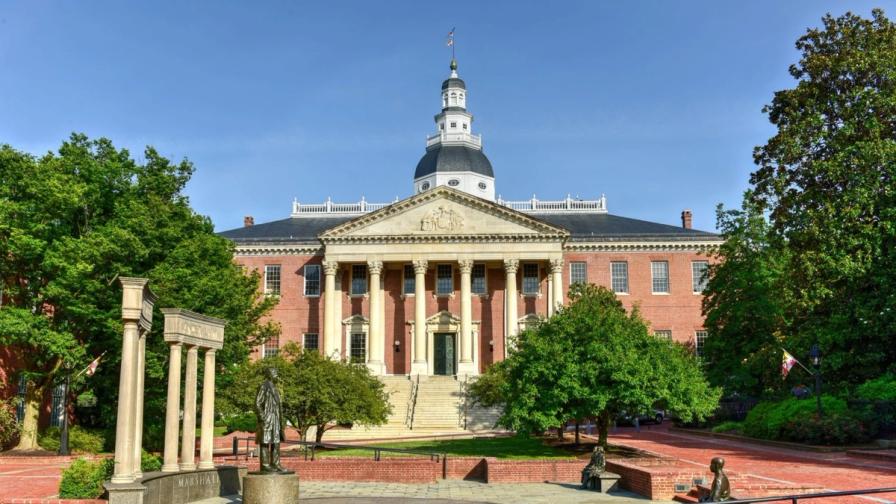
The Maryland House Ways and Means Committee received testimony Thursday for and against HB 1240, which would put legalizing historical horse racing (HHR) up for a referendum by the voters in November.
Many of the same principals who testified before the Senate's Budget & Taxation Committee on Feb. 25 returned to Annapolis for a lively discussion led by bill co-sponsor Del. Kris Fair.
Proponents of HB 1240 maintain HHR can serve as a needed lifeline for off-track betting parlors in addition to keeping gaming tax revenue within the state.
Opponents representing some of the state's six casinos expressed cannibalization concerns and felt the proposed 40% tax rate for the machines was too low. The six casinos negotiated their own rates on slot revenue, ranging from 42% to 61%.
Addressing the gaming 'desert'
Fair noted one alteration to the fiscal note accompanying the two bills, pointing out lawmakers would be looking to authorize up to 5,500 HHR machines. The state's four OTBs, six casinos, and the Maryland Fairgrounds would have the ability to purchase up to 500 HHR positions apiece. State Sens. Paul Corderman and Karen Lewis Young previously stated the proposed amount would be 4,000. At full maturity with 5,500 positions, Fair estimated annual tax revenue to be more than $200 million.
Fair had two key prongs in his argument. The delegate noted residents in Montgomery, Frederick, Carroll, Washington, and Charles counties all have to travel more than an hour to visit a Maryland-based gaming venue, and casinos in neighboring Virginia, Pennsylvania, and West Virginia are closer.
The introduction of HHR would reduce that revenue bleed and "empowers Maryland's off-track betting facilities, many of them locally owned small businesses, to diversify their operations, grow their workforce, and become stronger economic anchors."
Fair said the proposed 40% tax rate was intentional for gaming integrity, otherwise the casinos would simply swap out their slot machines for HHR positions. He claimed the data pointed toward a cannibalization rate of only 1%, "a marginal shift with a much larger and expanding market."
Operators make their case
Chesapeake Gaming co-owner Richard DiPietro, Long Shot's owner Alyse Cohen, and Riverboat on the Potomac Managing Partner Antonio Jones all testified in support of HB 1240.
Both DiPietro and Cohen, who run off-track betting locations, talked about needing HHR as a means of business survival and the potential of creating hundreds of new jobs. Cohen pointed out the success Churchill Downs has had with HHR in Virginia, generating $30 million in annual salary and increasing horse racing purse accounts by 180% while creating an economic impact of more than $85 million.
"We do not want to lose an essential part of Maryland's agricultural identity to a lack of innovation," Cohen said. "Maryland has not significantly diversified its gaming landscapes with the advent of casinos. This will diversify and democratize gaming. The casinos will continue to generate billions. And that can happen with or without HHR. The same cannot be said for these owners here."
Jones offered one interesting data point about Riverboat on the Potomac, which is technically in Maryland but accessed largely through Virginia. He said 91% of its revenue comes from Virginia, which "doesn't bother the casinos at all."
Casinos still vehemently opposed
Mike Johansson of CBAC Gaming, which represents Horseshoe Casino for Caesars in Baltimore, and Marta Harding, speaking on behalf of MGM National Harbor, again presented testimony to state legislators in opposition.
Johansson pointed out the last time the state considered such a notable gaming expansion back in 2012, the General Assembly lowered operator tax rates. He called the introduction of up to 5,500 positions similar to opening a seventh casino and for the state to consider again lowering tax rates if they indeed want to expand.
Harding reiterated most of her key points from her testimony to the Budget & Taxation Committee, focusing on the gap of the proposed tax rate for OTB operators and the 56% levy National Harbor currently pays on slot revenue. She also expressed concern that one of the facilities eligible for expansion, Rosecroft Raceway, would be approximately five miles from an MGM property.
Under questioning from fellow bill co-sponsor and Del. Jason Buckel, Johansson said the state's six casinos have 10,000 slots in operation while being authorized to have as many as 16,000. Johansson argued this is a "demonstration the market is fairly saturated," though Buckel countered that it could be "evidence that in your facilities, you don't need as many machines because you can't generate as many players."
Buckel added this could point to "an elasticity in the market we could build up."

Chris Altruda was a sportswriter with ESPN, The Associated Press, and STATS for more than two decades before turning to the gambling industry at Sports Handle in 2019. When not crunching sports betting revenue figures,…