Massachusetts Casinos And Tribes Oppose Historical Horse Racing
Casino operators and the Mashpee Wampanoag Tribe are urging lawmakers to reject legalization

Massachusetts casino operators and the Mashpee Wampanoag Tribe want lawmakers to kill a plan that would allow historical horse racing machines at simulcast centers, according to the State House News Service.
The Massachusetts House approved the proposal back in July as part of a broader economic development bill, but the Senate’s version left it out. Lawmakers negotiating the final bill have yet to settle the issue, SHNS reported.
Wynn Resorts CEO Craig Billings, whose company operates Encore Boston Harbor, asserted in a Boston Globe op-ed that casino companies invested in Massachusetts expect the state to put the kibosh on competition, considering how much the existing operators have already invested.
“This was not an unlimited gaming market,” Billings wrote. “It was a limited-license model built around major capital investment and serious public obligations. Economics mattered then, and it matters now.”
Billings stated that sports betting and online lottery sales already compete with casinos for customers’ money, and that historical horse racing and online casinos would add to that competition if approved.
“These are effectively slot machines operating under a different regulatory label,” he wrote about the historical horse racing machines. “They compete for the same customers and discretionary spending without the licensing costs, tax obligations, community commitments, capital investment, responsible gaming controls, or regulatory oversight required of destination resort casinos.”
Horse racing at horse races
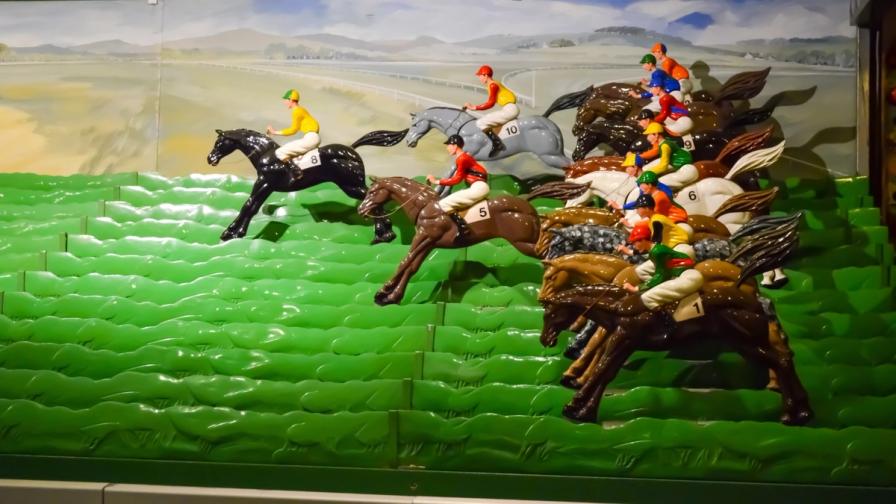
Under the House proposal, racing licensees, including the simulcast operations at Suffolk Downs and Raynham Park, could offer the machines, SHNS reported. Players would bet on races that have already happened, with identifying information hidden.
During a rally at the Massachusetts State House last week, Mashpee Wampanoag Chairman Brian Weeden said the proposal threatens the tribe’s sovereignty and economic future, according to SHNS. He said First Light Casino in Taunton has grown from 10 machines to 250 since it opened about a year and a half ago.
“We fought for years to secure our reservation lands, negotiated in good faith with the commonwealth concerning our gaming facility, and responsibly planned for our gaming facility’s future,” Weeden said. “Now the commonwealth is considering a proposal that would circumvent those laws and dramatically expand gaming without the protections and oversight that apply to everyone else.”
Supporters of the expansion bill say the machines would bring more business, support jobs, and provide state subsidies to assist in healthcare for the needy.
The House proposal would send gambling tax revenue to the Health Safety Net Trust Fund. The fund helps hospitals and community health centers recover the costs of treating low-income patients without adequate insurance.
Sterling Suffolk Racecourse, the Suffolk Downs simulcast license holder, projected that the machines would provide more than $100 million a year for the state’s safety net hospitals. Republican Rep. David Vieira questioned how the proposal got through the House. SHNS reported that representatives approved it unanimously as part of a larger amendment package without debating the gambling provision.
“There wasn’t the transparency, either on the floor or off the floor with the general membership,” Vieira said, according to SHNS.
Vieira said he and other House members opposed to the gambling expansion did not realize the proposal’s potential consequences until after it passed. They then sought help from senators to stop it.
Although the Senate left the authorization out of its bill, it also rejected an amendment that would explicitly ban historical horse race betting.

Jeff Edelstein is a longtime columnist, reporter, radio host, and fantasy sports aficionado, not necessarily in that order. He lives in New Jersey with his family.