Why New York's Chuck Park Is Running An Anti-Gambling Campaign
Democratic congressional candidate from Queens likens gambling to tobacco and alcohol and wants ad ban

Tired of ubiquitous ads for casinos and sports betting? New York congressional candidate Chuck Park has the solution for you: a complete ban. He equates gambling with tobacco and alcohol, as addictive substances that need federal regulation.
“Tobacco used to be on TV all the time, on billboards, in commercials. I’m old enough to remember that too,” says the youthful-looking Park, who’s in his early 40s. “I’m actually older than I might seem.”
But those tobacco ads aren’t around in that form anymore, and Park says, “We can do the same with gambling.”
Park is running in the Democratic primary, to be held June 23, against incumbent U.S. Rep. Grace Meng, who represents New York’s Sixth Congressional District. He has held positions with the U.S. State Department and in city government and community activism.
In Park’s eyes, Meng’s sin was to take campaign money from lobbyists for Steve Cohen’s $8 billion Metropolitan Park casino project. The casino megaresort in Queens is being developed in tandem with Hard Rock Entertainment. It is also a flashpoint for Park’s insurgent campaign.
“I’ve been upset that, despite very clear community opposition, it has secured a license and it looks like it may be built,” Park fumed to Casino Reports. He says his campaign has knocked on 50,000 Sixth District doors and found widespread support for his concerns about gambling.
Game Over Act described
A key plank of Park’s platform is his proposed Game Over Act. It would, among other things, establish federal regulation of the gaming industry. It would also establish a “harm protection fund,” bar casinos from federally subsidized land, and mandate independent reporting of casino profits and losses.
Park professes a degree of tolerance for casinos, but not much. “It is clearly something people enjoy,” he allowed. “It is also highly addictive. Gambling is addictive and should be heavily regulated, heavily taxed. It certainly should not be promoted or subsidized by the government. Unfortunately, that’s what’s happening here.”
Park contends city-owned land is being used to erect “a temple to something that we all know and understand is addictive and dangerous. It’s like someone building a mega-tobacco emporium on a public field. People would be upset about that, right?”
The Cohen/Hard Rock mega-project has proven the most controversial of the three New York City casino finalists and is still being litigated. Asked what makes it a federal-level concern, Park replied that his prospective constituents are “concerned about the fact that there’s this oligarch billionaire named Steve Cohen, who’s sprinkled enough millions on local elected officials to convince them to approve his project.”
Park was somewhat vague on specifics of how his proposed Game Over Act would be implemented. “We can start by doing something that the federal government does very well, which is collect money.” But he has no specific tax rate in mind other than that it should be “heavy.” He looks to the federal levies on tobacco products ($1.01 a pack) or alcohol ($13.50 per proof gallon) for comparison.
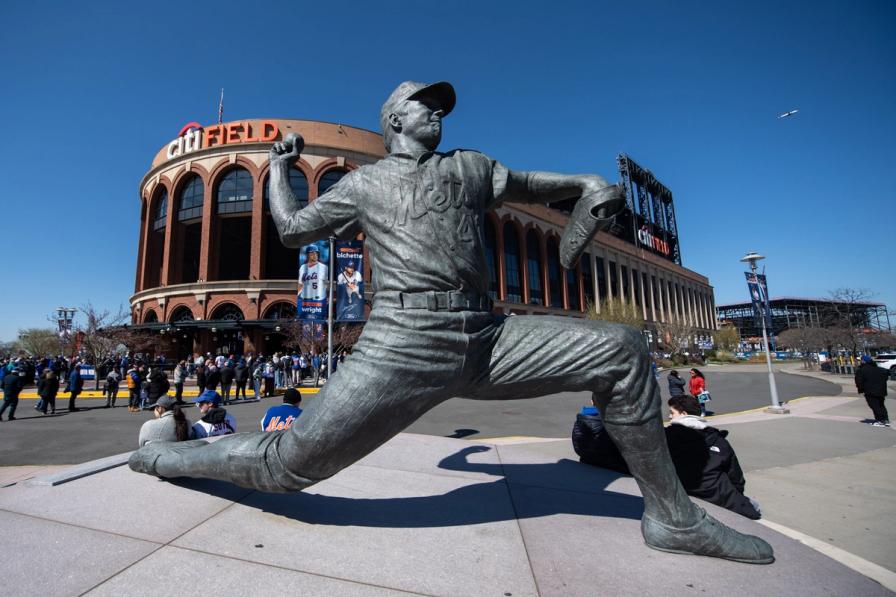
The congressional aspirant is more specific about clawing back federal subsidies for eventual casino projects — which he insists would not apply to tribal reservations. For instance, “in the case of Citi Field, when they built that parking lot that they want to turn into a casino now, that received tax-exempt bond financing worth hundreds of millions to the builders of Citi Field. Now that they’re proposing a casino for that same site, they should repay the millions that they received in tax breaks.”
As for Native American casinos, “I don’t propose to regulate activities on those lands. They have special legal considerations that are unrelated to this bill.”
Park suggested that gambling should be federally regulated, which he would put under control of the Bureau of Alcohol, Tobacco & Firearms.
AGA’s Miller sees it differently
One person who wouldn’t agree would be American Gaming Association President Bill Miller. Although unfamiliar with Park and his proposed legislation, Miller took issue with the ideas behind it. (Rep. Meng’s campaign did not respond to Casino Reports’ phone calls.)
“The gaming industry and sports betting is one of, if not the most, highly regulated industry in America,” Miller said. Existing advertising standards “that we both create voluntarily, as well standards that we’re held accountable to by regulators that we work under, are appropriate,” he maintained.
The type of restrictions proposed by Park were described by Miller as “a well-intentioned and misdirected piece of opinion.” That said, he extended an olive branch: “If this person should actually become a member of Congress, we’ll be happy to meet with him and explain what the legal, regulated marketplace looks like. Then conversely, we’d show him how easy it is to find Bovada and Kalshi and Polymarket on their social media sites,” Miller said, referencing betting platforms that face no state regulation.
Miller said his role includes educating new members of Congress on the casino industry and how it is economically additive to communities like Park’s. “It’s quite different from these prediction markets, who say, ‘This is not part of entertainment; this is financial investing.’ And that is a scary proposition that every member of Congress and member of Congress wannabe should be talking about,” Miller concluded.
On that, he and Park might find common ground. As the candidate said, “There’s no reason a kid that’s playing a game on their phone should get an ad for Kalshi.”

David McKee is a correspondent for CDC Gaming. His “Stiffs & Georges” column appears on LasVegasAdvisor.com. He lives in Augusta, Georgia, with his wife and their three cats.