Pennsylvania Supreme Court Declares Skill Games Illegal
The state's highest court gives lawmakers a 120-day window to regulate the devices before law enforcement could begin removals

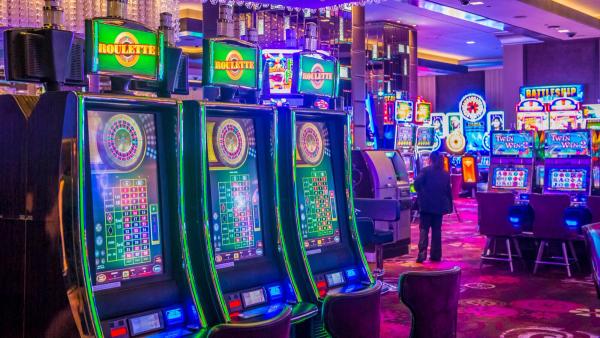
Pennsylvania's skill games are operating as illegal slot machines and the legislature should regulate them or they should be removed from thousands of locations in the state, the state Supreme Court ruled Monday.
The decision comes after proliferation of the untaxed, unregulated machines sitting in clubs, bars, gas stations, and convenience stores throughout Pennsylvania. The justices stayed their order for 120 days, giving lawmakers a four-month window to legalize, regulate, and tax the devices before law enforcement could begin taking action against them.
The casino industry in Pennsylvania, which combined has far fewer slot machines than estimates of the number of unregulated skill game devices, has contended for years that the latter represent unfair and illegal competition, with the Pennsylvania Gaming Control Board agreeing. Lack of legislative action has left it to the courts to try to settle the issue, leading to Monday’s ruling,
The justices decided two cases at once, and in both they shredded the lower Commonwealth Court's reasoning allowing the machines as "deeply flawed" and "incorrect on both points," as reported by the Spotlight PA news service. A skill game, the justices wrote, is a slot machine "several times over." Whether it involves some minor element of skill, they said, is beside the point.
Justice David Wecht had little patience for the industry's argument that banning skill games would also end up affecting arcade machines.
"This is a 'slippery slope' argument that the Commonwealth calls the 'Chuck E. Cheese defense,'" Wecht wrote, according to the Altoona Mirror. "Despite its euphemistic name, the 'Pennsylvania Skill Amusement Device' plainly is not purely for entertainment. It is not a game for children to win prizes. Its raison d'etre is to take the money off those who risk it in the hope of winning more money."
Representatives of House Democrats and Democratic Gov. Josh Shapiro said they were still reviewing the ruling.
Analyst deems it positive for casinos
At least one Wall Street analyst took it as good news for the legalized casino industry. In a note to clients, Citizens analyst Jordan Bender called the decision an "incremental positive" for regional operators with Pennsylvania exposure, identifying Penn Entertainment, Boyd Gaming, and Churchill Downs as the companies that stand to benefit most.
Bender views legalization within the 120-day window as unlikely because control of the legislature is split. Lawmakers are scheduled to be in session until June 30 before taking a recess until fall.
If the machines are removed, which is the outcome Bender sees as more likely, he expects Pennsylvania's casinos to win back a chunk of the skill machine gambling dollar.
He also sees a smaller lift for the online operators — names like DraftKings, FanDuel, Rush Street Interactive, and MGM — as some skill game players move to gamble on their phones.
And if Pennsylvania regulates instead of bans?
Bender figures route operators such as Accel Entertainment make a real push into the state. He also sees Penn and Boyd getting in through their distributed-gaming arms, Prairie State Gaming and Lattner Entertainment.
That outcome would likely mean fewer machines across the state than exist today, which he still sees as a modest upside for the casinos.
Tax rate has been hang-up to action
For all that, any legislative action still hinges on a tax rate lawmakers have never been able to agree on.
Shapiro's proposed 2026-27 state budget would set it at 52%, close to the 55% the state already charges on casino slots. Senate Republican leaders have backed 35%. Some other Republicans have pushed 16%, according to the Spotlight report.
The legislature’s Independent Fiscal Office estimates that regulating and taxing the machines could eventually generate more than $1 billion a year.
At least one lawmaker urged his colleagues not to chase the revenue without thinking it through.
"What we are talking about here is the potential largest expansion of gambling in Pennsylvania history since the casinos," Rep. Ben Waxman, a Democrat representing Philadelphia, told Spotlight PA. "And we cannot make short-term decisions with really long-term consequences."

Jeff Edelstein is a longtime columnist, reporter, radio host, and fantasy sports aficionado, not necessarily in that order. He lives in New Jersey with his family.