Resorts World NYC’s Head Start Comes With Additional, Disputed Costs
Queens casino seeking legislative changes in face of horseracing subsidy expectations

Is Resorts World NYC in Queens already the biggest revenue-generating casino in New York state by a wide margin? Yes, it sure is.
But is it also facing a steep challenge to turn serious profits because its proposal to the state last year included an agreement to pay a jaw-dropping 56% tax rate on slot machine revenue and a 30% rate on table games? Also yes.
And is the newly expanded property trying to find ways to limit the amount of money it pays to the state, particularly over the next four years when Resorts World NYC figures to be the only game in town? According to New York Focus, that’s another big yes.
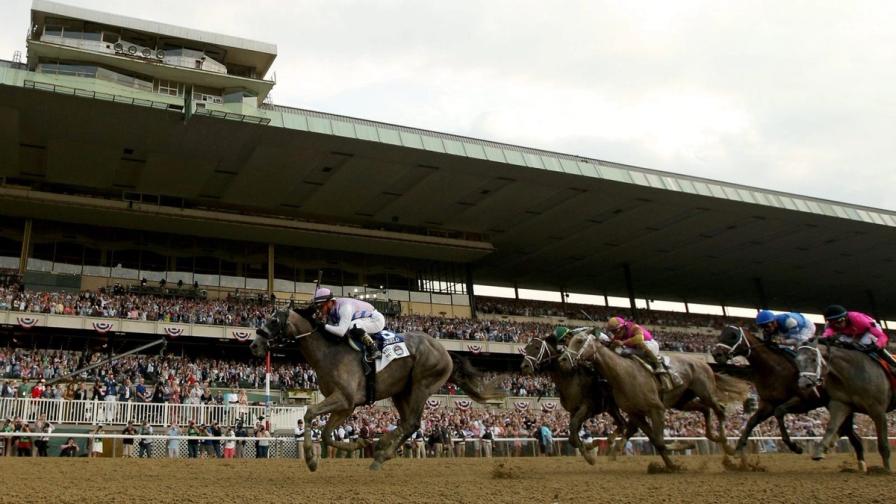
The media outlet reported Monday on Resorts World NYC’s ongoing dispute with the state over annual payments to support New York’s horseracing industry — payments that the operator reportedly believes are baked into the tax rate it agreed to, while the state expects to collect the fees on top of the 56% and 30% taxes.
Casinos being asked to pay horseracing subsidies is not a circumstance unique to New York — neighboring New Jersey, for example has a similar arrangement — but the price tag in New York is substantial, at more than $150 million annually. And while Resorts World’s April opening gave it roughly a four-year head start on its eventual competitors Hard Rock Metropolitan Park and Bally’s in the Bronx, until those properties open the $150 million subsidy falls entirely to Resorts World rather than being split three ways.
That’s more than $600 million over four years, and according to New York Focus, Resorts World has proposed legislative changes to stipulate that the horseracing subsidy money comes out of the existing revenue taxes.
Taxes paid, taxes owed, taxes projected
The New York State Gaming Commission has thus far published the first four weeks of revenue reports for Resorts World NYC.
The total slots gross gaming revenue through May 24 was $86.8 million, which means $48.6 million in taxes to the state for a little under a month of operation. On the table game side, GGR the first four weeks totaled $23.8 million, resulting in another $7.1 million in taxes owed.
Combined, that’s $55.7 million in taxes generated through four weeks. Extrapolated over 52 weeks, it comes to $724.1 million that Resorts World NYC would pay the state.
There is a significant difference between taking $150 million out of that or adding $150 million on top of it. If the horseracing subsidies come out of the existing tax payments, that drops the take for the state fund earmarked mostly for education and public transit to a little under $575 million. If the horseracing payments are in addition to Resorts World’s state taxes, that means the property will be paying about $875 million annually in all.
Each prospective downstate casino proposed its own revenue tax rates during the bidding process, and Resorts World shot far higher than the other winning bidders. Bally’s highest tax rate will be 30%, and Metropolitan Park’s will be 25%.
Bloomberg reported that Resorts World inquired with the state after the bidding was complete about reducing its tax rate, having seen how much higher it was than its competitors’ rates.
But with the rates locked in at 56% for slots and 30% for table games, a statement Resorts World spokesperson Stefan Friedman provided to New York Focus indicated the company will abide “by the payments we agreed to in our winning bid for a commercial license” — but that it expects the horseracing payments to come out of those agreed-upon taxes.

Eric has been a professional editor and writer for more than 25 years, including nearly 20 years of experience covering the gambling industry. He was editor-in-chief of the poker magazine All In from 2005-2015 and manag…