Fanatics Fest Highlights How Sports Card Collecting Has Evolved Into High-Stakes Gambling
The sports card hobby has shifted from a childhood pastime into a high-stakes marketplace that mirrors aspects of a casino floor

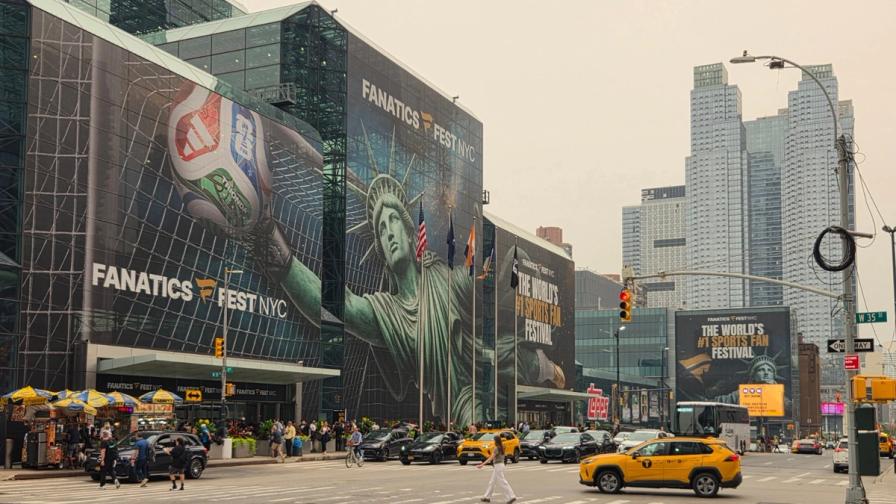
The sports collectibles gambling scene market is alive and well.
All right, let's get this part out of the way immediately: Collecting sports stuff is mostly gambling at this point. Sure, there are people in it only for the joy of collecting, but a quick look around Fanatics Fest in New York last week showed a different story.
To be clear, before the angry emails come roaring in, I'm more or less fine with this development. I don't care. Sure, I can remember driving to Pete's Stationery with my dad on Sunday mornings in 1979, where he'd buy the Newark Star-Ledger and let me buy a rack pack, 39 cards for 59 cents. Wholesome.
Today, the same father would be reading NJ.com on his iPhone in a Waymo and explaining to his kid that no, there's no freaking way I'm giving you $150 for a box of Topps Series 2 because you hope to pull a Golden Mirror Base Image Variation of Chase DeLauter.
Again: It's different. Oh well. Innocence lost, etc. Carry on.
But goodness, is it different. I witnessed plenty of kids rolling through the four-day event at the Javits Center with giant rolling cases of cards. These are little children, engaging in high-stakes buying and selling (again, pretty much gambling), and there wasn't a single warning sign to be found. We're OK with this though, right (wipes sweat from brow)? Right???? RIGHT?!?!?!?!?!
Yep. We're OK with it.
Bonkers
Listen: This event was bonkers. I hesitate to say every celebrity in the sports world was there, but when Tom Brady and LeBron James and Cooper Flagg and David Beckham and Kevin Hart and John Cena and Derek Jeter (just click here and I won't mention another name) are in attendance, it's a pretty big deal.
In addition to the autograph-signing and discussions, the meat and potatoes of the event was found on the floor, where seemingly every sports card shop owner in the universe was in attendance. A company from Australia had a table. Hawaii was represented. I can only assume people came in from all corners of the world for the buying and selling going on.
It was a mob scene within an hour of the 1 p.m. public opening Thursday. People buying, selling, ripping packs, going table to table. It felt not so dissimilar to a casino. The only thing missing was the ching-ching-cha-ching-ching noises.
Priced out
Roger Gentry has been in the hobby since he was a kid, and three years ago he opened Collector's Arena in Chesterfield, Michigan, where he runs a show the second weekend of every month with 72 6-foot tables. It sells out every time. He's watched kids get priced out of the boxes entirely.
"Early on, packs were a dollar, two dollars. Kids could afford them," Gentry told me. "That's completely changed. It's unaffordable for kids. So kids started buying the singles, which is what you would pull out of those boxes. Instead of buying the whole box, you buy that individual card."
So the kids with the rolling cases aren't necessarily ripping wax and praying. A lot of them got priced out of the lottery and into the singles market, which is its own kind of high-stakes trading floor. Which is either wholesome or terrifying, depending on where you're standing. (I land on wholesomely terrifying, I think.)
Ben Corriveau flew in from Bozeman, Montana, where he co-owns Bozeman Sports Cards. He's 25, three years into owning the shop, and made the trip for the second year running. He shipped some inventory ahead and then, in the grand tradition of air travel, sat on the tarmac for three hours getting to his destination. The Montana collectibles scene, he says, is growing fast.
Corriveau is exactly the kind of guy you'd expect to have a hot take on the creep of gambling into the pastime, being young and running a shop and all. His take, though, is more live-and-let-live. In short: He was not alive for the 59-cent rack packs.
"At its core, it's about having fun, collecting the cards you like," he said. "If you're buying the boxes to chase a dollar, I don't know if that's necessarily the right way to do it. But everyone has the way they want to play the game, and that's not for me to decide."
I pushed him on it. What's the right way?
"It's however you want," he said. "If you want to collect dollar cards, you can do that. If you want to collect million-dollar cards, do that, too."
If you want the purest distillation of the gambling turn, look at the setups built entirely around the rip. Arena Club and its cousins online, where you spend $25, or $50, or $100, or $1,000, spin a wheel, and take whatever card comes out. That's not buying a card. That's buying a chance at a card.
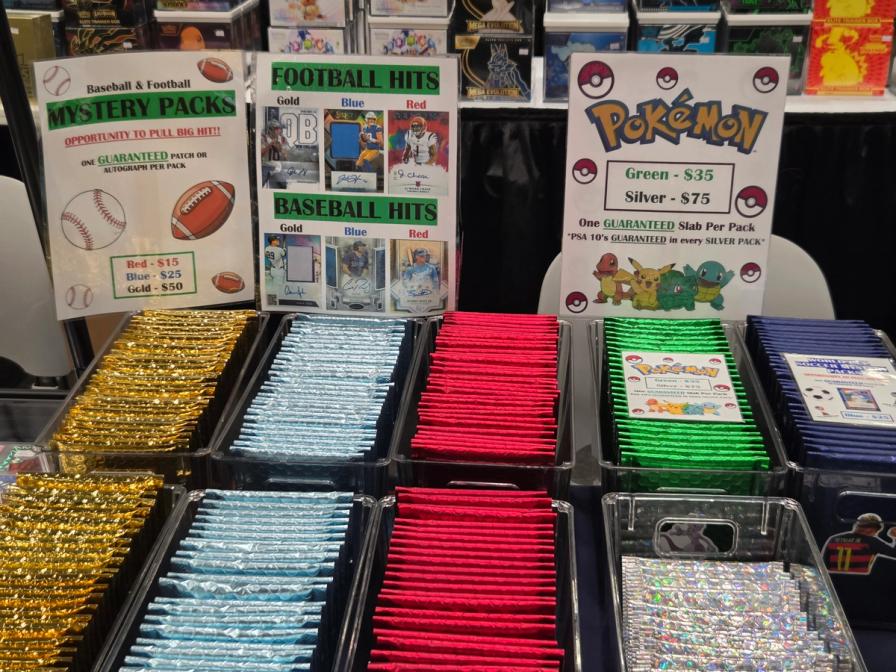
Gentry, back in Chesterfield, doesn't bother dressing it up, agreeing that it’s like any other form of gambling.
"The more you spend, the greater the reward could be."
The real Adam
Which brings me to Adam Martin, who has forgotten more about this business than I'll ever know. He founded Dave & Adam's Card World in Williamsville, New York, opened his first store in 1991, and figures he's got 40 years in the business with 35 of them behind a counter.
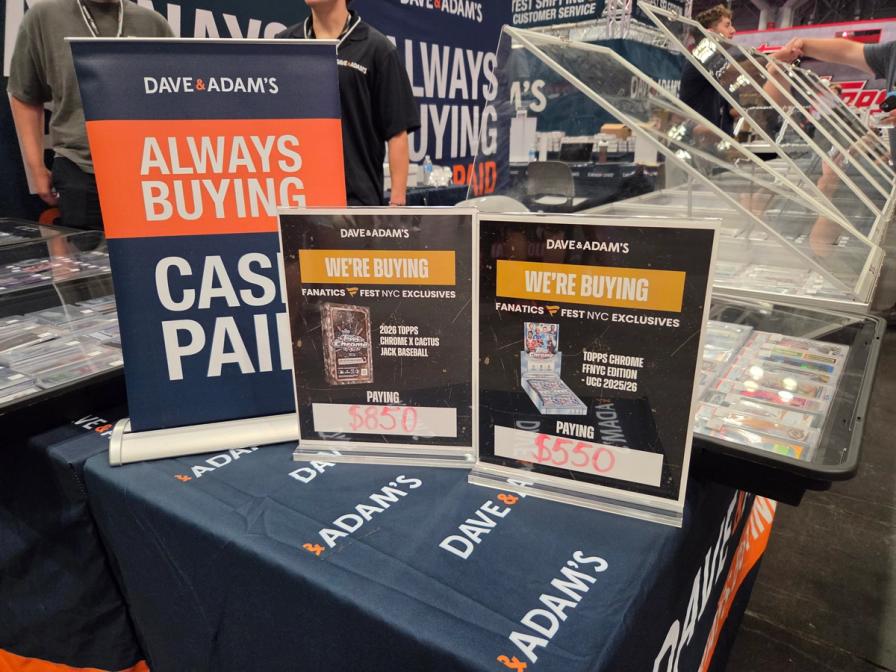
Here's where I laid my own cards on the table. I told Martin what I've been telling you: The spin-the-wheel stuff, Arena Club, all of it, that's gambling by any other name, and I don't have a moral issue with it. What gets me is that something that started with my dad taking me to the stationery store on a Sunday morning has blossomed into, well, this. Just look around.
Martin's take was that this isn't even the craziest the hobby has ever been.
"I'll add a twist and say 1989 and 1990 were even crazier," he said. "What's now considered the junk wax era, everybody was buying cases. Everybody was going to their local candy and tobacco wholesaler and making nice to the little old lady behind the counter so they could get boxes of the new cards when they came in. Then Upper Deck came in in '89 and pushed it even further." (That was a Ken Griffey Jr.-inspired craze.)
The difference now, he said, is the money. Today the dollars are, to use the technical term, insane.
Is he surprised by the size of it? Of course, he said. The business really started to pick up in 2018 and 2019, but then he thought COVID was going to put him out of business. What it did, instead, was explode the market. There was a minor correction after life went back to normal, but Martin said things are burning bright as we speak.
Buying it all
Fanatics bought Topps in 2022 for about $500 million, and from my perspective, it was about the steal of the century. Basically, Fanatics bought the industry. Or as it's called by those inside of it, The Hobby, and that's not my capitalization.
Martin, for one, gives Fanatics the credit for lighting the whole thing on fire.
"You cannot underestimate the power of marketing that Fanatics has put behind the hobby," he said. "A lot of the interest is driven by them. When you have a multi-billion dollar company throwing a marketing budget like that behind it ..."
He didn't finish the sentence. He didn't have to. As he put it, he doesn't meet anybody anymore who isn't interested in cards — Pokemon or sports or whatever. Ten years ago, he said, that was not the case.
With Fanatics Fest — and this is the third year they've done it — Fanatics has created the biggest, best, most ridiculous card show the world has ever seen. Forget Sunday mornings at the local Ramada Inn. This is nirvana if you're interested in this stuff.
Worth noting, to give you an idea of how much Fanatics thinks of The Hobby: There was a small, separate section for Fanatics Sportsbook. You could try and win FanCash by playing a few games in a roped-off area. All you needed was to have the sportsbook downloaded on your phone. This area took up approximately .0001% of the event's real estate.
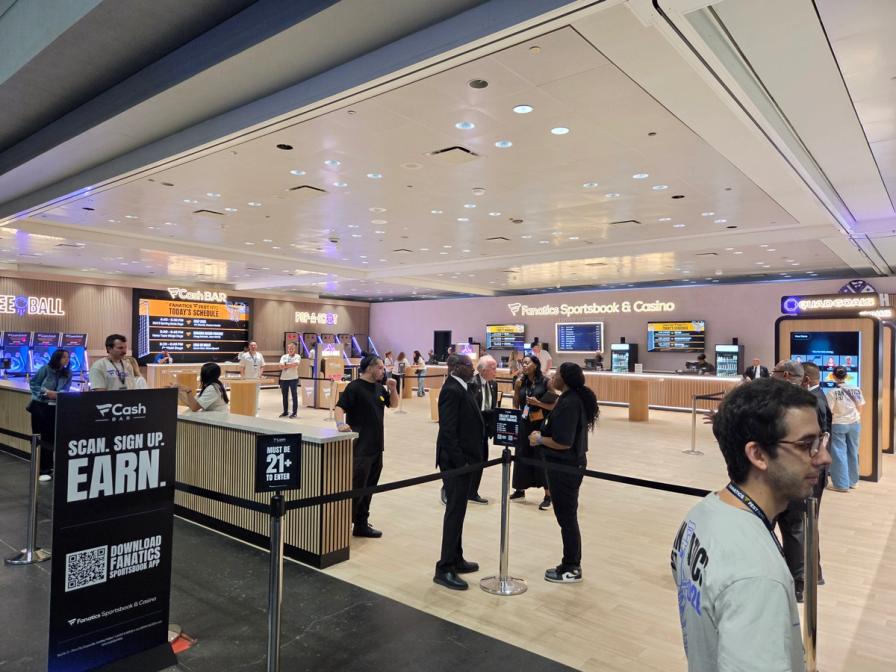
While I was there, people would wander into it -- the FanCash could be used on the event floor -- but there was no juice, no electricity. Just a few carnival-style games and a cash bar.
Think about that. The actual sportsbook — the licensed, regulated, this-is-literally-gambling operation — was the smallest thing in the building. The rest of the Javits Center was the real casino.
We might all be in the wrong business.

Jeff Edelstein is a longtime columnist, reporter, radio host, and fantasy sports aficionado, not necessarily in that order. He lives in New Jersey with his family.