Trading Cards Have Entered Their Casino Era
Mystery packs, instant buybacks, and prices up to $5,000 are giving an old hobby a very familiar feel

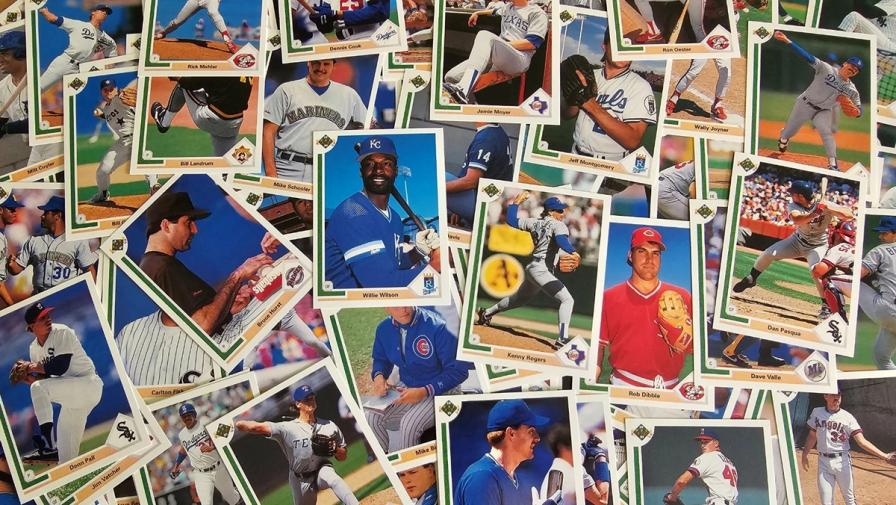
A $100 purchase on a digital repack site can go something like this: You open a virtual pack, find out which real, honest-to-goodness baseball card you got, decide you’d rather have the money, and sell the card right back. Depending on the app, you’ll get back anywhere from 90-100% or so of market value.
But market value is carrying a lot of water here. That $100 card may have a $20 market value — or maybe a $200 market value. Or maybe a $2,000 market value.
Either way, you can sell it or keep it.
And then, if you want, you can buy another one. As many as you want. At varying price points, trying — obviously — to make more money than when you started.
I mean, walks like a duck, right?
Barron’s identified 52 sites offering digital repacks as of two months ago, though if my Facebook ad feed is to be believed, that number has certainly gone up. Arena Club, which sports Derek Jeter as a co-founder, is in the business. So are Fanatics, GameStop, and Underdog, along with companies such as Courtyard and Collector Crypt.
They’re selling a souped-up version of an experience anyone who ever collected cards knows well: You pay, you open the pack, you hope there’s something good in there.
But this feels different.
Nitty gritty explanation
Quick vocab lesson: A “repack” is made up of previously issued cards that a seller assembles into a new mystery product. A “slab” is the hard plastic holder around a professionally graded card, with the grade and identifying information displayed. Buy a digital slab pack and you might get one such card, randomly selected from the available inventory.
You choose how much to spend — Underdog’s “rips” start at $5, while at Jeter’s Arena Club, there are $5,000 options. You watch the reveal and decide what to do with the card. Depending on the service, you can leave it in a vault, request delivery, list it for sale, or accept the buyback. Some offers give you money you can withdraw; others give you credit to keep spending on the platform.
Arena Club’s Pokémon page, for example, advertises packs from $25 to $2,500, with a 90% buyback offer available for 24 hours.
Again, though, that’s not 90% of the purchase price. It’s 90% of the value of the card. This isn’t exactly advertised heavily on the sites, for the record. There can be fees, too. Repackz, not to be confused with Packz, which is another company in the space, advertises a 90% buyback with a “restocking” fee that reduces the payout to 84%.
Slab packs aren’t the only game in town. Some sites offer physical repacks, where the mystery comes in an actual package, delivered to your door. Or you can participate in livestream breaks, where a host opens cards on camera and distributes them according to purchased spots, teams, or other arrangements.
But with the digital reveal and buyback, there’s no waiting for an envelope or negotiating with a buyer before you can plow your money back into the site.
And people are plowing.
The money keeps increasing
Courtyard announced a $30 million funding round in July 2025 and said its monthly gross merchandise value had grown from $50,000 to $50 million. It later told Barron’s it was on pace for $2 billion in annual sales.
Packz founder Rahul Khatti reported in April that customers had opened $8.1 million worth of packs the previous month, up 76% from just a month earlier. He also announced $10.7 million in total funding, with executives at DraftKings among the investors.
But hard numbers in the space are pretty much impossible to come by. And if they were all publicly available, they’d need some unpacking themselves.
Spend $100, sell the card back, spend the proceeds on another pack, and you’ve generated more than $100 in purchases from one deposit. Additionally, we don’t know how much the companies keep, or how much the customers … don’t keep.
But the industry itself isn’t bothered with that last part. They officially object to the idea that this is gambling.
“Purchasing a randomized collectible product is not the same transaction as placing a wager,” the Certified Trading Card Association wrote in an August statement.
The association’s argument is that you bought a collectible and received a collectible. Maybe you bought it for nostalgia, or to build a collection, or because it’s just fun. The fact that you could sell it afterward, for more or less than you paid, doesn’t automatically make it gambling.
The group did acknowledge that “(r)apid repeat purchasing, highly stimulating reveal experiences, immediate resale functionality and marketing focused heavily on financial outcomes can influence customer behavior,” and did call for “responsible-product design, consumer education, transparency and safeguards.”
But the statement ended pretty much where it began, saying this is not gambling.
View from Hong Kong
Leon Xiao, an assistant professor at City University of Hong Kong who studies gambling-like products and their regulation, is … well, let’s just he’s not exactly swayed.
“I do think they are illegal gambling,” he told InGame. “The law is just not enforced against them.”
Xiao is trained in English law, and he stressed that he isn’t a U.S. lawyer. Under English law, Xiao said, paying for a random shot at something you can turn into cash is gambling, full stop. He said many U.S. state laws work much the same way, though some allow these products if buyers are offered a free way to enter. Receiving a physical card doesn’t, by itself, get the transaction out from under those laws.
To be clear, though, that doesn’t mean he thinks a $5 pack at Target poses the same risk as spending thousands of dollars on a single reveal.
“Because the law is written the way it is, the $1 product should be regulated the same way as the $5,000 product, but that doesn’t necessarily mean the law has been drafted correctly or in the best possible way,” he said.
California, as it happens, already has a law specifically dealing with sports-card grab bags. Penal Code Section 319.3 there includes certain grab-bag games in its definition of a lottery. It describes paying for a sealed package of sports cards removed from their original packaging, with a chance at advertised prizes that appear in some, but not all, of the bags.
Applying that to the slab pack business would probably take more work than pointing at the statute and yelling “fire.” For one thing, it’s written around sports cards, so it doesn’t answer the Pokemon question.
In an effort to stay on the right side of the law should they ever be questioned, some companies are applying the “no purchase necessary” sweepstakes-like language into their sites. Arena Club has a mail-in promotion which is exactly that: a chance to win cards without spending a nickel.
So while these companies are probably, at best, working in some gray areas, a search around the country did not yield a single legislator who has penned a bill aimed at the burgeoning industry. But some litigation around live box breaks are starting to crop up.
Birches Health, a virtual gambling addiction treatment provider, has been hearing about cards from its patients. It says it logged a 207% increase over 12 months in patients discussing trading cards, digital repacks, and related terms.
Xiao wants regulators to take a harder look at the products, especially as the prices rise and the experience changes.
And if the conclusion is that some kinds of card collecting should be exempt from any real oversight, he’d like consumers and businesses to be able to read that in the rules.
“And if we want to provide for an exception, we should draft the exception and make it clear to everybody what is allowed and what is not allowed, and where we draw the line,” he said.

Jeff Edelstein is a longtime columnist, reporter, radio host, and fantasy sports aficionado, not necessarily in that order. He lives in New Jersey with his family.