We Need To Stop Pretending Gambling Is Not Gambling
A rational, reality-based reaction to the recent 'Gamblification of Everything' webinar


First I gotta tell you about Uncle Dick before we get to Tokyo Joe.
It was 1997, 1998, somewhere in there, and I was basically making my “living” buying and selling penny stocks. I put “living” in air quotes because I was paying $350 a month in rent and residing with four other people in an apartment above a funeral home.
My nut was manageable, is what I’m trying to say.
A few years earlier, my Uncle Dick had put a bug in my ear about Y2K, how computers were not going to know what to do when the clock struck midnight on January 1, 2000, how there was money to be made in that particular market (assuming the world didn’t end, which was an actual fear). I remember two of the companies he gave me: Viasoft and Data Dimensions. I remember their NASDAQ symbols: VIAS and DDIM. I remember making “a lot” of money. (Again, the air quotes.)
Uncle Dick drove a canary yellow Mercedes convertible, always had a toothpick in his mouth, never married (but had a lifelong girlfriend), and never held a job, and when I was a little kid, he’d come to my house with Toys‘R’Us bags. He wore a fedora sometimes, zero irony.
He was awesome.
He also introduced me to a game in which he’d pull a bill out of his wallet. Sometimes a buck, sometimes a Franklin, sometimes something in-between. He’d fold it in half, cover the serial number with his thumb, and ask me to guess a number between zero and nine. He’d slowly reveal the serial number. If my number came up, I got the money.
If I picked incorrectly?
He’d cackle and put the money back in his wallet.
I thought — and still think — Uncle Dick was the alpha and omega of manhood. Or at least a certain kind of manhood.
So when Uncle Dick told you to invest in fly-by-night stocks that promised to turn the number 99 into the number 00 seamlessly in an effort to save the world’s computers, you listened.
As it turned out — shocker — making a few bucks without lifting a finger appealed to me, so I was on the lookout to become the next Uncle Dick.
And that’s when I stumbled upon pink sheets, chat rooms, pump-and-dump schemes, and Tokyo Joe.
Taboo
“The term gambling is viewed as taboo, and so some of these emerging forms of gambling don't want to be called gambling,” Matt King, the CEO of Fanatics Betting and Gaming, said during an American Institute for Boys and Men roundtable discussion last week titled “The Gamblification of Everything.” “And so they spend all their time denying that they're gambling instead of having a common sense conversation of like, OK, you may not be exactly gambling, but you're pretty damn close, and there's a basic set of consumer protections and, frankly, advertising restrictions that should go along with that.”
King was talking more or less specifically about prediction markets, which are not — as we all know, wink-wink, nudge-nudge — gambling.
They are trading. Investing, even.
But it doesn’t stop with prediction markets, as the roundtable — which also featured New York Times writer German Lopez, economics commentator Kyla Scanlon, and Jonathan Cohen, who leads gambling policy for AIBM — noted.
Loot boxes: not gambling, but gambling.
Crypto: not gambling, but gambling.
Meme stocks, GameStop: not gambling, but, as King put it, “100 percent gambling.”
Roblox: not gambling, but same mechanics, so basically, gambling with training wheels.
NFTs: not gambling, but gambling.
Day trading: not gambling, but gambling.
In the parlance of our times: It’s all gambling, bruh.
Busted
All right, so Tokyo Joe ended up getting arrested, had to pay a $750,000 fine, but before all that … he was something to behold.
On early stock message boards like Silicon Investor and Raging Bull, Tokyo Joe — real name: Yun Soo Oh Park — was the man. He’d post stock “tips,” (air quotes again) almost all of them for the thinly traded pink sheets stocks, the penny stocks.
If you’re not familiar with pink sheets, a scene in The Wolf of Wall Street does a pretty good job of explaining.
Basically, these companies were — to quote a different scene from the movie — fugazi. Fairy dust. Doesn’t exist. They might have been real companies at one point, they might have a P.O. Box, they might think that one day they might be a real company, but at the moment … not so much.
So Tokyo Joe — and others — weren’t exactly analysts. They were more like … well, criminal touts, I guess, but whatever.
One stock stands out in my memory, TPII was the symbol. This is how it would go …
Tokyo Joe would post about TPII, how the stock was primed for liftoff, how their product was going to change the world. The stock would be trading at ⅛, ¼ — this was before decimal points — and people would snap it up, sending the stock up 100%, 200%, 500% in a matter of minutes.
And it would come crashing back down again just as quickly.
I was doing this on a dial-up modem and ETrade.
It wasn’t as simple as I laid out above, but that was the gist. The whole game was sussing out, via the message boards, how “hot” the stock was going to get. More often than not, I’d buy and sell around the same price, paying the $20 commission both ways, or sell at a small loss when the stock barely budged.
But every so often, I’d buy at ⅛ and sell at $2 or $3.
Often, the craziest time was at market close — TPII is going to pop tomorrow! — and I’d end up holding — my goodness, HOLDING — one of these stocks overnight.
Of course, this was not gambling. This was investing. Same with the Y2K stocks. Investing. Not gambling. Of course. Duh.
It’s all gambling
King again: “Let's agree what makes sense for a sports betting-type product from a consumer protection perspective should be applied to this whole spectrum of things. Age restrictions, advertising restrictions, and everything else.”
He’s talking about prediction markets, and NFTs, and loot boxes, and all of it.
Basically, and my words here: We all agree that sports betting is gambling. We all agree slot machines are gambling. How are we so %#$@% dense as to think the other crap isn’t also gambling?
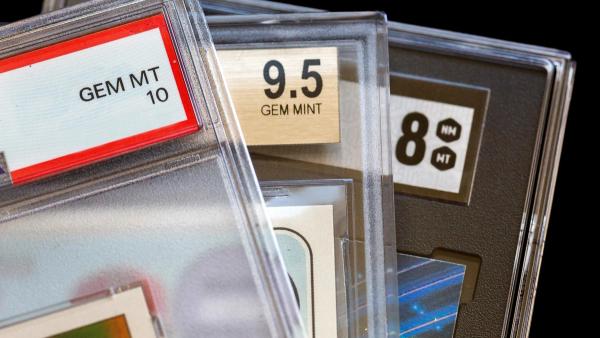
Like trading cards. More like gambling cards, amirite?
I just discovered Packz and Arena Club and Courtyard and about 100 other companies that turned sports cards and Pokemon and all that into a slot machine.
Basically, this: You buy at a price point — Packz is up to $1,000 — the wheel or whatever spins, you get a card. At that point you can keep the card or the company offers to buy it back at around 80% or so of the going price.
The Packz tagline sums it all up: “Open packs. Win cards. Cash out instantly.”
You have to be 18 to use it, but … you don’t. There’s no KYC in the repack biz.
This “not gambling” product is one of the most gambling products I’ve ever seen. It makes pink sheets trading look like treasury bills.
But again: Not gambling.
Come. On.
Go ahead and search these companies up, and then check your Facebook. Every other ad will be for these companies. People posting there and other places about their huge hits.
Just like sports betting touts. And meme stock pushers. And all the rest.
Good thing Tokyo Joe didn’t have Instagram.
“I think that a big part of the problem is the marketing … and I don't know if there's a way to have social media posts be regulated in a sense, because I think that's fuel to the fire,” Scanlon, the economist, said during the roundtable. “I was working in crypto during the last boom and it was all of the same patterns.
“People are just betting everything on this pudgy penguin NFT, and I just feel like people will move money from one spot to another because of the FOMO that's created on social media,” she continued. “And social media is essentially apparently impossible to regulate, but I think even just figuring out how [to make] the prediction markets say if they're partnering or paying somebody to post — it's really important.”
She said the above three days before The Wall Street Journal report on Polymarket’s (or should I say “PoIymarket’s,” that’s a capital “I” and not a lowercase “L” back there) alleged scheme to show the world how influencers were getting rich. Spoiler alert: They’re not.
Let’s be real
I'm not on a high horse. I love gambling. Loved buying TPII at an eighth, loved watching it run, loved the whole stupid rush of it. Hand 25-year-old me a Packz account and I’d blow the rent money in an afternoon.
And if prediction markets had been around back then? Forget it. I'd have been all-in on whether the Knicks covered, and I probably would have told you, straight-faced, that it was investing. That I was reading the market. That I had an edge.
I would not have had an edge. I would have been gambling.
So I'm not telling anybody to stop. People do what people do. Always have. But can we knock off the dance? Can we stop pretending the loot box and the repack and the pudgy penguin and the prediction market are anything other than Uncle Dick folding a bill in half and telling you to guess a number?
Because that's all it is, that's all it ever was, that’s all it’s ever going to be. Let’s all grow up.

Jeff Edelstein is a longtime columnist, reporter, radio host, and fantasy sports aficionado, not necessarily in that order. He lives in New Jersey with his family.