A Shot Clock In The WSOP Main Event? It’s About Damned Time!
Mid-tournament rule change not ideal, but something had to be done about tanking

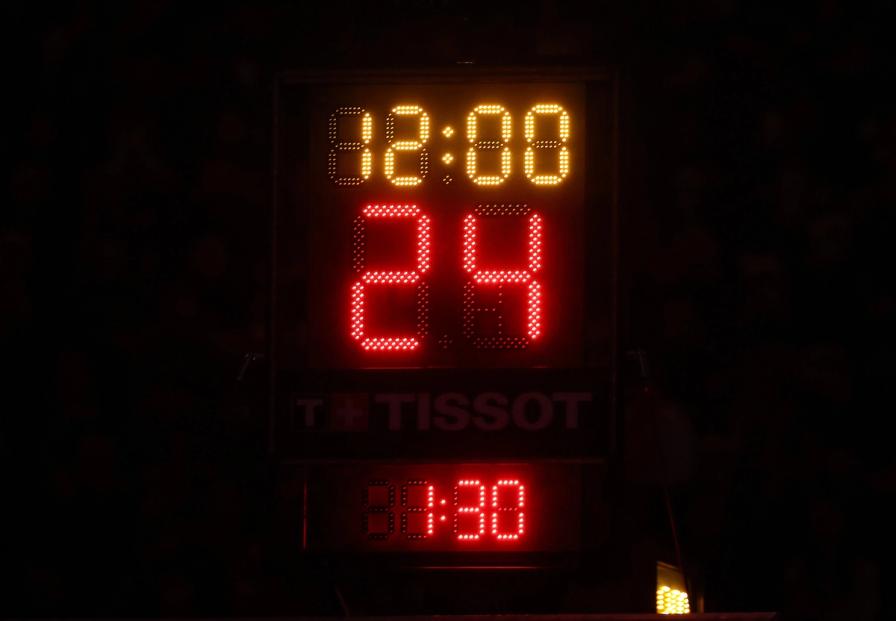
Congratulations, Loren Klein. You are the Ted Stepien of poker.
Stepien was the owner of the Cleveland Cavaliers in the early 1980s who traded away five straight years’ worth of the team’s first-round draft picks. It forced the NBA to step in and institute the “Stepien Rule,” barring teams from trading their first-round picks in consecutive years. Stepien had done something so damaging to the product that the league changed its rules to prevent further damage.
Now Klein, a professional poker player from Golden, Colorado with four World Series of Poker bracelets to his name, has done something so egregious as to force the “Loren Klein Rule.” (Not that anyone is calling it that, but I will, for now.)
With 72 players remaining in the WSOP Main Event on Saturday, and with 72nd place set to pay $105,000 and 71st place representing a pay jump to $125,000, the short-stacked Klein left one chip in his stack. He then stalled on a decision for a full 15 minutes, hoping and praying that someone at another table would bust while he was “tanking,” allowing him to earn an extra $20,000. The logic behind what he did is undeniable. So is the unfairness to everyone else in the field who was playing the game with decency and dignity. And so is the damage it does to poker as a plausibly entertaining TV/streaming product.
In the end, the scheme got Klein nowhere. He still busted in 72nd place for $105,000.
But the WSOP brass reacted anyway. The Main Event has never, in its history as a freezeout tournament dating back to 1971, used a “shot clock.” But that changed overnight between Saturday and Sunday.
It was a controversial, polarizing decision — largely because of when it happened, mid-tournament, on the fly, with players having paid $10,000 to enter a tournament with a particular set of rules and now being told those rules had been rewritten.
But even if it wasn’t the ideal time to do it, it was the right thing to do. Not because of Klein’s actions (or rather, inactions), specifically. But because tanking is an absolute epidemic that has been plaguing poker tournaments for decades, and it was high time for the “greatest poker tournament in the world” to recognize it.
Make up your mind
Here are the rules the WSOP implemented ahead of Day 7’s play: There’s a 20-second clock on every action pre-flop and a 30-second clock on every action on later streets, and each player is allowed to use six 30-second “time extension” chips over the course of a day’s play. If you don’t act in time, your hand is either checked or folded.
It’s not perfect. No system is. But it’s a huge improvement over the previous system, which was … well, no system at all, allowing someone like Klein to blatantly stall for 15 minutes, or until a fellow player at their table decides to be the “bad guy” and call the clock on them.
As someone who’s been playing, watching, and covering poker for more than 20 years, I say without hesitation that every tournament should have a pre-flop decision clock starting on Day 1, and it could even be 15 seconds instead of 20 — at least in cases where there’s been no action in front of you. You know what you’re going to do within five seconds of looking at your cards. Pre-flop decisions just aren’t that complicated.
And it’s maddening to see players wasting everyone’s time and making the game unwatchable as they take their deep breaths and look around and pretend to ponder before folding their 9-4 offsuit, either because they believe taking forever on every decision disguises their play better or because they just want to agitate their opponents.
So, yeah, 20-second shot clock pre-flop? Absolutely. No-brainer. If you don’t like it, that means you’re part of the problem.
The 30-second clock after the flop, turn, and river? That’s a tougher one. But it still should be enough time for most of a player’s decisions and will put an end to unnecessary “Hollywood-ing.” The only problem is when, on occasion, a legitimately grueling, high-stakes decision arises, and even a couple of 30-second extensions aren’t enough to properly think it through. I wouldn’t mind if every player got, say, three 60-second extensions and three 30-second extensions to slightly increase the leeway there.
But the fact of the matter is, tanking goes a long way toward convincing people not to play poker tournaments and toward convincing people not to watch poker tournaments. The occasional intense stare-down offers drama, certainly. But poker needs those to indeed be occasional or else there is no drama — just irritation and, ultimately, a changing of the channel.
Batter up
Look no further than Major League Baseball for a clear example of the value of adding a timer. When the MLB first announced plans for a “pitch clock,” opinions varied, and some players worried aloud that they would feel hurried and their performance would suffer.
There was indeed a learning curve and a re-shaping of habits, but pretty soon, everyone got the hang of it. And good luck finding any fan who doesn’t think it made baseball more fun to watch. The average length of a game had gotten as high as three hours and 10 minutes before the pitch clock. It now hovers around two hours and 37 minutes. It worked.
A shot clock in the WSOP Main Event will work too, even if it takes a little getting used to. There are other solutions to consider in the future, such as a “chess clock” approach, where each player has a time bank available to build up or drain down throughout the day, or simply empowering dealers to call the clock when they feel a player is being unreasonable.
But something had to be done, and it couldn’t wait until this tournament was over.
In the future, I think the 20-second pre-flop clock should be in play from the very start of the tournament, with some version of the post-flop clock starting on, say, Day 6, when pay jumps start to become significant.
With or without Klein’s antics, for the good of the game there can’t be situations where it routinely takes three or four minutes to get around the table pre-flop, and there can’t be situations where people spend a couple of minutes pretending to think hard when they were 99% sure of what they were going to do from the moment their opponent tossed out chips.
The WSOP had to do something to keep the game moving. Loren Klein effectively called the clock on the tournament organizers, and it’s to the game’s benefit that they promptly made a decision.

Eric has been a professional editor and writer for more than 25 years, including nearly 20 years of experience covering the gambling industry. He was editor-in-chief of the poker magazine All In from 2005-2015 and manag…