Ruddock Report: Did The Midterms Really Help Online Casino Efforts?
All iGaming industry eyes will be on Ohio after the new governor takes office

Our monthly look at the online gambling landscape includes the current legal and regulatory scene, prospective online casino and online poker states, and significant trends to watch.
There is a renewed sense of optimism on the online casino legalization front following the midterm elections, but is that optimism justified? One major state in particular is attracting heavy industry focus.
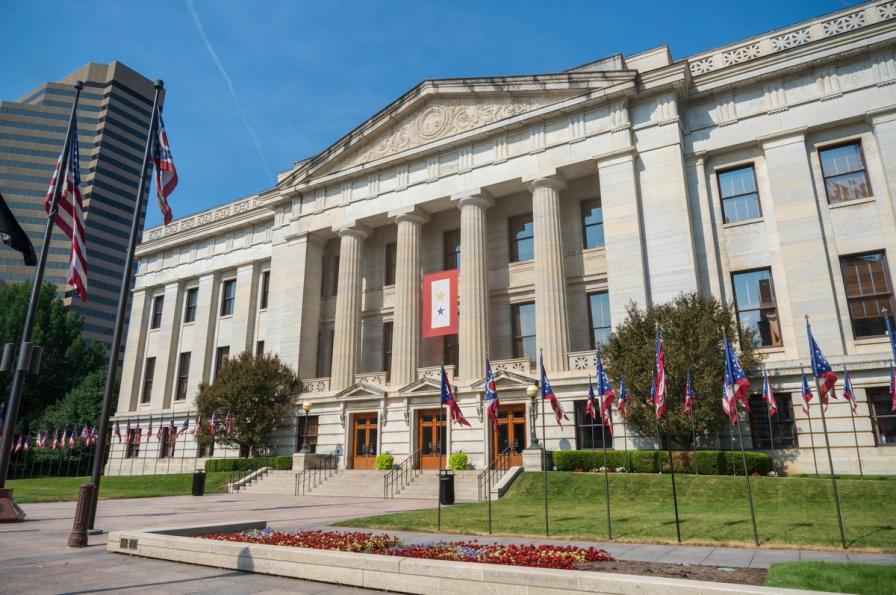
Ohio in the spotlight
Ohio has flirted with online casino expansion, but the efforts never gained much traction, garnering only a smattering of support.
Opposition runs deep in the state, with two National Association Against iGaming members, JACK Entertainment and Churchill Downs, operating in the state, as well as Penn Entertainment, which only supports online casino expansion if it is run through land-based casinos.
That said, the biggest hurdle was term-limited Gov. Mike DeWine, who has expressed deep regret over the legalization of sports betting and opposed online casinos, saying, “I’m not going to get into what I’m going to do yet, but I think everybody needs to understand what this is. This is just not an incremental increase in gaming.”
And that’s where the midterm results come in.
DeWine will be succeeded by Amy Acton, who told Cleveland.com she would consider online casinos, saying through a spokesperson that she is “open to online gambling expansion,” with the caveat that it must be done responsibly and the money must be used to increase revenue for “public schools, childcare, and measures that would reduce costs and property taxes for everyday Ohioans.”
Even with Acton open to the idea (which is a far cry from her vocally supporting the idea) and the legislature going from deep red to a more pinkish hue, both chambers are still controlled by Republicans — including the party maintaining a supermajority in the Senate. That is incredibly important, as split state governments tend to not want to make the opposing party’s governors look like a bipartisan bridge-builder, and expanding into online casinos would certainly give Acton a nice resume item to point to.
Quick hitter: Don’t sleep on DC’s online casino bill
Recent anonymously sourced industry reports pointed to the potential of a late push in Washington, D.C. to legalize online casinos. While there’s always a chance, as I noted in my Straight to the Point newsletter:
- There really isn’t all that much time, and following the midterms, with Mayor Muriel Bowser not seeking reelection, I’m not sure what the appetite would be to pass a gambling expansion bill. Legislation in D.C. is complicated, requiring committee passage, first reading, second reading (minimum 14 days in between), mayoral review, and a mandatory congressional review.
- If there was genuine behind-the-scenes momentum, the sources would be as quiet as a church mouse to avoid the anti-gambling side whispering in the ears of councilmembers.
2025-2026 online casino bills
The Ruddock Report will revise this list as new bills are introduced and reset the list at the start of the 2027 legislative cycle.
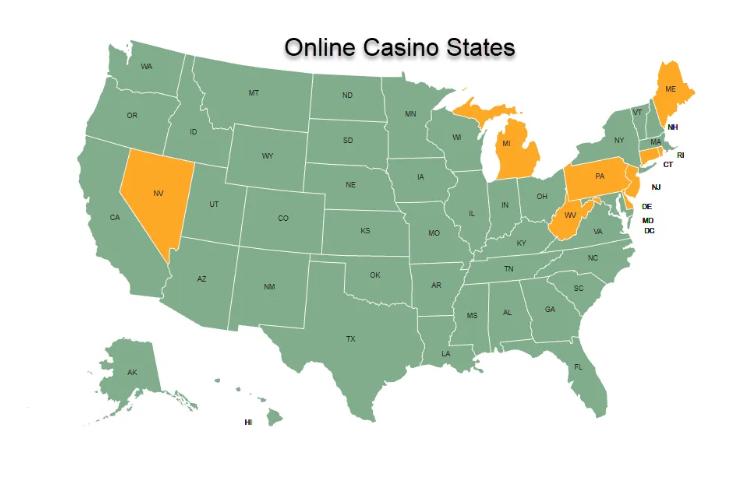
Active bills
Illinois (The session ended in May, but veto sessions will be held Nov. 17–19 and Dec. 1–3)
- HB 4797, sponsored by Rep. Edgar González Jr.
- HB 4802 (poker-only), sponsored by Rep. Edgar González Jr.
I’ve likened Illinois to the little engine that can’t, as there have been efforts to legalize online casinos in the state going back more than a decade.
There is certainly high-level support, as Gov. JB Pritzker called iCasinos an idea worth exploring last year. Pritzker’s 2026 budget said nothing about online gambling but proposed increasing taxes on existing casino table games.
More importantly, until the politically powerful VGT industry is on board, which is unlikely to happen anytime soon, legalization will remain out of reach. In January 2026, the team at Citizens met with Accel Entertainment and was told by Accel management that “there is no shot” of iGaming legalization in the state.
And recall that a March 13, 2025, legislative hearing turned into an anti-legalization struggle session, when the anti-online crowd marched in small business owners to hammer home its point.
Rep. Edgar González Jr. filed two bills in 2026. The first resembles last year’s effort, HB 3080, and the second is an online poker-only bill that has no text and simply reads, “Amends the Illinois Gambling Act. Adds a Section concerning online poker. Contains a Section heading only.”
Also working against Illinois is the ongoing effort to repeal the recently enacted city of Chicago tax on sports betting, as well as the authorization of VGTs in Chicago.
Washington, D.C.
- CB 260656, sponsored by Councilmember Wendell Felder
A bill in D.C. would legalize online casino games while simultaneously prohibiting sweepstakes sites. The bill would impose a licensing fee of $2 million and set the tax rate at 25% with an additional 2% local fee.
A hearing was held on May 4, but after four hours of robust debate, no vote was taken.
Inactive bills
Hawaii
The bills did not meet the legislative deadline and are effectively dead for the year.
Maryland
Sen. Ron Watson introduced two separate bills, one to legalize online poker and one that would legalize online casino games and bingo. SB 885 was paired with SB 761, which called for a statewide voter referendum in November 2026 for full implementation. The online poker bill sought to overcome the union and stakeholder opposition that has thwarted the state’s past online casino efforts.
A hearing on March 11 in the Budget and Taxation Committee resulted in no vote, as problem gambling and cannibalization concerns persist. The bill failed to pass the Senate before the March 23 crossover deadline and is effectively dead for the year. SB 884 was withdrawn by Watson on March 13.
Massachusetts
- HB 4431, sponsored by Rep. David Muradian
Massachusetts held two committee hearings on online casinos in 2025, but a vote was never taken. A June 23, 2025, legislative hearing (on HB 332 and SB 235) was short and sweet, with testimony and no questions from the committee. No vote was taken at the November hearing in front of the Joint Committee on Economic Development and Emerging Technologies either, but lawmakers did ask questions, with most of the questions pointing to concerns about the existing harms of sports betting.
The bill was sent to study on March 23, effectively killing it for the remainder of the year.
The recent launch of online lottery products will also make further expansion difficult, as Massachusetts Treasurer Deborah Goldberg said in December: “I, right now, am firmly against iGaming. They may not like me for that, but I gotta think about the people of Massachusetts, and that’s my top priority.”
New York
New York has frustrated online gambling supporters for more than a decade. Last year’s efforts barely got off the ground as the state was busy handing out downstate casino licenses. Now that the downstate casino licenses have been awarded, there is growing optimism that the legislature can turn its attention to online expansion, but there are still several hurdles to clear.
Those include the state’s labor unions and cannibalization concerns, and with three new casinos coming, that means thousands of new union jobs and three new land-based properties to voice concerns about online cannibalization. The three casino operators (Bally’s, Hard Rock, and Genting) are not online-focused companies, and New York Gov. Kathy Hochul hasn’t shown any signs of supporting iCasinos.
Virginia
Virginia burst into the online casino conversation last year with two bills, SB 827, sponsored by Sen. Mamie Locke, and HB 2171, sponsored by Del. Marcus Simon. The existence of the bills wasn’t a surprise, but the attention they received certainly was. Still, stakeholder opposition and union concerns caused Locke and Simon to pull their respective bills.
Simon and Locke introduced new bills in January, HB 161 and SB 118. The bills include policies to address lottery and job concerns, as well as higher problem gambling funding.
The bills progressed to a conference committee, where they failed to win approval.

Eric has been a professional editor and writer for more than 25 years, including nearly 20 years of experience covering the gambling industry. He was editor-in-chief of the poker magazine All In from 2005-2015 and manag…