Bill Introduced To Legalize iGaming And Ban Sweeps In D.C.
A bill to both legalize iGaming and ban sweepstakes casino gaming has been filed in the nation's capital of Washington D.C.

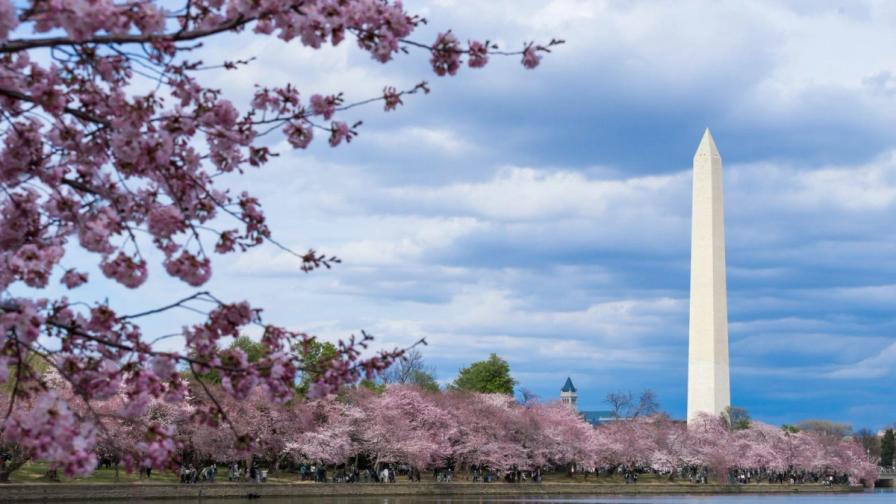
District of Columbia Councilmember Wendell Felder has filed legislation seeking to both legalize internet casino gaming and ban casino sweepstakes games.
In introducing his bill Thursday, Felder said B26-0656 "reflects a practical, data-informed approach to strengthening consumer projections, modernizing our gaming framework, and capturing revenue that is currently flowing outside of the District's oversight."
Washington D.C. has had legalized mobile sports betting since 2019, but its current expanded form throughout the district came via the Sports Wagering Amendment Act of 2024. There are currently five licensed operators offering digital wagering in the nation's capital following the departure of Penn Entertainment-owned theScore Bet in late February.
The year has proven to be another tough slog for internet casino gaming proponents thus far, with only Maine legalizing iGaming back in January.
The iGaming portion of the bill
Felder's bill calls for a $2 million license fee that would last five years, and subsequent five-year renewals would cost $500,000. The legal age for internet casino gaming would be 21. Current mobile sports betting license holders would be "entitled to an expedited review and approval under this title; provided, that the (Office of Lottery and Gaming) may rely on prior background investigations or licensure history to streamline review where appropriate."
The proposed supplier application license fee is $50,000, and a license would be good for five years. Subsequent renewals would cost $25,000, and the process could be expedited if the applicant has similar licenses from other jurisdictions.
Operators would be limited to two online skins, but the OLG has the power to "authorize an operator to operate more than 2 internet gaming brands upon a showing of good cause, including demonstrated compliance capacity and market need, provided that such approval is consistent with the public interest."
Applicants must also submit a "Certified Business Enterprise" (CBE) plan to the Department of Small and Local Business Development that shows at least 35% of the licensee's District-related operating budget will be contracted through one or more CBEs.
Adjusted gross revenue would be taxed at 25%, with the first $500,000 collected each month transferred to the Department of Behavioral Health. Operators would not be allowed to deduct promotional spend for the first three years but could carry losses over for up to six months. After the first three years, operators would be limited to deductions not exceeding 1.75% of AGR per fiscal year.
Operators would also be required to have responsible gaming tools that include the following:
- Deposit limits that can be set either daily, weekly, or monthly
- Spend or loss limits that can be set either daily, weekly, or monthly
- Session or time limits
- Cooling-off periods of not less than 72 hours
- Self-exclusion and account closure options
- Real-time or near real-time access to account history
- Periodic reminders of time spent and net activity during a session
- Procedures to evaluate requests made by third parties to exclude a patron from internet gaming
"The scope of this activity is significant," Felder wrote about iGaming. "National estimates indicate that Americans wager hundreds of billions of dollars annually through unlicensed online gaming platforms, with billions in associated revenue occurring outside of regulated systems.
"In Washington, D.C., residents are estimated to have wagered approximately $700 million on unlicensed platforms in 2024, reflecting continued growth in this market. These figures make clear that iGaming is not a new activity -- it is already occurring. The policy question is whether the District will regulate it effectively or allow it to remain unregulated."
A sweeps ban with teeth?
Regarding sweepstakes games, the OLG would be given regulatory authority to handle violations. If a violation is deemed to have been conducted by a licensee, the agency would be allowed to "issue a reprimand or corrective action order" in addition to a maximum fine of $100,000 for each violation or a maximum fine of $500,000 "for violations arising out of the same transaction, occurrence, pattern or practice."
The OLG would also be given authority to send sweeps operators cease-and-desist letters and "may seek injunctive relief and any other appropriate remedy in a court of competent jurisdiction." It would also allow the district's attorney general to "bring a civil action" as means of enforcement, including "injunctive relief, civil penalties, restitution, and disgorgement."
"iGaming, online casino-style games such as blackjack, poker, roulette, and slot-style games played on mobile devices or computers, is already accessible to District residents through unregulated and offshore platforms," Felder said. "In the absence of a legal framework, these platforms operate without meaningful consumer safeguards, age verification, or regulatory oversight, creating risks for residents and limiting the District’s ability to respond."
Maine and Indiana have already enacted sweeps bans in their respective states this year, while a similar bill is currently moving through the Minnesota statehouse. Six states passed sweeps bans last year.

Chris Altruda was a sportswriter with ESPN, The Associated Press, and STATS for more than two decades before turning to the gambling industry at Sports Handle in 2019. When not crunching sports betting revenue figures,…