Class II Mobile Emerges As iGaming’s Biggest Growth Area
How bingo balls led to slot-style games that are driving a new wave of online casinos

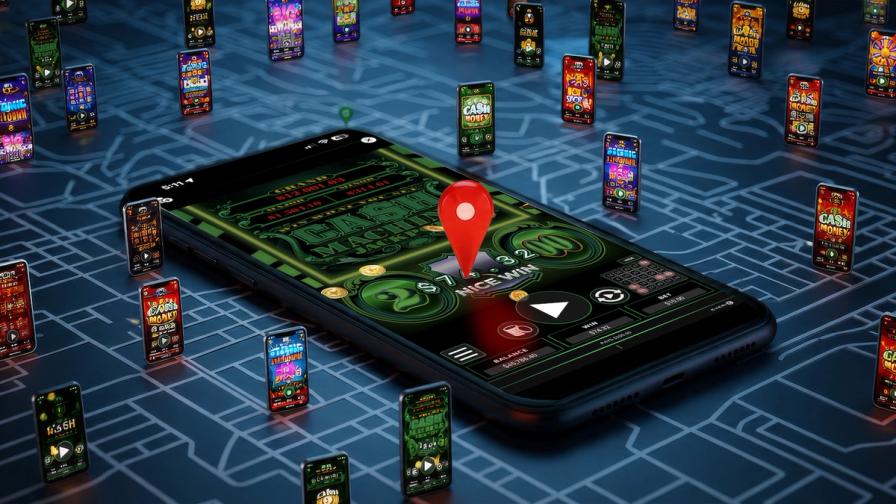
You can’t say state governments weren’t given ample time to legalize iGaming before the tribes within some of those states started figuring out a way to offer iGaming themselves.
The emergence of Class II mobile gaming on tribal lands is a story with roots going all the way back to the 1988 passage of the Indian Gaming Regulatory Act, but mobile gaming wasn’t even a twinkle in Hawaii Sen. Daniel Inouye’s eye when he introduced the bill that became IGRA. A few years later, along came the World Wide Web, then the smartphone, and now regulated U.S. online casino gaming is a more-than-$10-billion-a-year industry — to say nothing of the billions generated in countless unregulated channels.
But the gaming tribes have slowly, patiently charted their own path, while all but a handful of state legislatures sat back and did nothing. It’s a story of bingo balls, geolocation, and games that are nearly indistinguishable from many of the slots you can find at any major brand-name iCasino.
In 2022, a client asked Gene Johnson, a veteran industry consultant and the executive vice president of Victor Strategies, what he perceived to be the largest iGaming growth area given the obvious reality that state-by-state legalization was stalling out. In lockstep with most industry insiders at the time, Johnson told him it was sweepstakes casinos. And for a couple of years, he was right. Then one state after another began outlawing the gray-area games.
“The same client asked me the same question again this June,” Johnson recently told Casino Reports. “And I had to think about it, but then I said, ‘The major growth area right now is mobile on-premises in tribal country.’”
Amid a wave of creative ways springing up to simulate slot-style games without using random number generators (RNGs) to determine outcomes, Class II mobile is indeed standing out as a top contender for next-big-thing status. And there’s a developing twist: For some tribes, the “on premises” element has been extended to “on reservation,” meaning instead of these mobile games being available throughout resorts measured by the square foot, they’re available across regions measured by the square mile.
Only New Jersey, Pennsylvania, Michigan, West Virginia, Connecticut, Delaware, Rhode Island, and Maine have legalized statewide online casino play. But if you happen to be sitting in a coffee shop in Tulsa, Oklahoma right now, you can play Class II mobile games on your phone, completely legally, under tribal regulation, for real money, mixing your espresso shots with some progressive slots.
From IGRA came innovation
IGRA defined Class II gaming to include activities such as bingo and some non-house-banked card games, and these games, unlike the Class III games that patrons of commercial casinos are wholly familiar with, are permissible without the tribes signing new compacts with the state.
“The real intent of IGRA,” Johnson opined, “was to prevent tribes from doing casino games. It was meant to keep the tribes in their place. But it also was meant to tell the states that, if they were operating games commercially, then they had to compact with the tribes.”
Tom McDonald is the senior director of cage credit and digital for Choctaw Nation of Oklahoma, a tribe expecting to launch Class II mobile gaming this month in a state McDonald refers to as “the home of the Class II bingo-based slot machine.”
Bingo-based machines are forerunners of the now common historical horse racing machines or the Seminole tribe’s innovation using past auto races or DraftKings’ baseball-based experiment. Instead of using an RNG, the results of a slot spin are determined by a numerical formula stemming from the results of a sporting event. In other words, the outcome is not truly “random,” even if it may as well be and feels every bit as luck-based to the user as a Class III slot machine.
But instead of using past sports outcomes to stand in for the RNG, the Class II idea that was first experimented with in the early ‘90s utilized the results of active bingo games.
The initial versions were primitive and impractical.
“You have an electronic bingo ball call server that starts a contest,” McDonald explained. “In order to start a game, you need two players to be playing, and you basically have to wait until, here comes player number two. In the early days, if two people weren't playing on that same game, nothing was happening. They were very short-term games — it was really tough to get liquidity.
“But the way it mechanically works now, those two people will initiate a game and the 75-ball bingo card, and however many options there are potentially to happen throughout the course of a full game, that's how long that one game will stay open. When it runs out of mathematical possibilities, that game closes.
“And any Class II game, it has on it a little note that the reels or the video screen are for entertainment purposes only.”
Distinctions Between Class I, II, and III Gaming
| Category | Class I | Class II | Class III |
|---|---|---|---|
Definition | Traditional tribal/social gaming for prizes of minimal value | Bingo and certain non-house-banked card games, and derivatives thereof | Traditional casino gambling not in Class I or II |
Regulation | Exclusively by tribal governments | By tribal governments, with federal oversight by the National Indian Gaming Commission | Through a tribe-state gaming compact |
Examples | Tribal ceremonial games, low-stakes social games | Bingo, poker, non-banked card games, electronic bingo machines | Slots, traditional house-banked table games, sports betting |
‘Indistinguishable to a customer’
Class II games were the product of a gradual progression. IGRA allowed tribes to use electronic aids to actual bingo games, which started out as electronic boards in the bingo room, then morphed into electronic tablets at the counter. “Then somebody got the brilliant idea,” Johnson said, “to ask, ‘Why don't we put this tablet in a slot machine box that generates symbols instead showing of a bingo card?’”
Russell Witt, the president of Boing Gaming, has served on a subcommittee defining the standards for Class II games since 2006, watching closely as the game play and the displays evolved.
“Nowadays, it's very hard to tell if a game is Class II or Class III just looking at it, and I’m saying that even as someone with expertise,” Witt said. “They've taken the bingo-esque components out of the screen and moved them into the iDeck. So now you have a little space in the iDeck where you see the bingo card and you can see the outcome on it, but if you’re playing, once you put your money in, you're looking up at the screen — you're not even really looking at that bingo card.”
Here's a glimpse at one Class II machine on a casino floor (along with narration claiming to know how to score guaranteed wins, naturally):
Richard Sagman, the senior vice president of product management at Everi, a leading supplier of Class II games, further explains.
“The bingo math happens, the result happens, and then on the front end we show them a slot mechanic,” Sagman said. “Every time you place a wager on any of these games, you're telling the server, ‘Give me a result.’ The result comes back and then we show something fun on the front end.
“When Class II first started, it wasn't very good. You had to place a wager and double tap for every game. It was slow, and you had issues because it's a multiplayer game. You had to have liquidity. Nowadays, we centralize, we connect the liquidity across multiple properties. And the games themselves are indistinguishable to a customer. The play really feels the same. We do show the bingo card — which can also be hidden if you choose — but as far as the game's concerned, the actual outcomes and the volatility of a game or any of the definitions around how a slot game is played, Class II games really are just as good as the Class III.”
McDonald offers anecdotal first-hand evidence of that point.
“The content has gotten fantastic,” the Choctaw executive said. “The video-based stuff now is indistinguishable from a Class III game. My wife, she was looking at the different video games at the casino, and she started playing one game, and I said to her, ‘Oh, you like the Class II stuff?’ She's like, ‘What are you talking about?’ So I had to point out to her that, ‘Look, here's the bingo card in the corner.’”
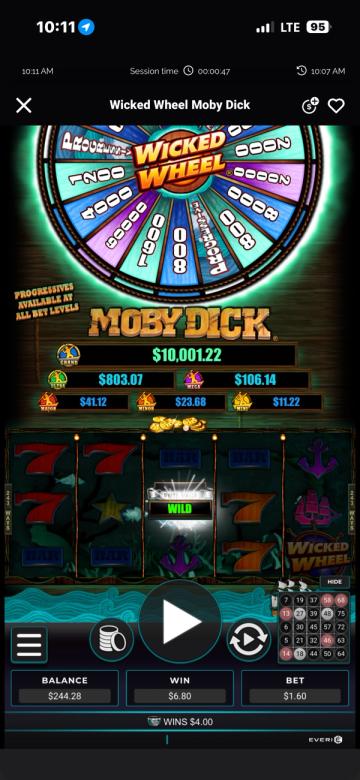
That doesn’t mean Class II games can quite do all the same things as Class III. With the bingo-based mechanic, games must have a single decision point — in other words, the player wagers, and that’s the extent of their action. There can’t be a subsequent decision to stand or hit like in blackjack. And there can’t be a choice between two bonus games like some slots have. Still, Class II slots do have bonus rounds just like their Class III counterparts, as the bonus game outcomes are all determined at the time of the initial spin (even if it may not appear that way to the player who is watching a game play out in stages).
Necessity is the mother …
Class II games on the tribal casino floor are ubiquitous at this point, but Class II mobile games? That’s a much newer category — one that, like online casino gaming in general, had its booster jets turned on when the world suddenly screeched to a halt in 2020.
“When the pandemic came, that was when the whole idea of having a mobile product really started,” explained Emmanuel Bezzell, the director of operations for Muscogee Nation Gaming Enterprises, whose properties include Muscogee Creek in Tulsa. “It just took a while to get it developed and formed into the way that we needed it to be rolled out. But I would say the beginning stages of it came out of that pandemic time frame when you had no access to the casinos.”
In regulated states like New Jersey and Pennsylvania, online casino revenue exploded during the Covid shutdowns. Full-year revenue went up 101% in New Jersey from 2019 to 2020. Pennsylvania began 2020 with a $15.8 million month and concluded it with a $108.5 million month.
“The whole discussion started out of the pandemic, identifying a need and then finding an avenue to create the opportunity for the players to play without being in the casino,” Bezzell continued. “In Oklahoma, it was easier for us to go the Class II route because the Class III mobile would require a compact amendment, and Gov. [Kevin] Stitt was not in favor of amending the compact. So between our attorney general’s office, our compliance team here, and our gaming regulatory body, we all worked together and came up with the standards that would work for the Class II environment — and then it was just a matter of whether or not a vendor was able to create the platform to use.”
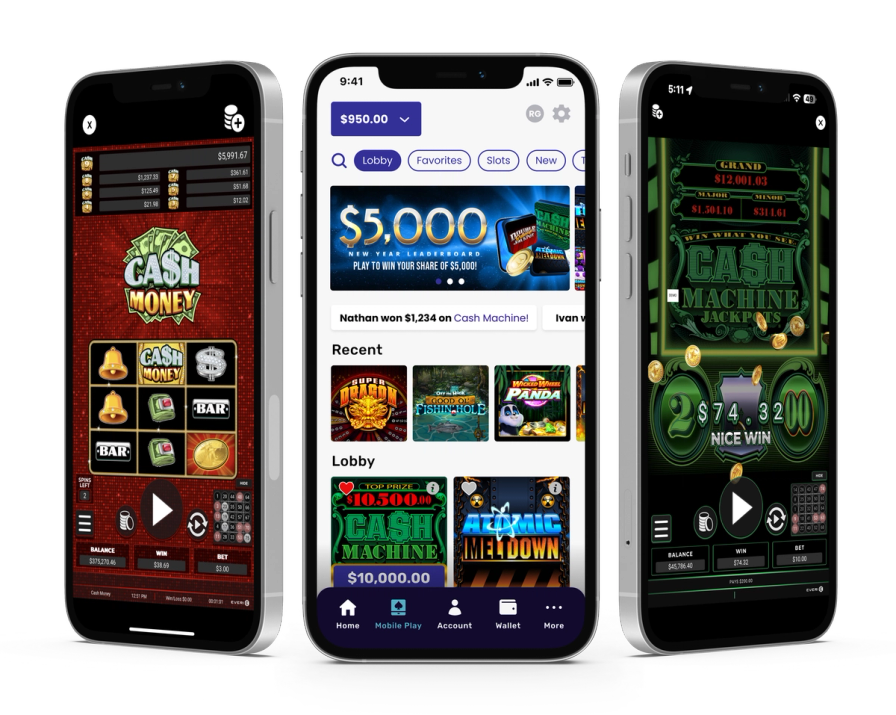
Enter the likes of Aristocrat, Amelco, and Everi — the latter of which partnered with Muscogee Creek and was the first to go live with Class II mobile apps in the Apple Store and Google Play Store, soft-launching in October 2025 before officially launching to the public this January. (Everi has since gone live with Prairie Band Casino Resort in Kansas as well.)
“We ended up going with Everi for a couple of reasons,” Bezzell said. “Everi had the platform and the PAM [Player Account Management system] already created. They already had a Class II library.
“They also were open to the idea of going reservation-wide here, which, we’re one of the unique tribes that has a designation that our entire reservation is considered Indian land. And they said, ‘Yes, we can do it, we can geofence the reservation.’”
Expand the land
As legally reaffirmed by the 2020 U.S. Supreme Court ruling in McGirt v Oklahoma, the Muscogee Nation covers nearly 4,900 square miles to the east of Oklahoma City, including about two-thirds of Tulsa — the state’s second-largest city, with more than 400,000 residents.
“They’ve got about 25,000 players registered on their platform,” Boing Gaming’s Witt said of the Muscogee Nation’s Class II app. “I think that’s starting to show people what this could really be.”
Bezzell pegged the number of unique players who have registered and logged in just a tad lower, at about 23,000, and said between 200 and 500 users are typically in action on a given day.
“We can pull data and see where the players are playing. They’re actually playing a lot at gas stations,” he said. “The time on device is just between three to five minutes on average. It’s more of a quick-style gaming.”
He said peak hours on the app tend to mirror peak hours at a casino — from 7-11 p.m., highest on Friday and Saturday nights.
So does that mean mobile play is eating into land-based revenue and traffic?
“We have not seen that. We have not seen any of that degradation,” Bezzell said. “I think part of the reason for that is, we coined this phrase ‘snack gaming.’ The mobile product is when they want to grab a snack really quick, that five-minute window. But then when they want the full meal, they come into the casino.”
Bezzell was not at liberty to share specific revenue numbers, but he said, “It performs on a similar level to one of our small casinos. We have a 3,000-slot machine casino here in Tulsa — the numbers don’t compare with that. But, one of our smaller properties only has 130 games, and the app performs at the same level as that property.”
“We coined this phrase ‘snack gaming.’ The mobile product is when they want to grab a snack really quick, that five-minute window. But then when they want the full meal, they come in to the casino.”
Sights set on on-site
While the reservation-wide approach makes obvious sense for a tribe like the Muscogee whose land covers millions of acres including a substantial metropolitan area, it won’t be logical for every gaming tribe. As Bezzell said, “Each tribe’s situation is going to be unique in how they approach it.”
For many tribes, just having Class II mobile games available throughout the property is a worthwhile enhancement.
“On premise, you can monetize your entertainment venue, you can monetize the pool area, convention space, your hotel rooms — most tribes have some sort of golf facility attached. Now you have people on the golf course playing. It is a way to create another revenue stream for them with little to no overhead,” Witt said. “If someone is there to see a show or they’re out by the pool, you're extending the gaming floor basically.”
Everi’s Sagman views mobile on-premises as a powerful engagement tool if deployed in conjunction with land-based marketing efforts.
“When you register with your mobile app, you're registering for the land-based rewards, and when you're getting loyalty points, you're connecting it to the land-based resort. Tribes can be using it to drive people to the property,” Sagman said. “If you win, you can go to the restaurant and buy dessert for your friends. The idea is to use these tools to enhance the land-based experience.
“The reservation-wide aspect of Class II mobile is an interesting point, but it's not all about that.”
It certainly isn’t all about that — at least not immediately — for the Choctaw properties as they prepare to launch.
“We're a more rural reservation. We have some great vacation areas like the Hochatown area, one of the fastest-growing like high-end vacation areas in the entire country,” McDonald said. “They have these multi-million dollar cabins that families vacation in, they're massive, out in the Broken Bow Lake area. So, we will want to have people that are out there for Christmas being able to play at their vacation house if they want to.
“But it doesn’t have to be that way at launch. We’re going to launch at the Choctaw Durant facility and perimeter, where we have an event center that's across the street from the resort. We have an RV park that's a little bit across from the resort, and those areas will be included in addition to the entire resort complex.
“Yes, we will at some point in time, hopefully in the near future, be reservation-wide. But not at launch.”
Cut around the red tape
Next June will mark 15 years since Delaware became the first state to authorize legal online casino play. All these years later, only about 11.7% of the U.S. population has access to state-regulated iGaming.
That speaks to the challenges of dealing with state-level bureaucracy combined with the challenges of persuading legislators who need modern technology explained to them step by step and tap by tap.
“They just don’t ever seem to move at the speed of technology and at the speed of where tribes want to go with this stuff,” Witt said. “I’ve talked to a lot of companies that are trying to come into the U.S. market, and I always tell them, yes, it's great to have a Jersey license or PA or Nevada, but if you really want to make inroads and grow quickly, the tribal market is perfect for that. They love new manufacturers. Their licensing process is not nearly as arduous and lengthy as a state one is.”
And this particular opportunity has, as McDonald explained, unified numerous tribes in pursuit of a common goal.
“For probably the last five years, we’ve seen Indian Country working together,” McDonald said. “We've been meeting with different tribes, talking to different tribes at different trade shows, talking through how we're doing it, what they're looking to do, trying to work collaboratively to see if we can build this portion of the industry up. It's different than when statewide iGaming companies are going head to head. With this, what benefits one should benefit all.”
The power held by gaming tribes varies from state to state. But Class II mobile is an opportunity that presents all gaming tribes with a measure of power.
“I always refer to Class II products as weapons of sovereignty for tribes,” Witt said. “They fought for their sovereign right in IGRA to have Class II, and they regulate that with little interference from the federal government, no interference from the state government, and this is theirs. Now they have the technology. Now they have the ability to really see where this can go and see how much of a revenue stream this can produce for them — because, eventually, sports betting is coming to every jurisdiction, Oklahoma, California, and you're going to offer all that stuff and the state's going to want their piece. But if you can keep this piece for yourself — I mean, the way I look at it is it's a win for the tribes because they're keeping that revenue, and that revenue is going back in to help support all the services that the tribe provides to their people.”
“I always refer to Class II products as weapons of sovereignty for tribes.”
Busier and buzzier
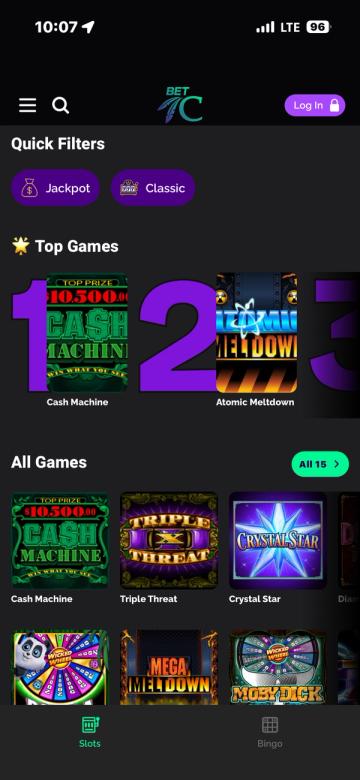
There’s still a long way to go with Class II mobile, of course. Everi has a library of a little over 30 games, and the Muscogee app offers about 20 of those. That app will likely expand at some point to include games from Aristocrat or Light & Wonder. Other game studios will get involved, other apps will launch in other states, some will navigate complicated checkerboard-like geofencing areas, and the size of the vertical will dwarf what it is now.
Bezzell said other tribes, from California to North Carolina and many points in between, have reached out to him and his tribe with questions. “If it’s financially beneficial for them, it’s definitely worth pursuing,” he advises.
Sagman observed that the buzz around Class II mobile has picked up substantially this year and the tenor of the conversation has changed. At the Global Gaming Expo in Las Vegas in September, he said “dozens” of tribes approached Everi asking for demos and showing interest.
“I think the key differentiator is it’s now real,” Sagman said. “I spent a couple of years going to conferences telling people this is going to come, this is really interesting. PowerPoint presentations are nice, and people showed interest, but — now that we're live in the market, now's the time to really lean into the expansion and scaling that's going to happen. Over the next 12 months, and I think once you have a number of tribes and suppliers in market, then you’ll get a real feeling for how the market's growing. That crystal ball that we'll all be looking at for 2028 will be really interesting. But there's definitely a huge opportunity we're seeing.”
Said Johnson: “If you're not doing something in this area, if you're standing still, you're just asking for a competitor to come in and eat your lunch.”
Standing still is precisely what the great majority of states have been doing on iGaming. So countless companies have been looking for innovative options outside that regulatory framework. As we’ve seen with sweepstakes casinos and sports betting on prediction markets, sometimes the legality of those innovative options is up for debate.
But if you say Class II gaming is very clearly legal on tribal lands and the mobile version of it is ready to explode, tribal authorities and industry insiders will likely respond to that assertion with a single word:
Bingo.

Eric has been a professional editor and writer for more than 25 years, including nearly 20 years of experience covering the gambling industry. He was editor-in-chief of the poker magazine All In from 2005-2015 and manag…