Kindbridge Study Focuses On Help For Those In Military With Gambling Addiction
New brief offers recommendations for removing stigma and offering financial education


A Kindbridge Research Institute (KRI) study released last week reveals a scary situation: When it comes to gambling addiction in the military, “disclosure typically comes only after a person has ‘already hit the rock bottom’ and can no longer meet basic financial obligations.”
It’s no secret that gambling in the military has its own unique set of issues, or that gambling is an easily hidden addiction and that those in trouble often don’t seek help until they are in crisis. But inside the military, where the culture calls for physical and mental fortitude, seeking help of any kind can be fraught, putting those with gambling addiction in particularly fragile — and sometimes career-threatening — situations.
Along with the stigma attached to asking for help, financial reporting systems don’t quickly identify gambling harm.
“Debt is still a prevailing issue with security clearances,” said Mark Lucia of KRI’s Stigma Stand Down. “How do you give someone the psychological safety to seek care when it affects everything? You have service members who are uniquely afraid to share their problem.”
The brief will be a key topic at the Stigma Stand Down Summit in Colorado Springs Tuesday.
The study, which brought together Kindbridge’s Stigma Stand Down program and its Financial Stability and Responsible Gambling Initiative, revealed that “financial instability can affect a security clearance, a promotion, or an assignment,” and that some with an addiction fear reporting it because doing so would “get the problem ‘flagged,’ with potential loss of a clearance or weapons qualification and, with it, the ability to perform their duties.”
More access = more problems
Until 2018, military members stationed in the U.S. didn’t have easy access to legal gambling. Bases abroad might have slot parlors, but in the U.S., gambling was far less accessible. But since the Supreme Court overturned the Professional and Amateur Sports Protection Act eight years ago, online sports betting has become available in 33 states and online casino gambling is available in seven. And prediction markets, which offer de facto gambling products, are even more widely available.
“You went from having a minority amount of military members who had access, but now it’s everywhere,” Lucia said.
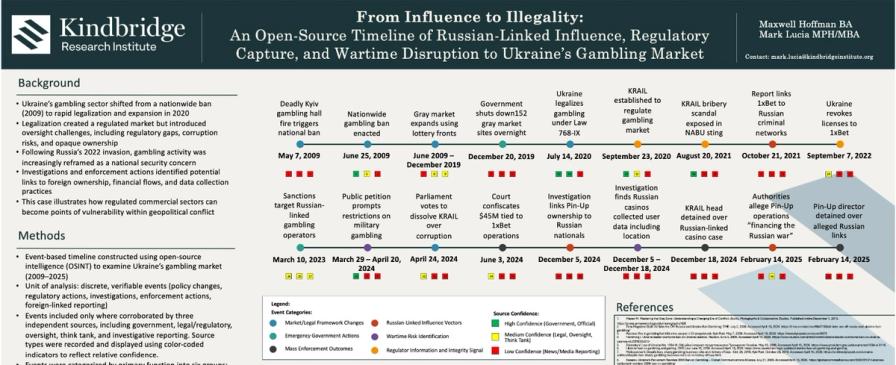
The problem isn’t limited to the U.S. military. According to a KRI information sheet, gambling was legalized in Ukraine in 2020, and since then a military bribery scandal was uncovered and Ukrainian officials discovered that Russian online gambling sites were collecting data — including location — of Ukrainian military members.
New views lead to solutions
The KRI study allowed examination of the issue of gambling in the military through multiple lenses. Stigma Stand Down is what it says — an effort to remove the stigma attached to seeking mental health help in the military. Lucia said it’s made inroads in Colorado. And the related initiative, which works with financial institutions and credit-reporting companies, seeks to educate military members about financial stability.
“We were able to bring together people who are normally not in the same room and take a look at where early signals of financial distress are,” said Kary Carbone, the initiative’s project leader. In doing so, the groups can work together to create awareness and to educate.
“A central finding was that this harm is typically identified late, when individuals present in crisis through healthcare, the legal system, or bankruptcy proceedings,” the study reads. “One body of evidence concerns stigma; the other concerns financial stability. Both point to the same gap: harm that develops out of view and becomes visible only at the point of crisis.”
The study authors offer a solution — a multi-pronged approach that allows for private reporting but also provides for gambling education without a disciplinary approach against those reporting addiction.
In the paper, Lucia and Carbone wrote that any program should be built on the idea that seeking help is not “an indication of weakness,” and that gambling should be treated as a form of “spending” to be integrated into budgeting, debt, or credit conversations.

Jill has covered everything from steeplechase to the NFL and then some during a more than 30-year career in sports journalism. The highlight of her career was covering Oakland Raiders during the Charles Woodson/Jon Grud…