Sen. Lankford’s Opposition Threatens Effort to Fix Gambling Tax
Oklahoma’s senator pushes back on reversing a new rule that lets the IRS tax phantom income, complicating efforts by House lawmakers

Gamblers hoping for a quick reversal of the provision in President Donald Trump’s long-passed One Big Beautiful Bill that limits gambling-loss deductions to 90% -- down from the long-standing 100% -- may be in for a long wait.
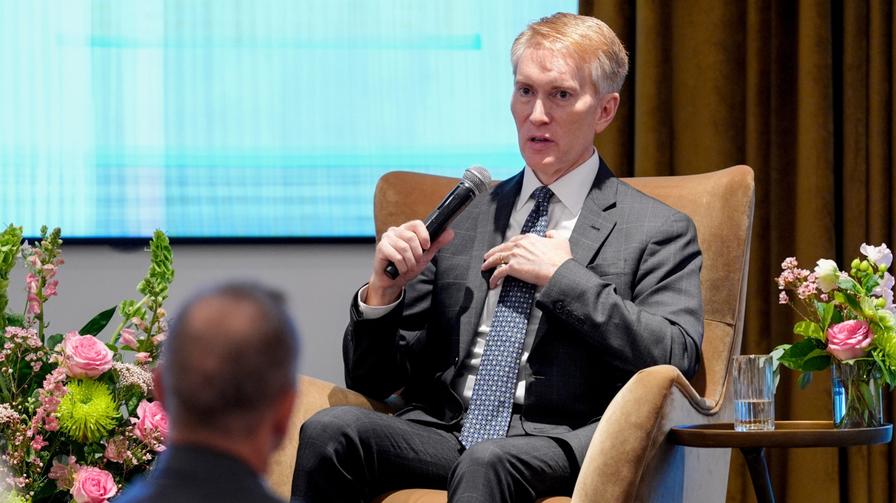
According to Punchbowl News, Sen. James Lankford (R-OK) is opposed to rolling the deduction back to its previous level.
“It’s not an unrealistic change,” Lankford said of the provision, according to the report. “It’s a pretty minor change in that tax policy.”
For gamblers, however, the change is anything but minor. In fact, it creates a scenario in which a bettor can lose money overall and still owe federal income taxes.
Under the new rule, a gambler who reports $100,000 in winnings and $100,000 in losses would be allowed to deduct only $90,000 of those losses. The IRS would treat the remaining $10,000 as taxable income, even though the bettor broke even.
At the standard 24% federal tax rate, that results in a $2,400 tax bill on zero net profit.
The impact doesn’t stop there. Even modestly profitable bettors would be hit hard. A gambler who wins $101,000 and loses $100,000 would owe $2,640 in taxes (on the $1,000 net win and the $10,000 of non-deductible loss) under the provision, more than double what they actually made.
And the bigger the numbers get, the more problematic for a professional gambler. A gambler who turns a tidy $100,000 profit on $1 million in winnings vs. $900,000 in losses would find themselves being allowed to deduct only $810,000, meaning they’d be paying taxes on $190,000 instead of $100,000.
Getting lanky
Lankford sits on the Senate Finance Committee, where the deduction cap originated. That same committee is currently holding the FULL HOUSE Act, introduced by Sen. Catherine Cortez Masto (D-NV), which would repeal the cap entirely.
In the House, Rep. Dina Titus (D-NV) has introduced the FAIR BET Act, which would restore the full deduction and already has bipartisan support. Even so, the bill has yet to receive a hearing in the Ways and Means Committee. A third proposal, the WAGER Act, was introduced by Rep. Andy Barr (R-KY) and would accomplish the same thing.
Despite rare bipartisan agreement, along with support from lawmakers in states with significant gambling industries, none of the three bills has advanced in 2026. For now, the 90% cap remains in place, leaving gamblers to navigate a tax regime where breaking even can still mean losing money.
And with a key Senate Finance Committee member publicly downplaying the impact, that reality may be the new normal for a while.

Jeff Edelstein is a longtime columnist, reporter, radio host, and fantasy sports aficionado, not necessarily in that order. He lives in New Jersey with his family.