New Underdog Trading Card Offer Blurs The Lines Of Gambling
You can call Underdog Rips gambling as much as hobbyist collecting

I’ll tell you this much: It’s only a matter of time before some state legislator floats a law putting age restrictions on buying baseball cards and Pokemon packs because they are gambling.
And you know what? That lawmaker would not be wrong.
I’ve written about it plenty, how collecting cards has gone from Norman Rockwell levels of innocence to nothing more than a form of high-stakes gambling.
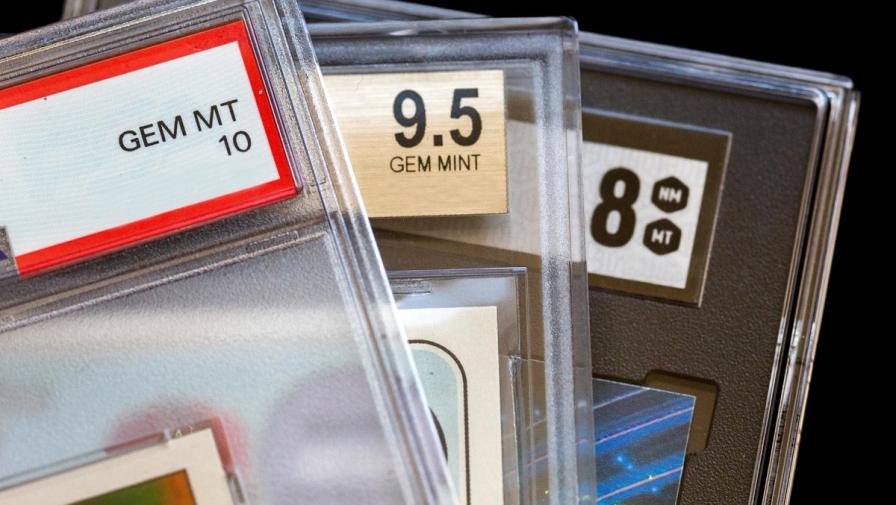
Forget the buying packs and flipping the cards on eBay, that’s child’s play. Today, numerous companies offer a product where, for a certain price point, you buy a “mystery” card online, digitally “rip” it open, and then you can either sell the card back to the company or get it mailed to you.
And now, as of this past Tuesday, there’s yet another company offering this product: Underdog.
The company introduced Underdog Rips, and it’s exactly what is described above.
There are three price points, set at $5, $25, and $1,000.
Along with each price point come the odds. At the $5 price point, you have a 31% chance of recouping your investment (or more.) At $25, about 37%. And at $1,000(!), you have a 36% shot.
Of course, the real money is at the top, where the top card in the $5 bucket could be worth $150. In the $25 rip, the card can be worth $750. And you can win a $30,000 card in the $1,000 pack.
If this sounds like gambling to you, congratulations. You’re a member of the human race with at least two digits to your IQ.
Gambling, meet gambling
What’s interesting about Underdog getting into this business is that it’s the first pure gambling company to enter into it. (Well, “gambling” company. They offer prediction markets and pick ‘em DFS and best ball, but come on.) (And to be clear, Fanatics offers a similar product, but to call it a “gambling” company would be like calling Costco a gas station.)
DraftKings dipped its toes in collectibles back in the COVID days, getting into the NFT craze. It did not end well for anyone.
But while NFTs were digital whozeewhatchas (pretty sure that’s the technical term), Underdog — and Arena Club, and Packz, and the dozens more companies in the repack game — are handing out physical cards. You are buying a physical card. They will send it to you. You will be able to hold it.
Which is cool, but again: This is as pure a form of gambling as exists. You are putting money down on an uncertain outcome in hopes of making more than you put in. Cannot be simpler.
And the more I sit here and type, the more I’m completely fine with it. Beyond fine, actually, as I think Underdog doing this just furthers my biggest complaint about the world of gambling — namely, that we create these false boundaries between what is and what is not gambling.
Go back to what I just said: I believe with every ounce of my being that if you are putting money down on an uncertain outcome, it is gambling.
Poker? Gambling.
DFS? Gambling.
Stock market investing? Gambling.
Meme stocks? Definitely gambling.
Loot boxes? Gambling.
Prediction markets? Can we please already?
And, of course, the digital repack business is gambling. On some of these sites, you actually spin a freaking wheel to determine what you won.
So yes, I’m glad Underdog is getting into this business. The company is basically saying the quiet part out loud: This is gambling, or in the parlance of our times, this is gambling, bruh.
Don’t tell your elected officials.
By the way, I bought a $5 pack and got a graded Zion Williamson rookie card of some stripe. I immediately sold it for $11.54, a tidy profit. I may retire.

Jeff Edelstein is a longtime columnist, reporter, radio host, and fantasy sports aficionado, not necessarily in that order. He lives in New Jersey with his family.