Compliance Confidential, Part Three: The Price Of Looking Away — Penalty Amounts To 'A Good Weekend For The Wynn'
Is it 'a significant amount of money'? Or is the NGCB 'sending a message to the gaming operators that it’s willing to work with them'?

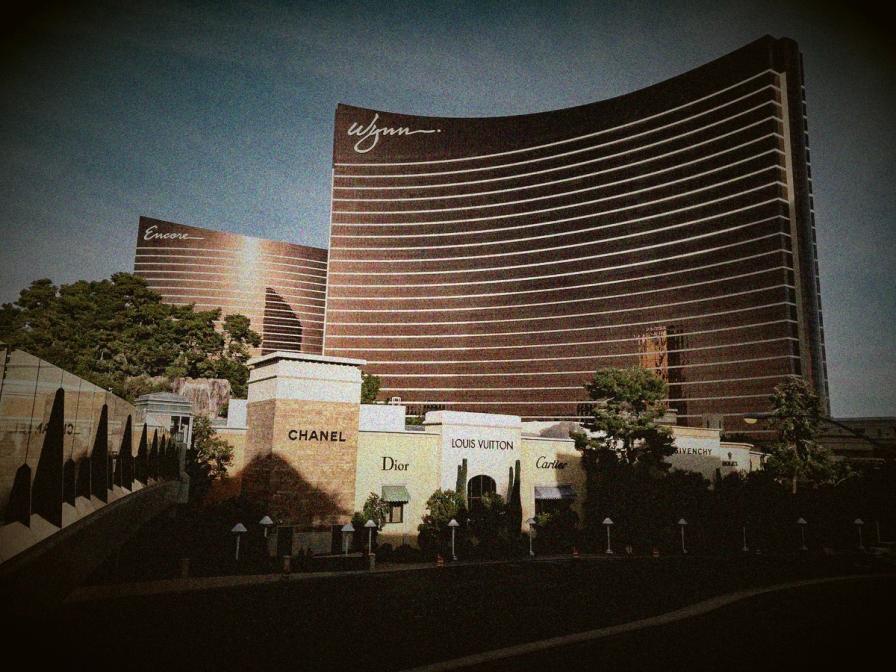
When Wynn Las Vegas settled a Nevada Gaming Control Board complaint over unregistered money transfers in May 2025, it was treated as another example of the anti-money laundering problems enveloping Strip casinos.
“Wynn accepts $5.5 million AML fine, becomes third Las Vegas operator fined this year,” reported iGaming Business in a typical headline.
But the Wynn case was unique. While it also dealt with AML issues, the allegations against the property were different from what the other gaming brands caught up in the scandal were accused of.
Where the others were faulted for compliance personnel who failed to adequately follow through and marketing staff who failed to disclose red flags about customers — particularly as it related to the bookie Mathew Bowyer — Wynn employees were accused of conspiring to circumvent the financial system by transferring money through a complex web of companies, bank accounts, and third parties as well as facilitating a blatantly illegal “Human Head” proxy betting scheme in which someone places bets on behalf of someone else.
“It’s a totally different animal because of the scale and the length of time that these compliance failures persisted,” said Joe Casole, vice president of legal and regulatory affairs at compliance consulting firm IC360.
The complaint was tied to a 10-year-old federal investigation that found Wynn supervisors were part of the conspiracy.
Yet federal prosecutors entered into a non-prosecution agreement with Wynn, just as they did with two of the other casinos sullied by the scandal, MGM Grand and The Cosmopolitan.
As part of the federal settlements, Wynn agreed to forfeit $130 million while the MGM properties agreed to pay fines totaling $7.45 million. In the same press release announcing the MGM fines, federal officials argued that Scott Sibella’s single AML violation warranted criminal prosecution.

Meanwhile, Nevada regulators piggybacking on the federal probes fined each of the five operators tied to the scandal between $5.5 million and $10.5 million. Former Nevada Gaming Commissioner Rosa Solis-Rainey, who was on the commission during approval of most of the settlements, repeatedly complained that the penalties were too low (although she also thought the MGM fine was too high).
“Don’t get me wrong, they paid millions of dollars, and I think any business is going to feel that,” said Solis-Rainey in an interview with Casino Reports. “But given the size of the enterprises and given the scope and the length of the violations, I didn’t think the lower fines addressed the scope of what they allowed to occur sufficiently.”
All of the operators fined by Nevada regulators — Caesars, Genting Berhad (operator of Resorts World Las Vegas), MGM, The Venetian, and Wynn — have or are estimated to have annual revenue totals in the billions.
“The government is not going to go after large employers in any meaningful way, and this is true in the banking industry as well,” said Howard Steiner, a retired AML expert with experience in the gaming industry, including serving as the executive director of AML operations for the Las Vegas Sands from 2014 to 2019.
“When’s the last time a bank or a casino has actually gotten prosecuted?” Steiner asked. “We should be surprised if there isn’t a non-prosecution or deferred prosecution agreement which, for either, results in no long-term consequences for these casinos or their executives. The big winners will be the consulting firms. ‘Cause that’s the way things roll. Five million, 20 million, that’s a good weekend for the Wynn. That’s not a big deal.”
Limited, opaque, and conciliatory

Despite Sibella’s case, which appears to have frightened casino executives up and down Las Vegas Boulevard with a tough-on-crime message, government oversight of AML in gaming is marked by regulatory ambiguity and limited enforcement.
Experts say AML is subjective, especially when regulations are written for banks but applied to casinos. The American Gaming Association has repeatedly asked FinCEN for guidance on the AML responsibilities of casinos, noting in one letter “novel considerations” not addressed by the Bank Secrecy Act.
The agency has never responded.
In the Silver State, gaming regulators’ authority to fine operators is constrained by the state legislature to only $500,000 for each initial violation, no matter what it involves. Half a world away, in the Australian state of Victoria, the maximum fine issued by the gaming regulator there was increased a few years ago from $1 million to $100 million, in Australian dollars.
At the national level, FinCEN’s largest fine of a casino operator was the $75 million assessed in 2015 to Tinian Dynasty Hotel & Casino in the Northern Mariana Islands, a U.S. commonwealth in the Pacific, for failing to implement an AML program. Australia’s equivalent, AUSTRAC, settled a case with Crown Melbourne and Crown Perth in 2023 for $300 million, in U.S.-adjusted dollars.
“The culture in Australia with regard to gambling activities is different than it is here in the state of Nevada,” said Becky Harris, a former NGCB chair who served on the board of directors of the Australian sportsbook and iGaming platform PointsBet. “Regulators in Australia have an appetite for severe fines and they’re almost vindictive in nature.”
On the other hand, she said the NGCB “is sending a message to the gaming operators that it’s willing to work with them.”
In defense of the fines
The U.S. Attorney’s Office for the Southern District of California, which prosecuted the Wynn case, and the U.S. Attorney’s Office for the Central District of California, which prosecuted Sibella and several bookies, both declined to comment for this series.
Also declining to comment: representatives of Caesars, Resorts World, and MGM. A Wynn spokesperson said that the operator continually reviews and enhances its AML program and did so, along with other compliance changes, in response to its non-prosecution agreement.
The Venetian, whose case was still pending before Nevada regulators while this series was reported, did not respond to requests for comment.
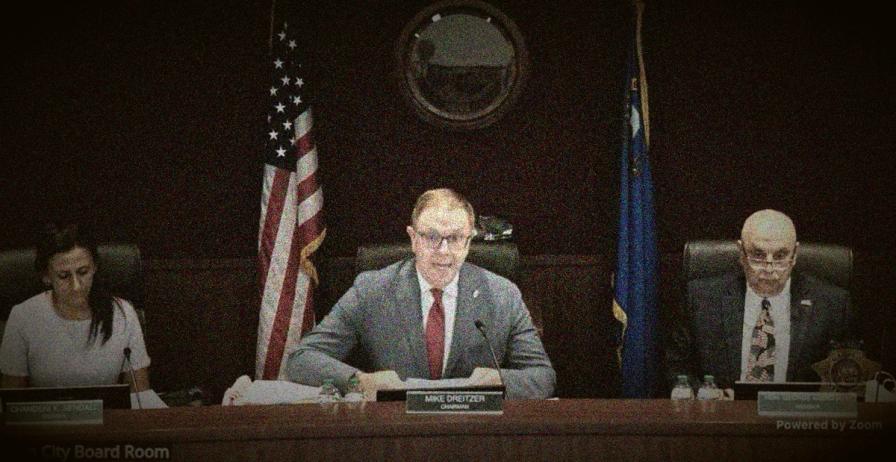
The only person who would speak to Casino Reports at length was Mike Dreitzer, the NGCB chair, who defended the state of Nevada’s fines and enforcement actions.
“The fines were significant,” he said. “When you’re fined that amount of money, in the seven or eight figures, that’s a significant amount of money.”
Dreitzer said an operator’s revenue is irrelevant to how much it should be fined for a violation. He said Caesars’ fine — $7.8 million — roughly equaled three times the benefit the operator received from the behavior that led to its enforcement action.
“So, let’s be clear,” he said, “the benefit was outweighed significantly by the fine.”
Dreitzer declined to discuss the NGCB’s internal decision making, saying there are “many, many factors that go into it, all of which are confidential,” and the enforcement actions speak for themselves. But he also said not to discount the embarrassment fines cause operators — “Our licensees take pride in their ability to comply” — and the conditions attached to the settlements.
“Those are really, really detailed and really, really meant to have the licensee make significant changes to their compliance plan,” he said, in some cases causing operators to change personnel or add “significant resources” to address AML issues.
“The number gets the headline, I get it,” Dreitzer said. “But it’s really a combination of a whole bunch of things.”
Next, in Part 4 of Compliance Confidential: The events of these last few years were not the first time major Strip casinos have played host to AML scandals.

Brian Joseph is a Las Vegas-based contributing writer covering gaming news in Nevada and California, the latter where he once served as the Sacramento bureau chief for the Orange County Register. Brian is the author of…