Compliance Confidential, Part Two: MGM Finds A Fall Guy
Others were more directly responsible than Scott Sibella for the AML violations, but 'they wanted an executive'


For years now, Mathew Bowyer has grabbed headlines as the most prominent bookmaker ensnared in the recent Las Vegas anti-money laundering scandal, with his long history of unchecked play tarnishing the reputations of multiple Sin City properties.
But Bowyer wasn’t the only bookie who gambled up and down Las Vegas Boulevard, federal investigators found.
Wayne Nix and his associates Kenneth Arsenian and Edon Yoshida Kagasoff were prosecuted in the same probe as Bowyer and they played at a laundry list of marquee Las Vegas casinos, including several that have avoided accountability for their involvement with the bookies.
Nix and company wagered at a variety of MGM properties — namely the Aria, the Bellagio, The Cosmopolitan, the MGM Grand, The Mirage, and Park MGM — as well as Caesars Palace, the Tropicana, the off-Strip Red Rock in Summerlin, The Venetian, and the Wynn. MGM and the Tropicana extended Nix credit, too.
“That’s always been the case in Las Vegas,” said John Spilotro, a Sin City attorney for Scott Sibella, the former Resorts World president whose high-flying career was vaporized by his connection to Nix. “It’s hard to walk through a casino without bumping into a bookmaker.”
Sibella declined to comment for this series, but Spilotro and another one of his attorneys, Richard Weber, the former head of the Criminal Investigation Division of the IRS, agreed to talk to Casino Reports because they remain outraged by the case.
“Mr. Sibella was just not the type of person that should have been charged with a money laundering or a Title 31, failure-to-file-a-SAR charge,” said Weber, who worked hundreds of money laundering investigations during his career as a prosecutor and chief of IRS-CI. “It just did not fit within the category of cases that the government should have spent the resources on.”

A high-profile casino leader for more than two decades, Sibella was done in by events that occurred eight years ago, when he was president of the MGM Grand. Sibella was charged with a felony for failing to file a Suspicious Activity Report when Nix made a cash payment of $120,000 on July 27, 2018, to pay a marker he owed to the casino.
Sibella later admitted to federal law enforcement that he suspected Nix was a bookie and pleaded guilty to the federal charge. He was twice caught on wiretapped calls with Nix, who made statements strongly suggesting he was a bookmaker, including saying that he had accepted a $5 million bet on the Super Bowl.
“The fact that he was even having conversations with someone that the government was interested in, I think put him in a negative light,” Weber said, noting that it was Nix’s phone, not Sibella’s, that was tapped.
Both attorneys said Sibella spoke with Nix in those calls as a casino president. Unlike other presidents who stay cloistered in their offices, Sibella had a long history of treating his role like an ambassador for his property, walking the floor and interacting with customers.
“Scott loved what he did,” Spilotro said. “He may have been the best operator in Las Vegas.”
Federal law enforcement and MGM both declined to comment for this series.
Corporate interests
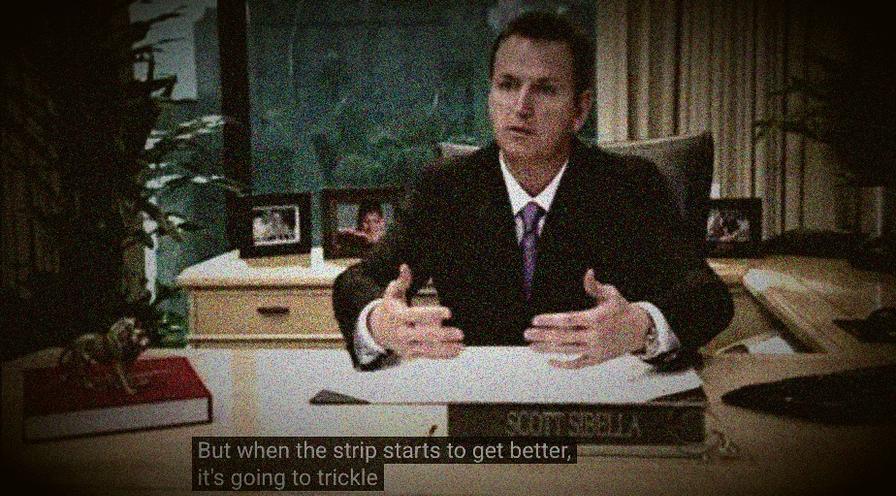
Sibella met Nix through golf trips that the attorneys said were organized by MGM Resorts for some of the corporation’s biggest gamblers. The trips, known as “Undercover Weekends,” sought to capitalize on Sibella’s 2011 appearance on the CBS television show Undercover Boss.
But Spilotro said Sibella wasn’t responsible for inviting Nix to his first Undercover Weekend.
“It was, ‘Hey Scott, you’re the Undercover Boss. Wine and dine ‘em,’” Spilotro said. “Nix was a player at another one of the MGM properties and he was foisted on these trips by someone other than Scott.”
The attorneys said Sibella’s interactions with Nix were primarily on the golf course, where they’d make friendly wagers on who’d win a hole or the outcome of an upcoming game.
“I sat there and had to explain to the government how that is not a crime,” Spilotro said. “Me and you can make a bet on anything right now, whatever. The Dodgers and the Angels are playing, you like the Dodgers, I like the Angels, we'll bet $100. That’s not an illegal bet. We're not bookmaking. There’s no vig.”
Vig, short for vigorish and otherwise known as juice, is the commission fee bookmakers build into their odds to guarantee themselves a profit.
“Any bets that Scott had with Wayne Nix did not include a vig,” Spilotro said, adding they weren’t large wagers. “They’re just betting to have fun.”
The federal government said in its non-prosecution agreement with the MGM Grand that Sibella had an account with Nix’s sports betting operation on a Costa Rican website. Spilotro said that’s incorrect, but Sibella and his legal team weren’t a party to the feds’ negotiation with MGM.
“The government, I pressed them on it, and they said there is no evidence that Scott ever accessed that system,” Spilotro said, adding that Nix created the account for his own convenience, to track his personal bets with Sibella. “That’s like me having a database and I give you an account, and you don’t know about it.”
The attorneys believe that misstatement could illustrate a critical, underlying dynamic of the case, that in its parallel negotiations with the government MGM successfully shifted blame from itself to Sibella, who despite signing a non-compete agreement when he left the corporation found a loophole that allowed him to head up Resorts World when it opened in 2021.
Spilotro said that the government knew of other MGM executives who had much more intimate and questionable relationships with bookmakers — including executives who ran money for bookmakers or took kickbacks — but none were charged.
“They had a bad taste in their mouth, because when he left MGM and negotiated his exit package they got out-negotiated,” Spilotro said.
The face of a scandal
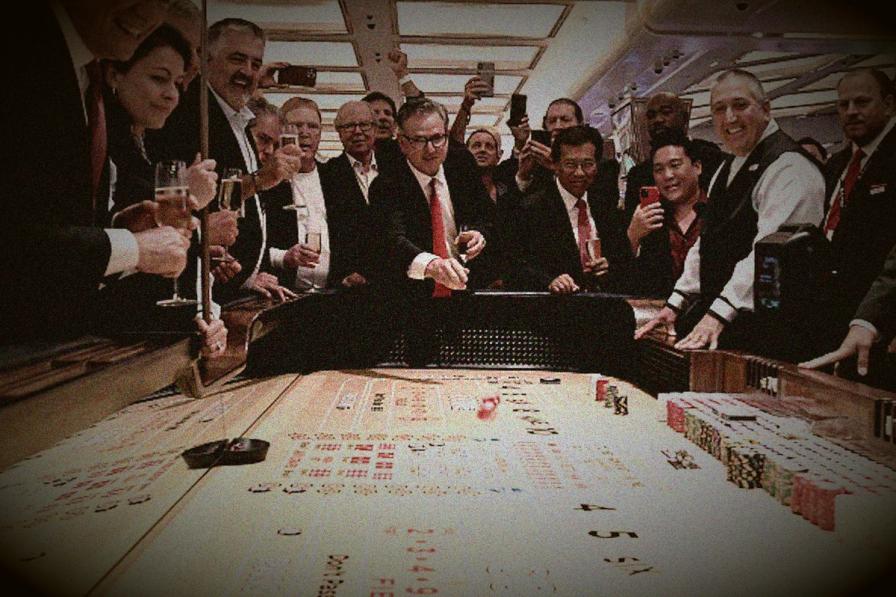
Both attorneys said the feds had a hard time differentiating what were the responsibilities of MGM corporate and what Sibella would have overseen as president of the MGM Grand.
Under MGM’s corporate structure, compliance was entirely outside of Sibella’s chain of command — and the attorneys said MGM executives were told to defer to the company’s corporate vetting program. On July 27, 2018, when Nix paid cash for a marker, the attorneys said MGM’s corporate compliance would have been responsible for filing a SAR, not Sibella or anyone who reported to him.
Indeed, Weber said he’s unaware of any casino president ever being prosecuted for failing to file a SAR or some kind of internal, pre-SAR notification. In fact, he said that when he was with the government, one of his talking points was that financial institutions would only be held accountable for willful, sustained, systemic AML program deficiencies, not for isolated SAR decisions or for not filing a single missed SAR.
Before July 27, 2018, Spilotro said another MGM property filed a SAR about Nix paying off a marker with cash, which was in violation of his credit agreement with the corporation.
Still, both attorneys don’t deny that Sibella violated the federal Bank Secrecy Act, which requires employees of financial institutions to report information about potential money laundering. Sibella admittedly didn’t raise a red flag about Nix when he began to suspect Nix was a bookie.
Nonetheless, the attorneys said they consider Sibella’s prosecution egregious due to the government’s selective enforcement of the law.
“You had people that were far more culpable that Scott Sibella,” Spilotro said, “and they were given a free pass.”
Other people the attorneys thought should have taken more of the blame include MGM’s compliance staff and Jeremiah Chambers, the former Cosmopolitan host who failed to inform compliance that Nix was a bookie and instead referred the baseball player Yasiel Puig to him.
Chambers got a kickback from Nix for the referral and had a financial incentive to not report him to compliance, because his bonuses were tied to the play of clients. Sibella, on the other hand, never took a kickback from Nix — he was not ordered to pay restitution — and he had no financial incentive to protect him from compliance, Spilotro said. Sibella’s bonuses were not contingent on any one customer’s play, he said.
“Sibella was not the person that was the most culpable in terms of AML responsibilities and SAR responsibilities,” Weber said.
But he was unquestionably high profile, with stints also running Treasure Island and The Mirage on the Strip before moving on to the MGM Grand and Undercover Boss and eventually Resorts World.
“I think they wanted an executive,” Weber said. “I think it was very important for the government to have at least one individual charged, to take the responsibility for these AML compliance failures. I think they very much wanted to have a deal with the casino, and in the casino’s cooperation with the government, Sibella was identified.”
Next, in Part 3 of Compliance Confidential: For some of the biggest, richest casinos in Nevada, did the fines fit the violations?

Brian Joseph is a Las Vegas-based contributing writer covering gaming news in Nevada and California, the latter where he once served as the Sacramento bureau chief for the Orange County Register. Brian is the author of…