Fertitta Acquisition Of Caesars Clears One Hurdle With NGCB, Many Approvals Remain
Directors granted initial findings of suitability at Wednesday hearing as review of $17.6 billion transaction marches forward

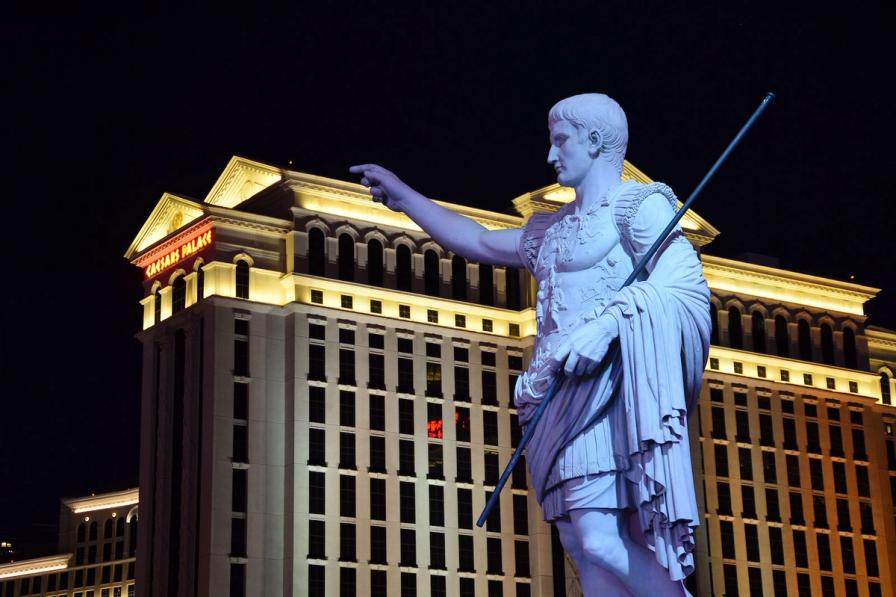
Fertitta Entertainment’s proposed acquisition of Caesars Entertainment is progressing but still needs to clear antitrust concerns by the U.S. government and receive approvals from more than a dozen state gaming regulators, according to company executives.
On Wednesday, the Nevada Gaming Control Board (NGCB) granted initial findings of suitability to Richard Liem and Steven Scheinthal as directors with Fertitta Entertainment. The Nevada Gaming Commission is scheduled to consider their applications at their meeting on July 23.
During Scheinthal’s hearing, NGCB Chairman Mike Dreitzer asked for an update on Fertitta’s proposed $5.6 billion acquisition of Caesars that includes the assumption of nearly $12 billion in debt, valuing the transaction at $17.6 billion.
Scheinthal told the control board the company has until next Monday to file a Hart-Scott-Rodino (HSR) Premerger Notification with the Federal Trade Commission and the Department of Justice. The application notifies the federal government of a proposed deal so antitrust agencies can review it before it closes.
Currently, Fertitta operates eight Golden Nugget casinos in five states, including two in Nevada. Caesars operates more than 50 casinos in the U.S. The deal also includes the company’s digital business, Caesars Sportsbook.

Applications and approvals timeline
It’s unclear if Fertitta would have to sell off some of Caesars’ casinos, including some of the 15 it operates in Nevada, to receive federal approval.
“We have to get gaming approvals to the Caesars properties where they operate,” Scheinthal said. “Under our contract, we had 45 days to file. We selected a handful of jurisdictions that we felt would have a longer lead time.”
Scheinthal didn’t disclose in which states Fertitta had filed the applications, but added the company has an additional 45 days to file the rest of the applications.
He told the control board Fertitta expects it to take nine to 10 months to receive approvals from every jurisdiction. Also required is for Caesars to file a proxy statement with the U.S. Securities and Exchange Commission (SEC).
“The SEC will review the proxy statement,” Scheinthal said. “It takes the SEC 30 days to issue initial comments and there will be an exchange back and forth between the SEC and Caesars with respect to their proxy statement.”
Once cleared by the SEC, the proxy statement will be mailed to Caesars shareholders, who will need to approve the transaction. Caesars’ board of directors has already approved the transaction.
Scheinthal confirmed Fertitta has a commitment letter from a syndicate of banks to finance the transaction, but the company’s preference was not to relay on the commitment letter because it gives financial institutions the ability “to put more onerous conditions than if we just go to the marketplace and raise the money.”
“Our hope is within the next few months there will be a window of opportunity … and we can go raise the money and put it into an escrow account,” he said. “If that doesn’t happen, we just go to the banks and say we agreed to the commitment letter.”
Scheinthal reiterated that if that happens, the banks will fund the transaction but can take advantage of more unfavorable economic terms and issue the debt to Fertitta but then sell it off into the marketplace.
The Financial Times reported in May that lenders, including Morgan Stanley, have put together almost $5 billion to fund Fertitta’s acquisition of Caesars. Caesars exited bankruptcy in 2017, with investor Carl Icahn supporting the company’s $17.3 billion sale to Eldorado Resorts, which closed in July 2020.
Icahn currently has two members on the board. As part of the agreement, Caesars can seek competing bids through this Friday.
Bloomberg News reported that Jefferies Financial is exploring investor interest in approximately $5 billion in debt to support a competing offer from Icahn. Like Fertitta, Icahn would take Caesars private and reports put his initial offer at $33 per share, surpassing Fertitta’s $31-per-share bid.
“This transaction is clearly out of the norm, but it has been discussed and we think it is a tremendous opportunity to put two really good businesses together in a private environment, which has some benefits to how you operate,” Liem told the control board.
Fertitta seeks to retain Wynn Shares
In April, Tilman Fertitta acquired 400,000 shares of Wynn Resorts through a company buyback program, bringing his total ownership to 13 million shares, roughly a 12.3% stake.
NGCB member George Assad asked Scheinthal if Fertitta would be required to sell his Wynn shares before or after the Caesars transaction closes.
“We are a passive investor in Wynn” Scheinthal said. “We like owning the Wynn stock, so it is our desire to keep owning the Wynn stock.”
Assad questioned whether the federal antitrust review of the merger would allow him to continue to own the shares.
“I have no reason today that is an issue, being a passive investor,” Scheinthal said.
Is no MGM news good news?
Chair Dreitzer also took the opportunity Wednesday to ask an MGM Resorts International executive for an update on the proposed acquisition by Barry Diller’s People Inc.
“I can only say what has been made publicly available, and if more developments take place, it will become public as well,” Chandler Pohl, vice president and legal counsel for MGM, responded.
Last month, Diller’s company made an $18 billion non-binding offer to acquire the remaining shares of MGM it doesn’t already own. Diller currently sits on MGM’s board, and People already owns a 26.1% stake in MGM.
MGM confirmed it had received the offer but is reviewing the proposal before deciding on next steps.

Chris Sieroty writes about gambling, banking, technology and finance. Currently, he is a freelance reporter based in New York.