Ohio House Member Introduces Online Casino Bill Similar To Senate Version — With Big Differences
Rep. Brian Stewart, who chairs the Ohio House finance committee, introduced a bill that differs in some ways from a Senate bill.

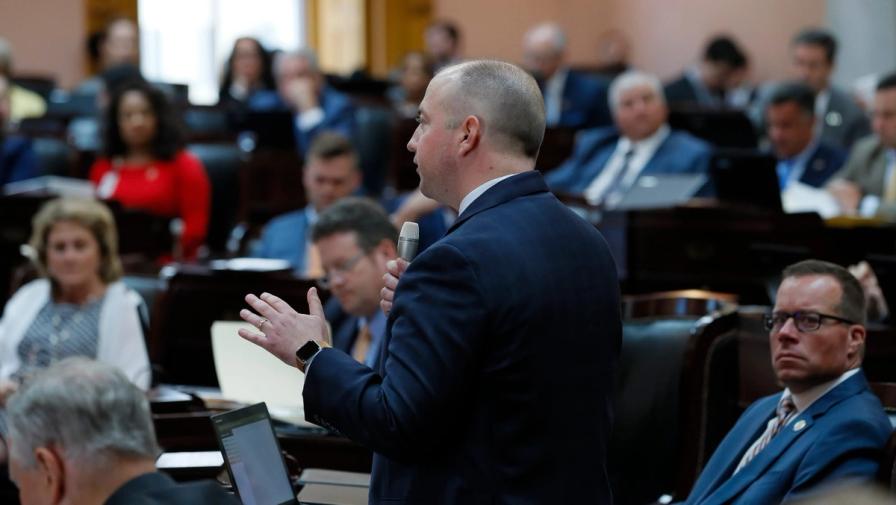
On the heels of an iCasino bill being introduced in the Ohio Senate, a second bill has been filed in the House.
While both seek to bring iGaming to the Buckeye State, they are not one and the same.
House Bill 298, introduced by powerful House Finance Committee Chair Brian Stewart, is similar in scope to the bill in the Senate, introduced by Sen. Nathan Manning. Both bills stipulate the Ohio Casino Control Commission would oversee the action and have launch deadlines of March 31, 2026. Additionally, both limit online gambling operators to current brick-and-mortar casino operators in Ohio or horse racetrack owners, and each would be limited to one platform.
Otherwise, there are plenty of differences, in some cases slight in nature.
Perhaps the biggest difference for would-be operators is in the tax rates: Manning’s bill calls for between 36% and 40%, which would be among the highest in the nation, whereas Stewart’s bill sets it at 28%.
Licensing fees also are a little different. Both bills call for an initial fee of $50 million, but Stewart’s bill has a $10 million renewal fee attached, compared to $5 million in Manning’s version.
Player differences
For would-be players, there is a monster difference. Stewart’s bill would ban online casinos from offering patrons bonuses and promotional credits. No other state bans that practice. Manning’s bill allows for promotions.
For payment, Stewart’s bill doesn’t allow players to fund via credit cards, whereas Manning’s does.
Additionally, Stewart’s bill bans sweepstakes sites from offering dual currency or casino-like games, while Manning’s bill does not contain such language.
Furthermore, Manning’s bill also includes iLottery and online pari-mutuel horse racing, while Stewart’s does not.
Manning’s bill has been sent to committee, while Stewart’s bill was just introduced Tuesday.
These legislative efforts follow last year's comprehensive Study Commission on the Future of Gaming in Ohio report, which ran 354 pages and included input from eight legislators plus the Ohio Lottery director and the chairs of the state's casino control and racing commissions.
While that study didn't explicitly advocate for iGaming legalization, it presented several favorable findings, which suggests the state government appears receptive to the concept.
The study highlighted potential economic benefits of up to $410 million annually in new tax revenue. It also addressed the cannibalization concern with brick-and-mortar casinos, leaning toward the conclusion that this wouldn't be problematic.
The report cited research from Eilers & Krejcik Gaming showing that iGaming tends to expand the overall gaming market and accelerate revenue growth, with supporting evidence from New Jersey and Pennsylvania where all gaming segments grew after iGaming introduction.
Consumer protection was another benefit mentioned, with legal iGaming offering safeguards absent in the illegal market.
The study wasn't entirely positive, however. JACK Entertainment expressed concerns that iGaming could reduce physical casino revenue by 10.2%. The company also raised a constitutional issue, suggesting iGaming would qualify as "casino gaming" under Ohio's Constitution, potentially restricting it to Cincinnati, Toledo, Cleveland, and Columbus.

Jeff Edelstein is a longtime columnist, reporter, radio host, and fantasy sports aficionado, not necessarily in that order. He lives in New Jersey with his family.