NCLGS Panel: If States Want More Tax Dollars, Gambling Expansion Is Way To Go
Industry stakeholders say more revenue will come from expansion than from hiking sports betting taxes


SAN DIEGO — State lawmakers say it’s a constant struggle figuring out how to raise more tax dollars in order to offer more services and keep states running. Unlike the federal government — “which just adds debt,” one lawmaker said — states must have the dollars on hand to pay for goods and services.
Of late, legal sports betting has been in the crosshairs, with five states raising or adding taxes in the last year. And that doesn’t include Ohio’s doubling of the tax rate six months after go-live in 2023. Or the sliding scale that went into effect in Illinois in 2024, on which the biggest operators now pay more than twice the original 15% tax rate.
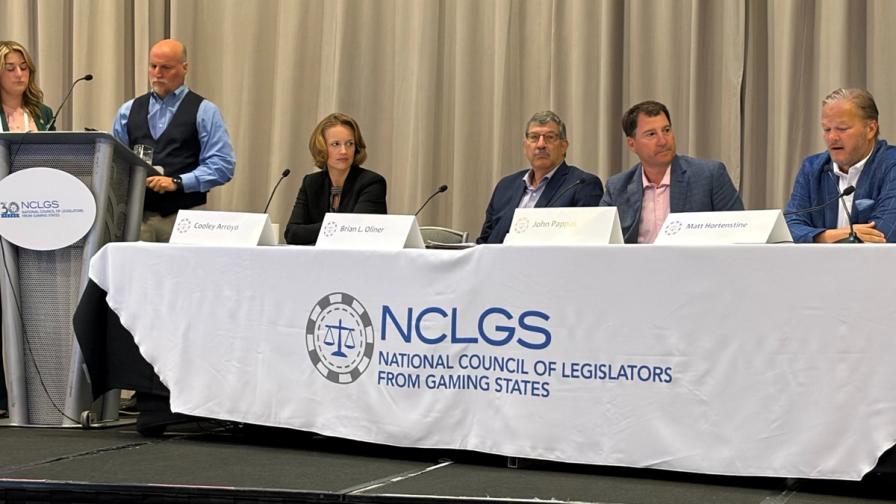
What are lawmakers to do? Expand gaming, stakeholders taking part in a panel discussion said Saturday at the National Council of Legislators from Gaming States (NCLGS) Summer Meeting. The panel included Matt Hortenstine, general counsel for video gaming operator J&J Gaming; Cooley Arroyo, chief compliance officer for the New Hampshire Lottery Commission; Brian L. Oliner, general counsel for the Federation of Tax Administrators; and consultant John Pappas, state advocacy director for the industry group iDEA Growth. New Hampshire Sen. Tim Lang and Oklahoma Rep. Emily Gise were the moderators.
“I think lawmakers need to be thinking about what are the types of activities that they can actually raise revenue from,” Pappas said. “I think the question about whether they can raise revenue from prediction markets is very much in question [as a federally regulated product]. … So, where states need to be looking, in my view, is things like iGaming, online casino.”
North Carolina lawmakers this month included language in their budget to tax prediction markets but not regulate them, while lawmakers in Illinois earlier this year agreed to put a framework, including a tax structure, around the platforms.
“Online casino is wildly popular in the states where it is licensed and regulated today,” Pappas continued. “It is outpacing tax revenue from sports betting by three or four times. So a state like Michigan or Pennsylvania, where sports betting may deliver $100 million in tax revenue in a year, iGaming is delivering $500 million to $700 million in a single year.”
Skill games another potential cash cow
Another option, Hortenstine said, is “distributive gaming,” also known as skill gaming, video lottery terminals, or video gaming terminals, which are legally available throughout some states, including Illinois, Montana, and Nevada. In Pennsylvania, lawmakers have been contemplating new regulation and taxation of skill games after a recent state Supreme Court decision deemed them illegal under existing law.
“I think it’s about new segments of the industry,” Hortenstine said. “I think prediction markets are going to take all the air out of the room and the media, but …. you’re seeing this right now in Pennsylvania between the unregulated games the [state] Supreme Court just ruled on and how that’s going to play out in the expansion of distributed gaming in the United States in the next five years.
“It’s probably the one thing that gets you the biggest bang for your buck.”
Hortenstine said that adding distributive gaming could provide states twice the tax revenue as iGaming does alone. So far, eight U.S. states have legalized online casino, and Hortenstein said 13 allow for some sort of distributive gaming.
Lawmakers, however, are sometimes cautious about putting gaming machines in truck stops, corner stores, or bars, meaning that online casino seems to be a more natural next step for states that already have legal online sports betting or a mature physical casino infrastructure.
Beyond that, Pappas said, offshore sites are already taking revenue away from states.
“I think iGaming, that’s something the states can regulate, right? They already have licensed casinos, they can regulate iGaming properly, they can tax that at a very competitive rate, and the revenue from that will be substantial for those states,” he noted, “and I think that will help offset concerns that state lawmakers have about raising personal taxes or other taxes that their citizens may not want.”

Jill has covered everything from steeplechase to the NFL and then some during a more than 30-year career in sports journalism. The highlight of her career was covering Oakland Raiders during the Charles Woodson/Jon Grud…